


The Elliott Wave Indicator for MT4 attempts to solve this by automatically identifying wave patterns on charts. Instead of manually counting waves and debating whether the price is in wave 3 or wave 5, the indicator labels them directly. It gives traders a framework for understanding market psychology through price structure, helping them align positions with the prevailing cycle rather than fighting it.
What Elliott Wave Analysis Actually Measures
Elliott Wave Theory, developed by Ralph Nelson Elliott in the 1930s, proposes that markets move in repetitive cycles driven by crowd psychology. These cycles consist of five waves in the trending direction (labeled 1, 2, 3, 4, 5) followed by three corrective waves (labeled A, B, C). The MT4 indicator automates the detection of these patterns by analyzing price swing highs and lows.
The indicator doesn’t predict future price movements—it identifies the current wave structure based on historical price action. When price forms a new swing high or low, the algorithm recalculates wave labels according to Elliott’s rules. Wave 2 can’t retrace more than 100% of wave 1. Wave 3 can’t be the shortest impulse wave. Wave 4 shouldn’t overlap with the price territory of wave 1 except in specific diagonal patterns.
Most MT4 versions display wave labels directly on the chart as text annotations. Some advanced versions add colored zones, trend lines connecting wave pivots, or projection levels showing potential wave 5 targets. The visual output helps traders quickly grasp where the price might be within the larger cycle.
How Traders Apply Elliott Patterns in Real Conditions

Here’s where theory meets practice. GBP/JPY on the 4-hour chart in March 2024 showed a clear five-wave rally from 188.50 to 192.80. Traders using the indicator watched for the A-B-C correction to complete. Wave A dropped to 191.20, wave B rallied back to 192.00, and wave C completed near 190.80—roughly 61.8% retracement of the entire impulse. This provided a high-probability entry for the next five-wave sequence.
But here’s the thing: Elliott Wave indicators aren’t plug-and-play. The same pattern can be counted multiple ways, especially in choppy markets. During low volatility Asian sessions, AUD/USD often produces overlapping price swings that confuse wave algorithms. The indicator might relabel wave 3 as wave C, then switch back—creating whipsaw signals that frustrate traders expecting consistency.
Experienced practitioners use the indicator as a guide, not gospel. They confirm wave labels against other factors: volume expansion in wave 3, Fibonacci retracements aligning with wave 4 support, or momentum divergence suggesting wave 5 exhaustion. On the daily EUR/GBP chart, a trader might see the indicator marking wave 5, but if RSI shows lower highs while price makes higher highs, that divergence adds conviction to an impending reversal.
Customizing Settings for Different Trading Styles
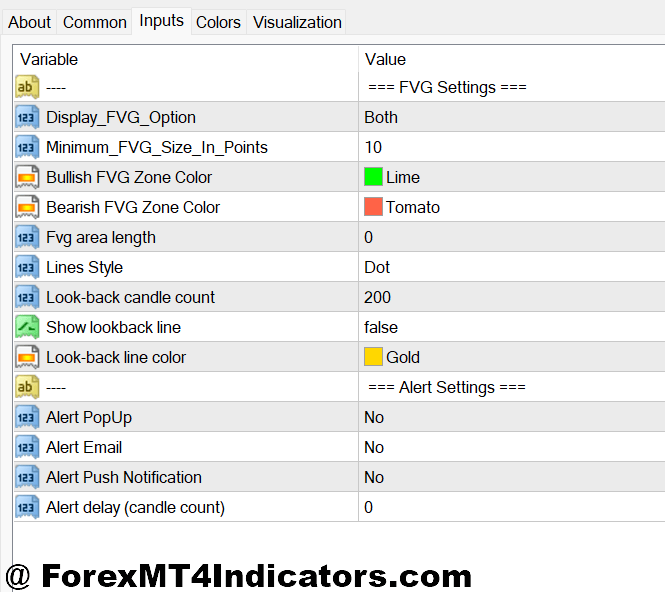
The indicator’s sensitivity determines how it interprets price swings. The “depth” parameter controls the minimum price movement required to register a new wave pivot. Setting depth to 12 on a 1-hour chart captures significant swings while filtering minor noise. Increase it to 25, and the indicator ignores smaller corrections, showing only major wave structures. Scalpers trading 5-minute charts might lower depth to 5 or 8 to catch micro-waves within larger patterns.
The “deviation” setting affects how much the price must move from the previous pivot to confirm a new wave turning point. Higher deviation (15-20) reduces false signals during consolidation but might miss early reversal points. Lower deviation (5-10) reacts faster but generates more relabeling as price chops back and forth.
Testing this on USD/JPY during volatile NFP release days shows the challenge. With low depth settings, the indicator might mark 8-10 waves within a single news spike that should arguably count as one extended wave 3. Traders need to adjust parameters based on volatility conditions—tighter settings for calm sessions, looser settings during high-impact news.
The Honest Assessment: Strengths and Real Limitations
Elliott Wave indicators excel at providing structure when markets trend clearly. During the sustained USD rally from October to December 2023, the indicator helped traders stay positioned with the wave 3 and wave 5 thrusts rather than exiting prematurely during wave 2 and wave 4 corrections. It’s particularly valuable for swing traders holding positions for days or weeks, giving them context about where the price sits within the bigger picture.
The limitations, though, are significant. Elliott Wave analysis is subjective—two experienced practitioners often count waves differently on the same chart. Automated indicators inherit this subjectivity through their programming assumptions. What the algorithm labels as the start of wave 1 might actually be the end of a complex corrective pattern from the previous cycle.
The indicator also repaints. As new price data arrives, previous wave labels can change. A formation labeled as wave 5 completion might be relabeled as wave 4 still in progress if the price breaks back above a key level. This makes backtesting results unreliable and can frustrate traders who plan trades around specific wave counts.
And it doesn’t work in range markets. When GBP/USD trades in a 150-pip range for two weeks, the indicator attempts to apply impulse wave labels to essentially random oscillations. Traders expecting five-wave patterns get chopped up as the price lacks directional conviction.
Comparing Elliott Waves to Momentum and Trend Systems

Unlike RSI or MACD, which measure momentum and divergence, Elliott Wave indicators focus purely on price structure. They don’t care about volume, momentum, or any other data—just the pattern of swings. This makes them complementary to oscillator-based systems rather than competitive.
Traders often combine Elliott analysis with Fibonacci retracements since Elliott himself identified specific ratios (38.2%, 50%, 61.8%) where wave 2 and wave 4 corrections typically end. When the indicator shows potential wave 4 completion near the 38.2% Fibonacci level of wave 3, and RSI bounces from oversold territory, the confluence increases confidence.
Compared to simpler trend indicators like moving average crossovers, Elliott Waves provide more granular cycle information. A 50-period MA crossover tells you the trend direction changed—Elliott patterns tell you whether that’s a minor wave 2 correction or the beginning of a major wave. That context matters for position sizing and risk management.
How to Trade with Elliot Wave Indicator MT4
Buy Entry

- Wait for wave 2 completion – Enter long when price retraces 50-61.8% of wave 1 and shows a reversal candlestick pattern; set stop loss 10-15 pips below wave 2 low on EUR/USD 1-hour charts.
- Wave 4 pullback entry – Buy during wave 4 corrections that hold above wave 1 high; target wave 5 extension at 1.618 Fibonacci level with 30-50 pip stop loss on 4-hour timeframes.
- Confirm with momentum divergence – Only take wave 3 buy signals when RSI or MACD shows bullish divergence during wave 2; skip entries if momentum confirms the downtrend.
- Trade after A-B-C correction ends – Enter long when wave C completes near 61.8% retracement of the previous five-wave rally; wait for 4-hour candle close above wave B high on GBP/USD.
- Risk 1-2% per wave trade – Size positions so wave 2 or wave 4 stop loss equals maximum 2% account risk; wave 3 offers the best risk-reward, but don’t overtrade it.
- Avoid choppy consolidations – Skip buy signals when the indicator relabels waves multiple times within 20-30 pips; Elliott patterns fail in tight ranges under 80 pips on daily charts.
- Use higher timeframe context – Only take 1-hour buy signals when the daily chart shows bullish wave structure; don’t fight against larger wave 4 or wave A corrections.
- Set wave 3 targets realistically – Take partial profits at 1.0 and 1.618 extensions; wave 3 often extends 161.8% of wave 1 length but can fail at 100% during weak trends.
Sell Entry

- Wave 2 resistance rejection – Short when wave 2 retraces 38.2-50% of wave 1 decline and forms a bearish reversal; place stop 15-20 pips above wave 2 high on EUR/USD 4-hour charts.
- Wave 5 exhaustion signals – Enter short when wave 5 reaches 100-161.8% extension with bearish divergence on RSI; this marks potential trend completion before A-B-C correction.
- Wave B rally failure – Sell when corrective wave B fails at 50-78.6% retracement and breaks below wave A low; use 4-hour chart confirmation on GBP/USD with 40-pip stops.
- Avoid selling wave 3 – Never short during strong wave 3 declines, even if oversold; wave 3 is typically the strongest move and can extend well beyond targets.
- Wait for five-wave completion – Only short after a clear five-wave decline completes; selling during wave 3 or wave 4 risks getting caught in extended fifth waves.
- Confirm pattern with structure – Skip sell signals when wave labels overlap chaotically or indicator repaints within 50 pips; wait for a clean wave structure on the daily timeframe.
- Trail stops on corrective waves – During A-B-C declines, trail stops below each wave’s low; wave C typically reaches 100-161.8% of wave A’s length before reversal.
- Risk management override – Exit immediately if position moves 50+ pips against you, regardless of wave count; indicator relabeling can invalidate trade thesis quickly during volatile sessions.
Key Takeaways for Practical Implementation
The Elliott Wave Indicator for MT4 offers traders a systematic framework for reading market cycles and psychology through price patterns. It works best as a contextual tool—showing where price might be within a larger structure—rather than a mechanical signal generator. Traders who combine wave analysis with momentum confirmation, support/resistance levels, and proper risk management can use it to improve entry timing and avoid counter-trend positions. That said, the indicator’s subjective nature, repainting tendencies, and poor performance in choppy conditions mean it demands skill and patience to use effectively.
Trading forex carries substantial risk. No indicator guarantees profits, and Elliott Wave analysis requires significant study to interpret correctly. The indicator handles the calculation and labeling, but traders must still judge whether the labeled pattern makes sense given current market conditions and whether it aligns with their broader analysis. For those willing to invest time mastering wave principles, it becomes a valuable lens for understanding market behavior—just don’t expect it to hand you perfect trades on a silver platter.
Recommended MT4/MT5 Broker
XM Broker
- Free $50 To Start Trading Instantly! (Withdraw-able Profit)
- Deposit Bonus up to $5,000
- Unlimited Loyalty Program
- Award Winning Forex Broker
- Additional Exclusive Bonuses Throughout The Year
- Exclusive 90% VIP Cash Rebates for all Trades!

Already an XM client but missing out on cashback? Open New Real Account and Enter this Partner Code: VIP90
(Free MT4 Indicators Download)



Enter Your Email Address below, download link will be sent to you.