

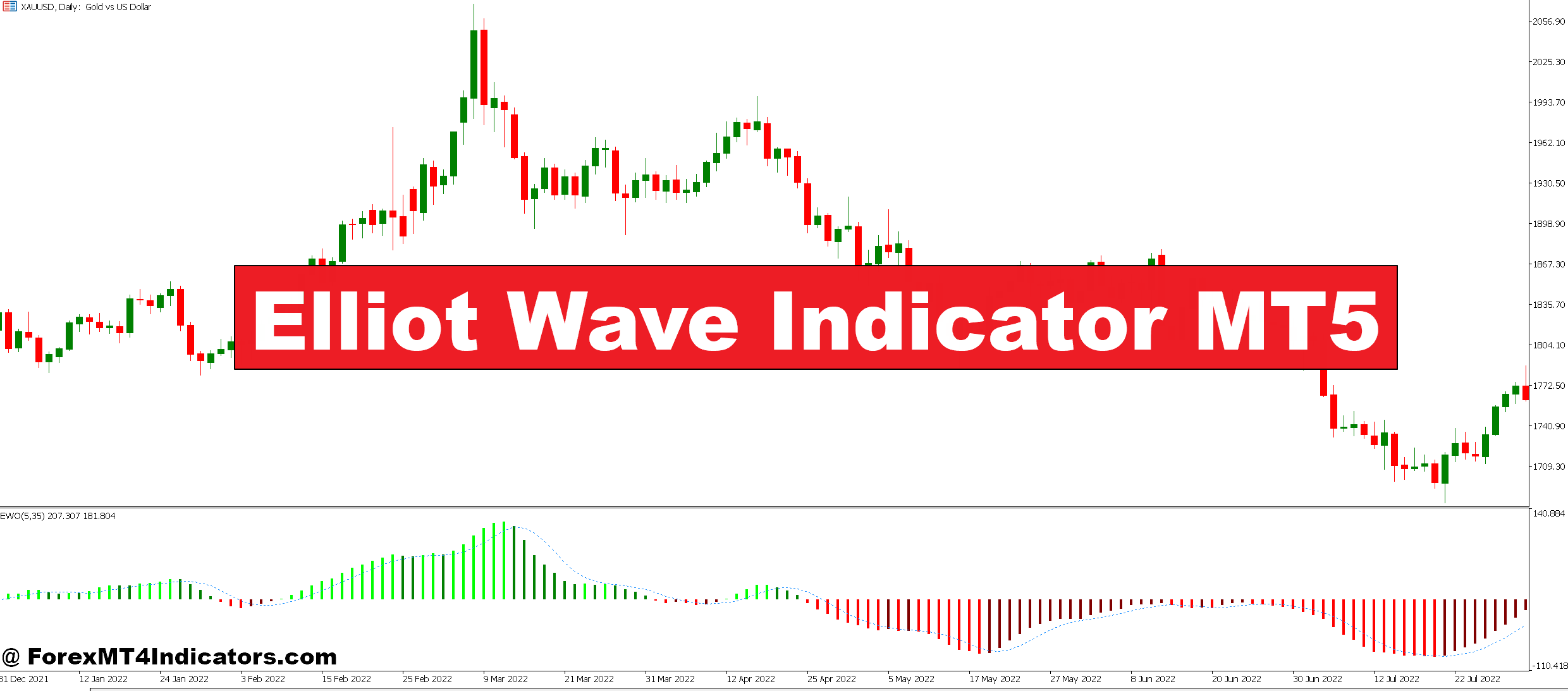
The Elliott Wave Indicator for MetaTrader 5 automatically identifies and labels wave patterns on price charts based on Ralph Nelson Elliott’s wave principle. Instead of manually counting impulse waves (1-2-3-4-5) and corrective waves (A-B-C), the indicator plots these structures in real-time as the price develops. It marks wave positions directly on the chart with numerical labels or letters, depending on whether the pattern is impulsive or corrective.
Here’s the thing: Not all Elliott Wave indicators work the same way. Some use zigzag calculations to identify swing highs and lows, then apply Elliott’s rules to label the structure. Others incorporate Fibonacci retracement levels, since Elliott Wave theory relies heavily on these ratios for projection targets and retracement zones. The MT5 version typically includes visual overlays showing where Wave 3 (usually the strongest) might extend or where Wave 4 should retrace to avoid overlapping Wave 1.
The Calculation Logic Behind Wave Detection
Most MT5 Elliott Wave indicators use a combination of swing point analysis and fractal geometry. The algorithm scans for pivot points—local highs and lows where price reverses direction. Once it identifies these pivots, it measures the distance and time between them, checking whether the structure fits Elliott’s specific rules.
For instance, Wave 3 can’t be the shortest impulse wave. Wave 2 shouldn’t retrace more than 100% of Wave 1. Wave 4 typically retraces 38.2% to 50% of Wave 3. The indicator continuously validates these rules as new bars form. When testing this on EUR/USD’s 4-hour chart during the September 2024 rally, the indicator correctly identified the five-wave structure before the corrective pullback, though it did repaint labels twice as Wave 4 developed.
That’s worth noting: Many Elliott Wave indicators repaint. As new price data arrives, the algorithm recalculates pivot points and may relabel previous waves. This isn’t a flaw—it’s how adaptive algorithms work—but it means traders shouldn’t backtest these indicators without accounting for hindsight bias.
Practical Trading Applications

The real value emerges when combining wave counts with other confirmation tools. Take a scenario on USD/JPY in March 2024. The indicator labeled a completed five-wave decline on the daily chart, followed by an ABC corrective bounce. Traders watching for Wave 5 completion could’ve entered long positions around 146.50, targeting the typical 61.8% Fibonacci retracement of the entire impulse wave. That setup delivered roughly 320 pips over two weeks.
But it doesn’t always work cleanly. Choppy markets create false wave counts. When Bitcoin crashed in August 2024, the indicator on BTC/USD struggled in the 1-hour timeframe, repeatedly relabeling waves as volatility spiked. The lesson? Elliott Wave analysis shines in trending markets with clear impulse and corrective structures. It struggles during consolidation or news-driven whipsaws.
Traders often use the indicator to spot divergence between wave counts and momentum. If the indicator shows Wave 5 extending higher but RSI is making lower highs, that’s a classic exhaustion signal. On GBP/JPY’s daily chart in July 2024, this exact setup preceded a 450-pip reversal.
Configuring Settings for Different Markets
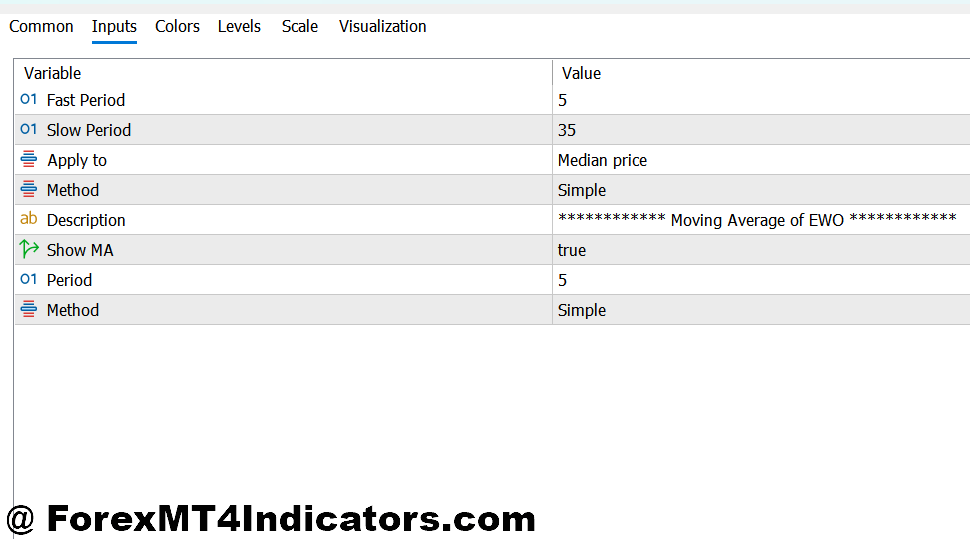
Most Elliott Wave indicators for MT5 include adjustable parameters like swing strength, minimum wave length, and label display options. The swing strength setting controls how sensitive the indicator is to price pivots. A lower value (3-5) catches more waves but generates noise on lower timeframes. A higher value (8-12) filters out minor swings, working better on daily or weekly charts.
For scalping EUR/USD on the 15-minute chart, traders might reduce swing strength to 4 and set a minimum wave length to 20 pips. This captures intraday wave structures without excessive repainting. Swing traders on daily charts should increase swing strength to 10 and minimum wave length to 150 pips, filtering out irrelevant fluctuations.
Currency pairs with smooth trends—like AUD/NZD or EUR/GBP—respond well to standard settings. Volatile pairs like GBP/JPY or exotic crosses need higher swing strength to avoid constant relabeling. Commodities like gold (XAU/USD) work best on 4-hour or daily timeframes where wave structures develop more clearly.
Strengths, Limitations, and Reality Check

The indicator’s biggest advantage is speed. Manually counting waves across multiple pairs and timeframes would consume hours daily. The automation lets traders scan for setups quickly, focusing on trade management rather than pattern identification. It also reduces emotional bias—the algorithm doesn’t “want” to see a pattern, it calculates based on mathematical rules.
That said, no indicator replaces sound judgment. Elliott Wave theory itself is subjective. Two experienced analysts can produce different wave counts on the same chart. An automated indicator makes assumptions programmed by its developer, which may differ from those of traditional Elliott Wave practitioners. Some indicators prioritize alternate counts, others stick to the most probable scenario.
Repainting remains the most significant limitation. A wave labeled as “3” might become “4” three bars later when the price invalidates the previous structure. Traders using these indicators for entry signals need strict confirmation—wait for the wave to complete and the next candle to confirm direction before entering.
The indicator also can’t predict black swan events or central bank interventions. In January 2015, the Swiss National Bank’s surprise policy change invalidated every Elliott Wave count on CHF pairs within minutes. Trading forex carries substantial risk. No indicator guarantees profits, and wave analysis doesn’t eliminate the possibility of total capital loss.
How It Compares to Manual Wave Counting
Experienced Elliott Wave traders often argue that manual analysis produces superior results because human judgment catches nuances algorithms miss. They’re not entirely wrong. Computers struggle with nested wave degrees—counting waves within waves—which skilled analysts handle intuitively.
But automated indicators offer consistency. They don’t get tired, distracted, or influenced by recent losses. For traders learning Elliott Wave theory, these indicators serve as training wheels, showing real-time examples of wave structures as they form. Over time, users develop an eye for patterns and may rely on the indicator less.
Compared to other trend-following tools like moving averages or MACD, Elliott Wave indicators provide earlier signals. A completed Wave 2 retracement offers entry before most momentum indicators trigger. However, this comes with higher false signals during consolidation phases when wave structures break down.
How to Trade with Elliot Wave Indicator MT5
Buy Entry

- Wave 2 completion at support – Enter long when the indicator labels Wave 2, and price bounces from a key support level with a bullish engulfing candle; ideal on EUR/USD 4-hour chart with 20-30 pip stop below the Wave 2 low.
- Wave 4 pullback entry – Buy during Wave 4 retracement when price pulls back 38.2%-50% of Wave 3 on the GBP/USD daily chart; wait for bullish reversal candlestick before entering to avoid catching a falling knife.
- ABC correction completion – Go long when the corrective ABC pattern completes and price breaks above the Wave B high with volume confirmation; risk 1-2% of account with stop below Wave C low.
- Wave 3 momentum breakout – Enter on Wave 3 label if it breaks above Wave 1 high with RSI above 50; this is typically the strongest wave, offering 100+ pip moves on major pairs like EUR/USD.
- Skip choppy ranges – Don’t trade if the indicator keeps relabeling waves within a 50-pip range on the 1-hour chart; wait for clear directional structure to develop before committing capital.
- Fibonacci confluence confirmation – Only take the buy signal if Wave 2 retracement aligns with 61.8% or 78.6% Fibonacci level; this doubles your probability on USD/JPY swing trades.
- Avoid news-driven spikes – Never enter during NFP or central bank announcements, even if Wave 2 appears complete; wait 2-4 hours post-news for the indicator to stabilize and avoid repainting chaos.
- Set profit at Wave 5 projection – Target the 161.8% Fibonacci extension of Wave 1 for your take-profit on Wave 3 entries; typically yields 80-150 pips on GBP/USD 4-hour setups.
Sell Entry

- Wave 5 exhaustion at resistance – Short when the indicator completes Wave 5 at a major resistance zone with bearish divergence on RSI; use 25-35 pip stop above the Wave 5 high on the EUR/USD daily chart.
- Failed Wave 3 extension – Enter short if price can’t break above Wave 3 and the indicator relabels it as a corrective structure; this signals trend weakness worth 60+ pips on GBP/JPY.
- Wave B rally fade – Sell when Wave B of a correction reaches 50%-61.8% retracement of the previous decline; expect Wave C to push lower for 100-200 pips on trending pairs.
- Break of Wave 1 low invalidation – Go short if price violates the Wave 1 low after completing what looked like Wave 2; this invalidates the bullish count and often triggers 80+ pip drops.
- Don’t short strong Wave 3s – Never enter sell positions when the indicator shows Wave 3 forming with a steep angle and increasing momentum; you’re fighting the strongest part of the trend.
- Overbought Wave 5 divergence – Short when Wave 5 makes new highs but RSI makes lower highs on the 4-hour chart; combine with 1.5% risk and 2:1 reward ratio for solid setups.
- Avoid range-bound markets – Skip sell signals if price is chopping between 40-60 pips on the 1-hour chart with constant wave relabeling; Elliott Wave needs trending conditions to work properly.
- Target previous Wave 4 low – Set take-profit at the Wave 4 low from the previous impulse structure; this typically offers 70-120 pip reward on major pairs during ABC corrections.
Conclusion
Successful traders treat the Elliott Wave indicator as one component in a broader system. They confirm wave counts with support and resistance levels, volume analysis, or candlestick patterns. If the indicator shows a completed Wave 5 at a major resistance zone with bearish divergence on RSI, that’s a high-probability setup. The same Wave 5 in the middle of nowhere? Less compelling.
Risk management matters more than wave counts. Even perfect wave identification fails if position sizing is reckless or stop losses are too tight. Smart traders risk 1-2% per trade regardless of how clean the Elliott Wave pattern looks.
The indicator works best for traders who already understand Elliott Wave theory. Without that foundation, the labels and numbers on the chart mean little. Reading Elliott’s original work or studying modern practitioners like Robert Prechter provides context that transforms the indicator from a confusing mess of numbers into a practical forecasting tool.
Trading forex carries substantial risk. No indicator, including Elliott Wave tools, guarantees profits. Markets can remain irrational longer than traders can stay solvent, and automated wave counts don’t eliminate the possibility of catastrophic losses. Use proper position sizing, maintain realistic expectations, and never risk capital you can’t afford to lose.
Recommended MT4/MT5 Broker
XM Broker
- Free $50 To Start Trading Instantly! (Withdraw-able Profit)
- Deposit Bonus up to $5,000
- Unlimited Loyalty Program
- Award Winning Forex Broker
- Additional Exclusive Bonuses Throughout The Year
- Exclusive 90% VIP Cash Rebates for all Trades!

Already an XM client but missing out on cashback? Open New Real Account and Enter this Partner Code: VIP90
(Free MT4 Indicators Download)


Enter Your Email Address below, download link will be sent to you.