

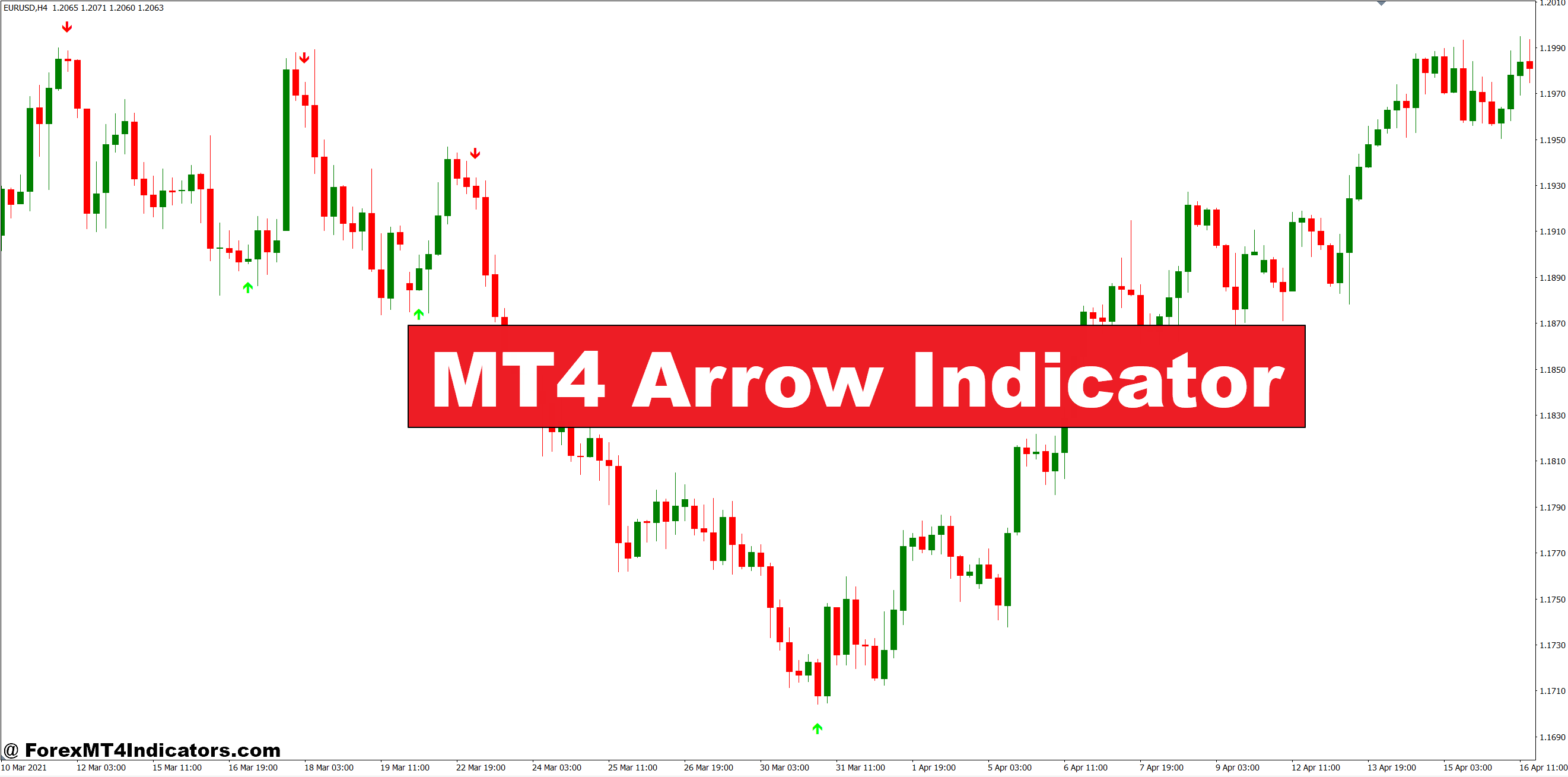
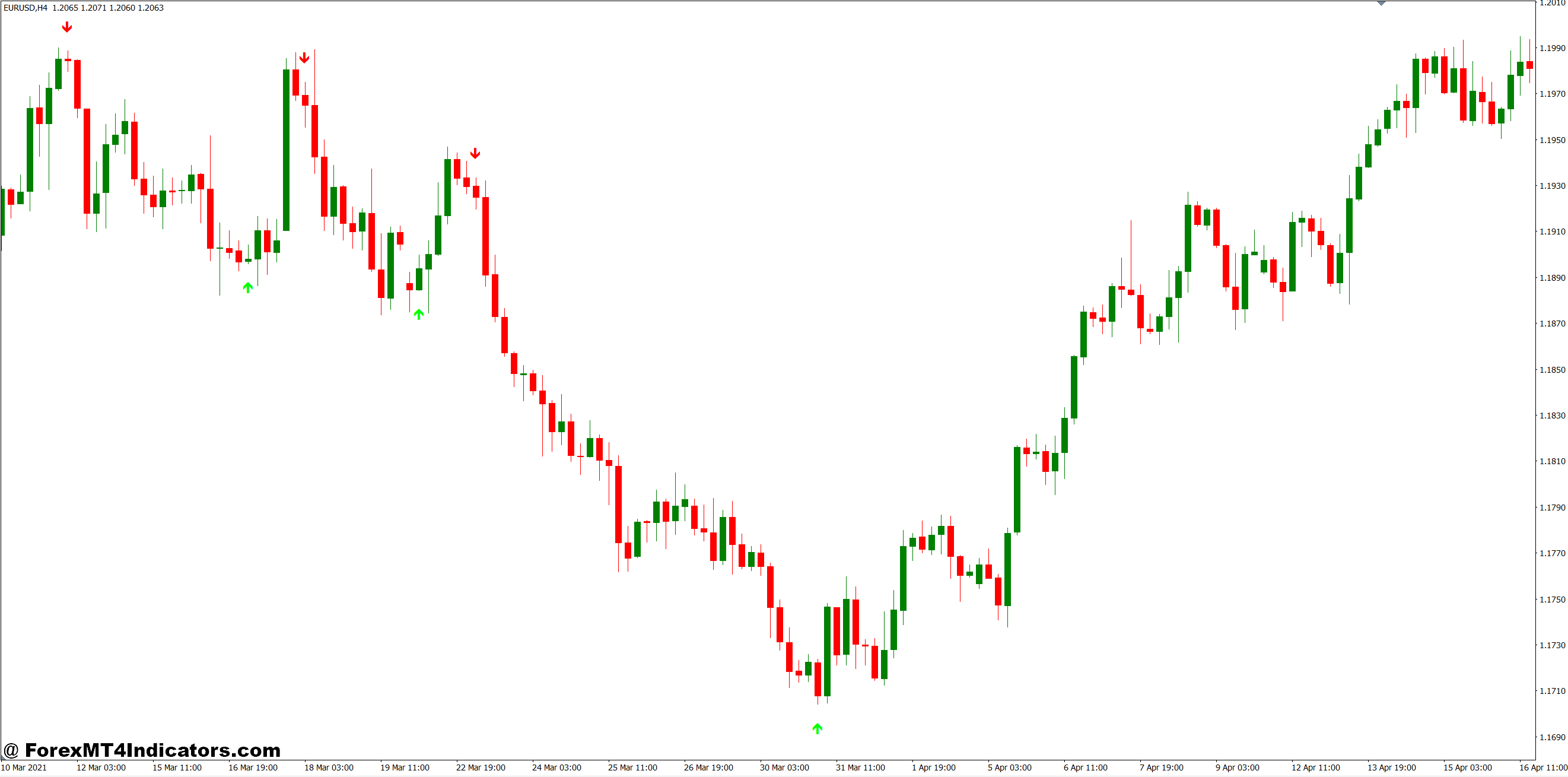
An MT4 arrow indicator is a technical analysis tool that displays directional arrows on price charts when specific trading conditions are met. The arrows typically appear as up-pointing markers for potential buy signals and down-pointing markers for potential sell signals.
These indicators run algorithms in the background—anything from simple moving average crossovers to complex multi-timeframe analysis. When the programmed criteria align, the indicator paints an arrow at that candlestick. Think of it as a visual alert system that processes technical calculations faster than any human could manually.
Most arrow indicators fall into three categories. Trend-following types generate signals based on directional momentum—they might use the relationship between the 50-period and 200-period moving averages to spot trend changes. Mean-reversion indicators fire arrows when price stretches too far from statistical norms, anticipating a snap back to equilibrium. Pattern-recognition indicators scan for classic chart formations like double tops, head and shoulders, or candlestick patterns.
The coding typically happens in MQL4, MetaTrader’s programming language. A trader or developer writes conditions—”if RSI crosses above 30 AND price closes above the 20 EMA, then plot buy arrow”—and the indicator executes these instructions automatically on every new candle.
How Traders Apply Arrow Indicators in Real Markets
The GBP/JPY on a 15-minute chart offers a solid testing ground. This pair moves with enough volatility to produce clear signals but enough liquidity to avoid excessive slippage. When testing a momentum-based arrow indicator on this pair during the overlap of Asian and European sessions, specific patterns emerge.
Say the indicator plots a buy arrow at 148.20. Smart traders don’t just market-order in blindly. They check confluence factors first. Does the arrow align with a previous support level? Is it near the daily pivot point? What’s the broader trend on the 4-hour chart? The arrow serves as the initial alert, not the complete trading plan.
One practical approach: wait for a second confirmation. If an arrow appears, watch the next 2-3 candles. Does price respect the signal direction, or does it immediately reverse? A buy arrow followed by strong bearish candles suggests a false signal. But when price consolidates briefly then pushes higher, that’s your confirmation.
Risk management matters more than signal accuracy. A trader using arrow indicators on USD/CAD might set stops 20 pips below the arrow for buy signals, targeting a 2:1 reward-to-risk ratio. On a standard lot, that’s managing $200 of risk for $400 of potential profit. The math only works if win rate exceeds 40% after accounting for spreads and commissions.
Customizing Settings for Different Trading Styles
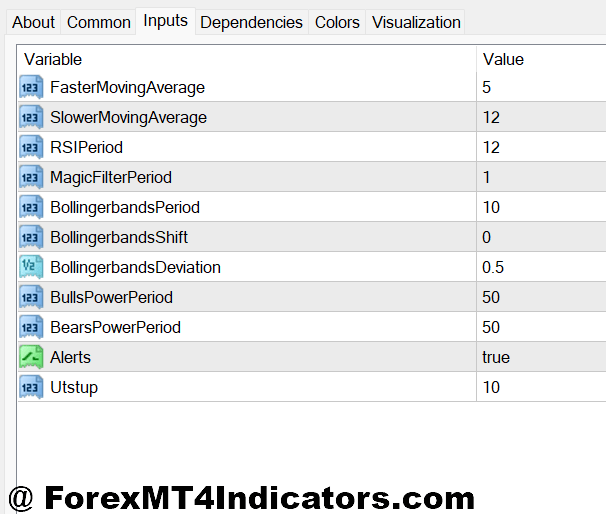
Default parameters rarely suit every trader’s strategy. Most arrow indicators include adjustable settings—sensitivity levels, lookback periods, confirmation requirements. Scalpers trading the 1-minute chart need different configurations than swing traders analyzing daily candles.
A scalper on EUR/JPY might tighten sensitivity to catch quick 10-15 pip moves. They’ll increase signal frequency by lowering the threshold values. This produces more arrows, including more false signals, but speed matters more than accuracy for scalping. The goal is capturing multiple small wins throughout the session.
Swing traders take the opposite approach. Trading GBP/USD on the 4-hour or daily chart, they’ll dial up confirmation requirements. Maybe the indicator needs three consecutive conditions met before plotting an arrow. This filters out noise and generates fewer but higher-probability signals. A swing trader might see only 2-3 arrows per week on a single pair—but each one carries more weight.
Timeframe alignment makes a difference. Running the same arrow indicator on a 5-minute chart versus a 1-hour chart produces drastically different results. The 5-minute version might fire 50 signals in a day; the hourly version might show 5. Neither is inherently better—it depends on trading style, available screen time, and risk tolerance.
Currency pair characteristics matter too. The AUD/USD typically trends smoother than the GBP/NZD. An arrow indicator optimized for trending conditions might work beautifully on Aussie-Dollar but produce whipsaws on Pound-Kiwi during range-bound periods.
The Real Advantages and Honest Limitations
Arrow indicators excel at removing emotion from trade entries. That split-second hesitation—”Should I enter now or wait?”—vanishes when a clear visual signal appears. They’re especially valuable for part-time traders who can’t stare at charts for eight hours straight. The indicator watches the market continuously, alerting only when conditions align.
Speed is another benefit. Scanning multiple currency pairs for setup patterns manually takes time. An arrow indicator processes 15 pairs simultaneously, instantly highlighting opportunities across the entire forex market. During high-impact news events like Non-Farm Payroll releases, that speed advantage becomes critical.
But limitations exist. Arrow indicators are backward-looking by design—they analyze historical price data to predict future moves. That works until market dynamics shift. An indicator optimized for trending markets from 2022-2023 might struggle during the choppy, range-bound conditions of 2024.
Repainting is the biggest credibility issue. Some poorly-designed indicators redraw arrows after new price data comes in. A buy signal appears at 1.0850, you enter the trade, then the indicator recalculates and removes that arrow from history. Suddenly your trade entry looks random because the signal vanished. Always test whether an indicator repaints before using it with real money.
False signals are unavoidable. Even the best arrow indicator produces losing trades. A study testing a popular MACD-based arrow indicator on EUR/USD over six months showed a 58% win rate—solid, but that means 42% of signals lost money. No indicator “always” works or “never” fails. Trading forex carries substantial risk. No indicator guarantees profits.
Overreliance is another trap. Traders who follow arrows blindly without understanding price action context typically underperform those who use indicators as one input among several. The arrow says “buy,” but broader market structure screams “downtrend.” Who do you trust?
How Arrow Indicators Compare to Alternative Tools
Standard oscillators like RSI or Stochastic provide similar information but require interpretation. An RSI reading of 32 suggests oversold conditions—but does that mean buy now or wait for confirmation? Arrow indicators make the decision explicit, which appeals to newer traders still learning technical analysis.
Compared to price action trading, arrows offer consistency. A price action trader might identify a pin bar reversal pattern, but another trader viewing the same chart might not. Arrow indicators apply the same criteria every time, removing subjective interpretation. That said, experienced price action traders often outperform indicator-based systems because they read nuance and context that algorithms miss.
Moving average crossovers and arrow indicators based on MA crossovers deliver similar signals. The difference is purely visual. Some traders prefer watching two lines intersect; others want the simplicity of an arrow saying “here.” Neither approach is superior—it’s personal preference and cognitive style.
Automated trading systems take arrow logic further by also executing trades automatically. An arrow indicator requires human discretion to act on signals. An Expert Advisor (EA) removes that discretion entirely. The middle ground—arrow indicators—offers visual guidance while preserving trader control over position sizing and risk management.
How to Trade with MT4 Arrow Indicator
Buy Entry

- Wait for confirmation candle close – Don’t enter immediately when the up arrow appears on EUR/USD 1-hour charts; wait for the current candle to close above the arrow level to avoid false breakouts that reverse within 5-10 pips.
- Check higher timeframe trend – Only take buy arrows on the 15-minute chart when the 4-hour chart shows an established uptrend; trading against the daily trend reduces win rate to below 40%.
- Set stop loss 15-20 pips below arrow – Place your stop beneath the most recent swing low on GBP/USD pairs to give the trade room to breathe while protecting against major reversals.
- Avoid buy signals during major resistance – Skip up arrows that appear within 10 pips of strong daily or weekly resistance levels; price typically stalls or reverses at these zones regardless of indicator signals.
- Target 1.5:1 minimum reward-to-risk – If risking 20 pips on a EUR/JPY buy signal, aim for at least 30 pips profit to maintain positive expectancy even with a 50% win rate.
- Confirm with price action structure – Take buy arrows that form at previous support levels or after a higher low pattern; random arrows in the middle of ranges often lead to whipsaw losses.
- Skip signals during high-impact news – Ignore buy arrows that appear 30 minutes before or after NFP, FOMC, or central bank announcements when spread widens to 5-8 pips and volatility spikes unpredictably.
- Watch for bullish candlestick patterns – Prioritize buy arrows accompanied by engulfing candles or pin bars on the 4-hour USD/CAD chart; these add 10-15% to overall win probability.
Sell Entry

- Confirm arrow with downward momentum – Only take sell signals on GBP/JPY when the preceding 2-3 candles show lower highs; arrows appearing after extended upward moves often trap traders.
- Place stops 20-25 pips above arrow – Position your stop loss above the recent swing high on volatile pairs like GBP/USD to account for normal market fluctuation before the downmove continues.
- Verify daily chart direction – Sell arrows on 1-hour EUR/USD charts work best when the daily timeframe shows a clear downtrend; counter-trend signals have less than 35% success rate.
- Ignore arrows near major support – Skip sell signals within 15 pips of daily pivot points, psychological levels (1.1000, 1.2000), or previous support zones where buyers typically defend aggressively.
- Scale position size with volatility – Reduce lot size by 50% when ATR (Average True Range) on the 4-hour chart exceeds 100 pips; increased volatility means wider stops and higher risk per trade.
- Demand bearish price structure – Take sell arrows that align with lower highs and lower lows on USD/CHF; random arrows during sideways consolidation produce choppy, unprofitable trades.
- Avoid trading during Asian session lulls – Skip sell signals between 10 PM – 2 AM EST when liquidity drops and spread on EUR/GBP widens to 3-4 pips; wait for London open.
- Exit if price closes above arrow within 3 candles – Cut losing trades quickly on the 15-minute chart if price reverses and closes 10+ pips above your sell arrow entry; the signal has failed.
Final Thoughts on Using Arrow Indicators Effectively
Arrow indicators serve best as confirmation tools within a broader trading system. They shouldn’t be the sole reason for entering trades, but they can validate decisions supported by multiple factors. That EUR/USD setup at major support, showing bullish divergence on the RSI, backed by an arrow signal? That’s a high-probability opportunity worth taking.
Test any indicator thoroughly on demo accounts before risking capital. Track results honestly—not just win rate, but average win size versus average loss size, maximum drawdown, and performance during different market conditions. Data reveals truth that gut feelings miss.
The most successful traders using arrow indicators maintain discipline and realistic expectations. They know arrows provide an edge, not a guarantee. They manage risk on every single trade. They continuously refine their approach based on performance data, not emotion.
Can arrow indicators improve forex trading results? Absolutely—when traders use them as decision-support tools rather than magic solutions. The arrows don’t predict the future; they simply highlight when current conditions match historical patterns that previously preceded price moves. What traders do with that information determines whether those signals translate into profitable trades or expensive lessons.
Recommended MT4/MT5 Broker
XM Broker
- Free $50 To Start Trading Instantly! (Withdraw-able Profit)
- Deposit Bonus up to $5,000
- Unlimited Loyalty Program
- Award Winning Forex Broker
- Additional Exclusive Bonuses Throughout The Year
- Exclusive 90% VIP Cash Rebates for all Trades!

Already an XM client but missing out on cashback? Open New Real Account and Enter this Partner Code: VIP90
(Free MT4 Indicators Download)


Enter Your Email Address below, download link will be sent to you.