

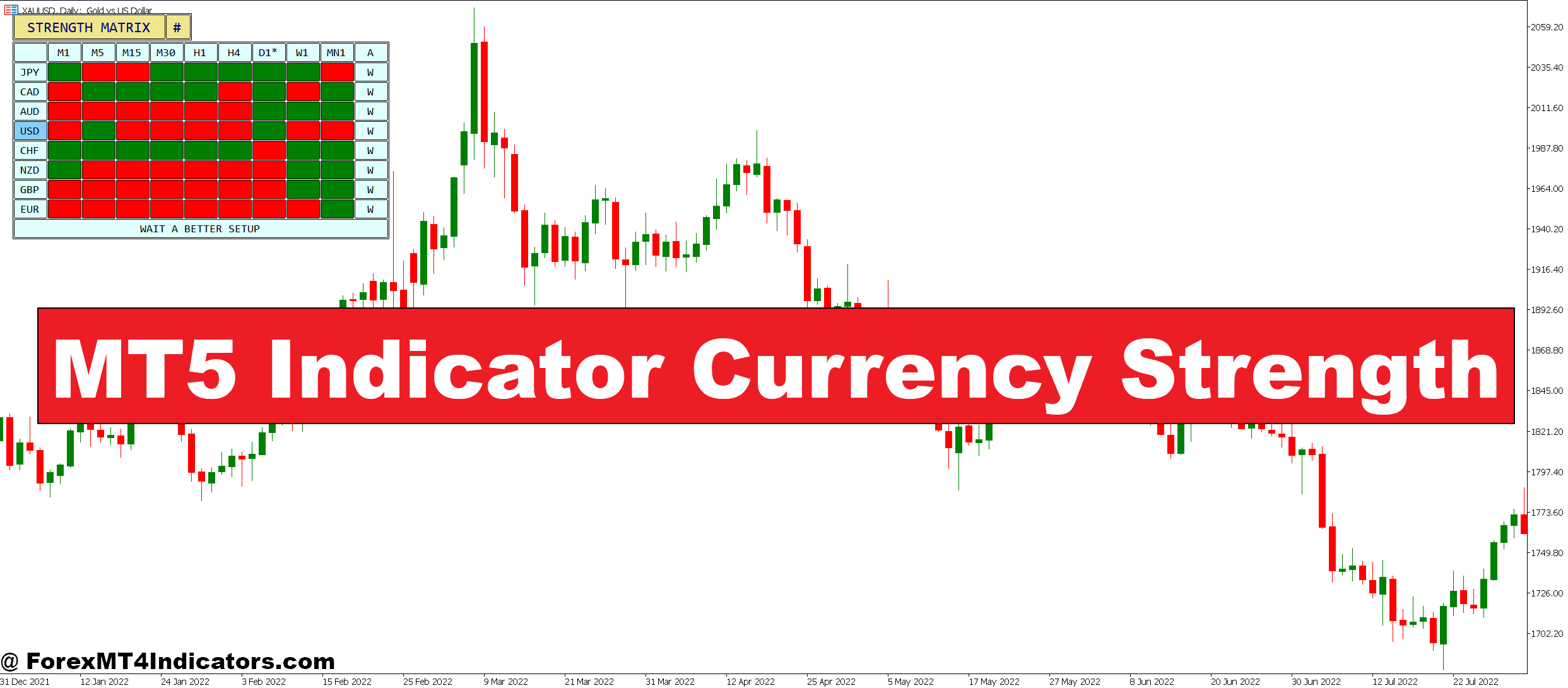
A currency strength indicator measures the relative performance of individual currencies against a basket of others. Unlike traditional indicators that analyze price action on a single pair, these tools break down the eight major currencies (USD, EUR, GBP, JPY, CHF, CAD, AUD, NZD) and rank their strength independently.
Here’s how this changes your perspective: When you look at GBP/USD on your chart, you’re seeing one data stream—the relationship between two currencies. But a currency strength indicator shows you two separate data streams. The pound might be up 0.8% while the dollar is down 0.3%. That’s a very different scenario than the pound being up 0.2% and the dollar being down 0.9%, even though both could show GBP/USD rising.
The calculation typically involves comparing each currency against all others over a specific period. If you’re using a 24-hour calculation window, the indicator measures how much the euro gained or lost against the dollar, pound, yen, and so on, then averages these movements to produce a single strength value. Some versions normalize this to a scale of 0-100, while others use percentage changes.
How MT5 Currency Strength Indicators Calculate Values
Most MT5 currency strength indicators use one of two calculation methods. The simpler approach takes the percentage change of each currency against all others in the basket. For instance, if EUR/USD is up 0.5%, EUR/JPY is up 0.8%, and EUR/GBP is down 0.2%, the indicator averages these movements to show the euro’s overall strength.
The more sophisticated method—and the one professional traders prefer—weights these calculations by trading volume or market share. Since EUR/USD represents roughly 24% of forex volume while EUR/NZD might be less than 1%, giving them equal weight distorts reality. Volume-weighted indicators provide a more accurate picture of actual currency strength.
The refresh rate matters too. Some indicators recalculate with every tick, creating a jittery, noise-filled line that’s tough to read. Others update every 5 or 15 minutes, smoothing out the microstructure noise while staying responsive enough for day trading. When testing the Currency Strength 28 indicator on a 4-hour EUR/USD chart during the March 2024 Fed decision, the 15-minute refresh rate caught the dollar’s reversal within 30 minutes, while the tick-by-tick version gave three false signals in the same window.
Trading Applications: Putting Strength to Work
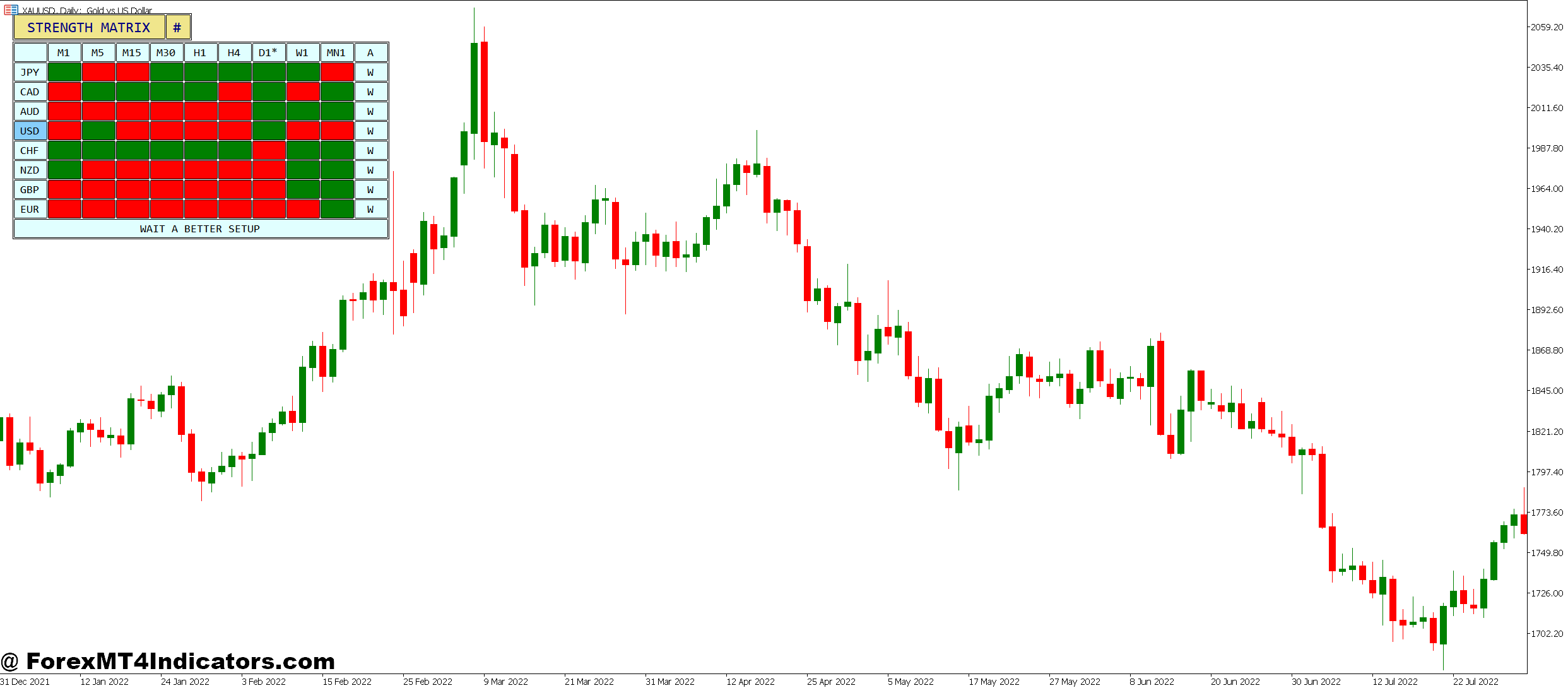
The most straightforward application is trend confirmation. Say you’re eyeing a long position on AUD/JPY based on a bullish flag pattern. Before entering, check the strength indicator. If the Aussie dollar shows strong momentum (above 70 on a 0-100 scale) while the yen sits weak (below 30), that’s confirmation. Your technical setup aligns with underlying currency dynamics.
But here’s where it gets interesting: divergence trades. On August 14th, 2024, EUR/GBP was grinding sideways between 0.8550 and 0.8580, looking dead. The currency strength indicator told a different story. The euro was weakening steadily while the pound was strengthening. Even though the pair hadn’t broken out yet, that divergence signaled the coil was winding tighter. When EUR/GBP finally broke down through 0.8550, the strength indicator had already given you a 4-hour heads up.
Pair selection becomes systematic rather than random. Instead of scrolling through 28 pairs hoping to spot a setup, you identify the strongest and weakest currencies, then trade the pair that combines them. If the CAD is showing maximum strength at 95 while the NZD is weakest at 15, you don’t need to wait for NZD/CAD to paint a perfect chart pattern—the strength differential is your signal. Just wait for a reasonable entry on any timeframe you trade.
Risk management improves too. When you’re holding EUR/USD long and the euro’s strength line starts rolling over while still in profit, that’s your cue to tighten stops or take partial profits. You’re not waiting for price to reverse and give back gains—the strength indicator is showing you the momentum shift before it fully reflects in price.
Customization and Settings for Different Trading Styles
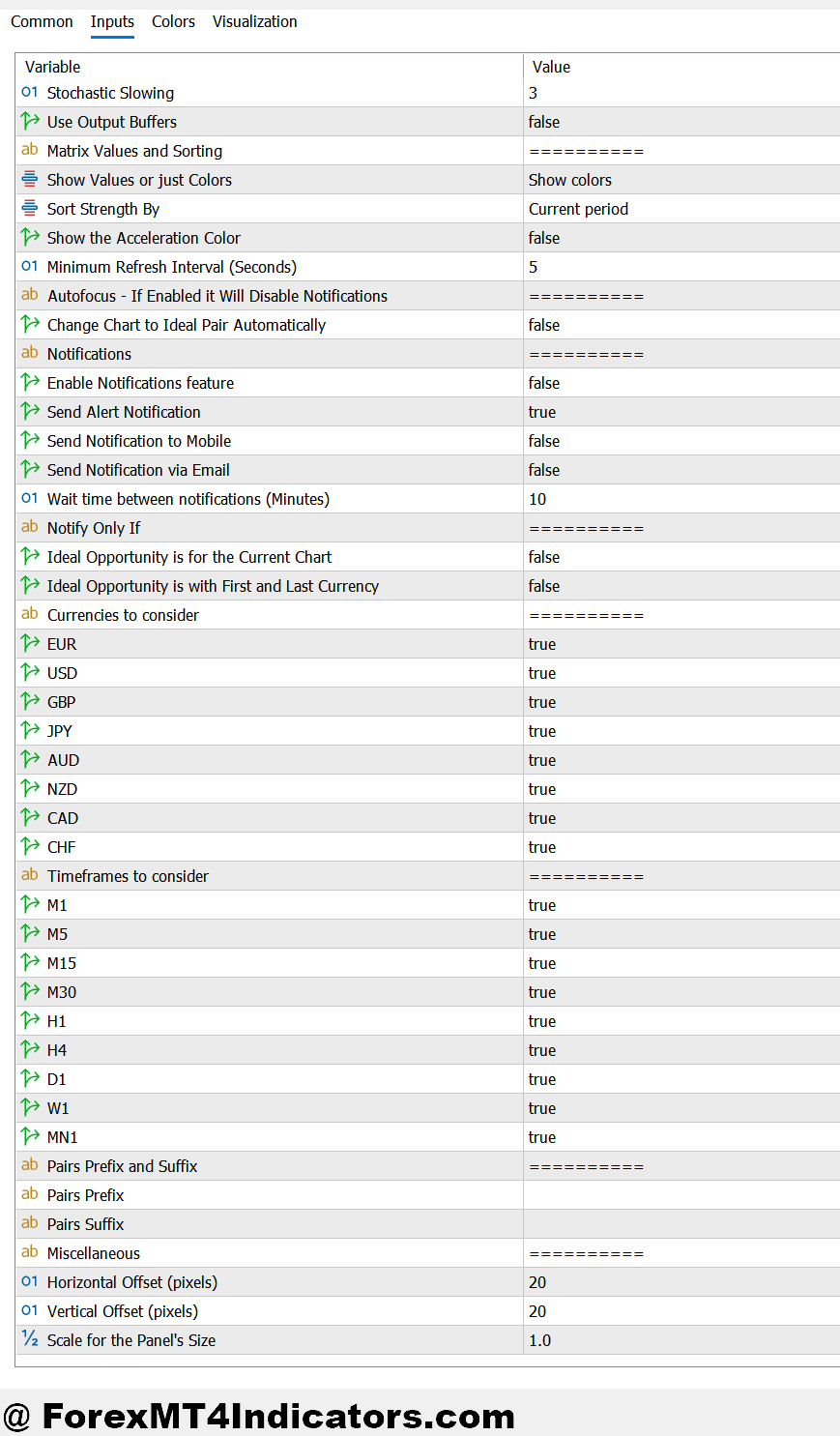
The calculation period is your primary lever. Scalpers might use a 1-hour or 4-hour lookback period, making the indicator hyperresponsive to short-term shifts. This works great on the 1-minute or 5-minute chart for catching quick intraday swings. Swing traders typically prefer 24-hour or 48-hour calculations, filtering out noise and focusing on sustained strength trends.
Smoothing settings matter more than most traders realize. A raw, unsmoothed strength line jumps around with every news blip and random market fluctuation. Apply a simple moving average—say, a 3-period or 5-period SMA—and suddenly the signal becomes readable. Test this yourself: Load the indicator twice on your chart, one smoothed and one raw. The difference is striking.
Currency basket composition can be adjusted too. The standard eight majors work fine for most trading, but some indicators let you add or remove currencies. If you never trade the Swiss franc or New Zealand dollar, removing them can sharpen the calculation for the currencies you actually care about.
Visual settings shouldn’t be overlooked. Some traders prefer line-based displays showing all eight currencies simultaneously—it’s comprehensive but can look like a bowl of spaghetti. Others use bar charts or gauges showing only the current strength values, which is cleaner but loses the historical context. Find what your brain processes fastest, because information you can’t quickly interpret is useless during live trading.
Strengths and Limitations: The Honest Assessment

The primary advantage is clarity. You stop guessing about currency dynamics and start knowing. When EUR/USD, EUR/JPY, and EUR/GBP are all moving differently, the indicator tells you whether the euro is genuinely strong or just benefiting from a weak dollar. That’s powerful.
Correlation trading becomes possible. Once you know the pound is crushing it and the yen is weak, you can look for GBP/JPY setups across multiple timeframes. Same analysis, multiple opportunities. This multiplies your edge without multiplying your research time.
That said, currency strength indicators aren’t crystal balls. They’re lagging by nature—they measure what’s already happened to calculate current strength. During flash crashes or major news events, the indicator might show strength building when the market is already pivoting. Don’t confuse measurement with prediction.
False signals happen, especially in ranging markets. If currencies are all bunched together in the middle of the strength scale, the indicator isn’t telling you much. Trading based on a 52 vs. 48 strength differential is like flipping a coin. You need meaningful separation—at least 20-30 points on a 100-point scale—to have conviction.
The indicator also doesn’t account for fundamental drivers. The dollar might show weakening strength, but if the Fed is about to hike rates unexpectedly, technical strength readings won’t save you. Currency strength indicators work best when combined with awareness of the economic calendar and major market themes.
Comparing Currency Strength to Other Approaches
Traditional RSI or MACD indicators applied to a single pair show you momentum for that relationship. Currency strength indicators show you the components of that relationship. They’re complementary, not competitive. An RSI might tell you EUR/USD is overbought while the strength indicator shows both currencies strengthening—meaning the uptrend has fuel left despite stretched technicals.
Relative strength compared to correlation matrices offers similar information but different usability. Correlation matrices are great for understanding relationships between pairs, but they don’t tell you which individual currency is driving those relationships. Currency strength indicators cut through that complexity with a single, readable output.
Some traders use index charts—like the Dollar Index (DXY)—for similar purposes. These work, but they’re limited to specific currencies and use weighted baskets that might not match your trading focus. DXY weighs the euro at 57.6% but gives the yen only 13.6%. If you’re trading yen crosses primarily, that weighting skews your perspective.
How to Trade with MT5 Indicator Currency Strength
Buy Entry
- Strength divergence above 30 points – Enter long when your base currency shows 65+ strength while quote currency sits below 35 on the 0-100 scale (example: buy GBP/JPY when pound hits 70 and yen drops to 32).
- Confirm with price action breakout – Wait for the pair to break above a 4-hour resistance level when strength readings support the move; don’t buy into resistance just because strength looks good.
- Rising strength line for 3+ bars – Enter when your target currency’s strength line climbs for at least three consecutive 15-minute or 1-hour candles, showing sustained momentum, not just a spike.
- Risk 1-2% maximum per trade – Even with perfect strength readings, limit position size so a 30-pip stop loss on EUR/USD equals no more than 2% of your account.
- Avoid trades when both currencies strengthen – skip the setup if EUR/USD strength shows the euro at 68 and the dollar at 71; you’re trading a coin flip, not a directional edge.
- Best during the London/New York overlap – Take buy signals between 8 AM and 12 PM EST when volume is highest; strength readings during Asian low-volume sessions tend to produce more false signals.
- Set stops below recent swing low – Place your stop 5-10 pips below the last 1-hour or 4-hour swing point, not arbitrary numbers; let market structure protect you.
- Exit partial at 1.5R, trail the rest – Take 50% profit when you’re up 45 pips on a 30-pip risk trade, then move stop to breakeven and let strength guide the exit on remaining position.
Sell Entry
- Weakness divergence below -30 points – Enter short when your base currency drops below 35 strength while quote currency rises above 65 (example: sell AUD/USD when Aussie hits 28 and dollar reaches 73).
- Strength line rolling over from peaks – Sell when base currency strength tops out above 75 and starts declining for 2+ consecutive bars on your trading timeframe, signaling exhaustion.
- Pair at resistance with weak base – Short EUR/GBP at daily resistance when euro strength shows 45 or below and pound strength exceeds 60; technical and strength align.
- Skip ranging markets entirely – Don’t sell when all eight currencies cluster between 45-55 strength; wait for a clear separation of at least 25-30 points between the strongest and weakest.
- Time entries after major news releases – Avoid selling 15 minutes before and after NFP, Fed decisions, or ECB meetings; strength indicators lag during volatile spikes, and you’ll get slippage.
- Use tighter stops on lower timeframes – If trading 5-minute charts with strength confirmation, keep stops 15-20 pips max; longer timeframes like 4-hour can handle 40-50 pip stops.
- Watch for strength convergence as exit – Close shorts when the weak currency’s strength starts rising and approaches the strong currency’s declining strength, even if the price hasn’t hit your target.
- Never trade against all-time strength extremes – Don’t sell USD pairs when dollar strength hits 90+ on the scale; wait for a pullback to 75-80 or risk getting run over by the freight train.
Conclusion
Currency strength indicators give traders X-ray vision into the forex market’s skeleton, revealing which currencies are actually moving the pairs on your charts. They won’t replace solid technical analysis or fundamental awareness, but they add a layer of insight that most retail traders completely miss.
Start by adding a currency strength indicator to your MT5 platform and just watch it for a week. Don’t trade off it yet—just observe how strength shifts before price breaks out, or how ranging pairs often show converging strength readings. Notice which currency tends to lead moves during your trading session. That observational period will teach you more than any article can.
The real edge comes from combining strength readings with your existing strategy. Use it to filter trades, picking setups where the underlying currencies support your directional bias. Use it to manage exits, closing positions when the strength starts deteriorating. And use it for pair selection, focusing your attention where the true opportunities are.
Trading forex carries substantial risk. No indicator guarantees profits, and currency strength tools can produce false signals during ranging markets or unexpected news events. They’re one piece of information in your decision-making process, not a standalone system. But for traders willing to add this perspective to their analysis, currency strength indicators reveal patterns and opportunities that price charts alone keep hidden.
Recommended MT4/MT5 Broker
XM Broker
- Free $50 To Start Trading Instantly! (Withdraw-able Profit)
- Deposit Bonus up to $5,000
- Unlimited Loyalty Program
- Award Winning Forex Broker
- Additional Exclusive Bonuses Throughout The Year
- Exclusive 90% VIP Cash Rebates for all Trades!

Already an XM client but missing out on cashback? Open New Real Account and Enter this Partner Code: VIP90
(Free MT4 Indicators Download)


Enter Your Email Address below, download link will be sent to you.