

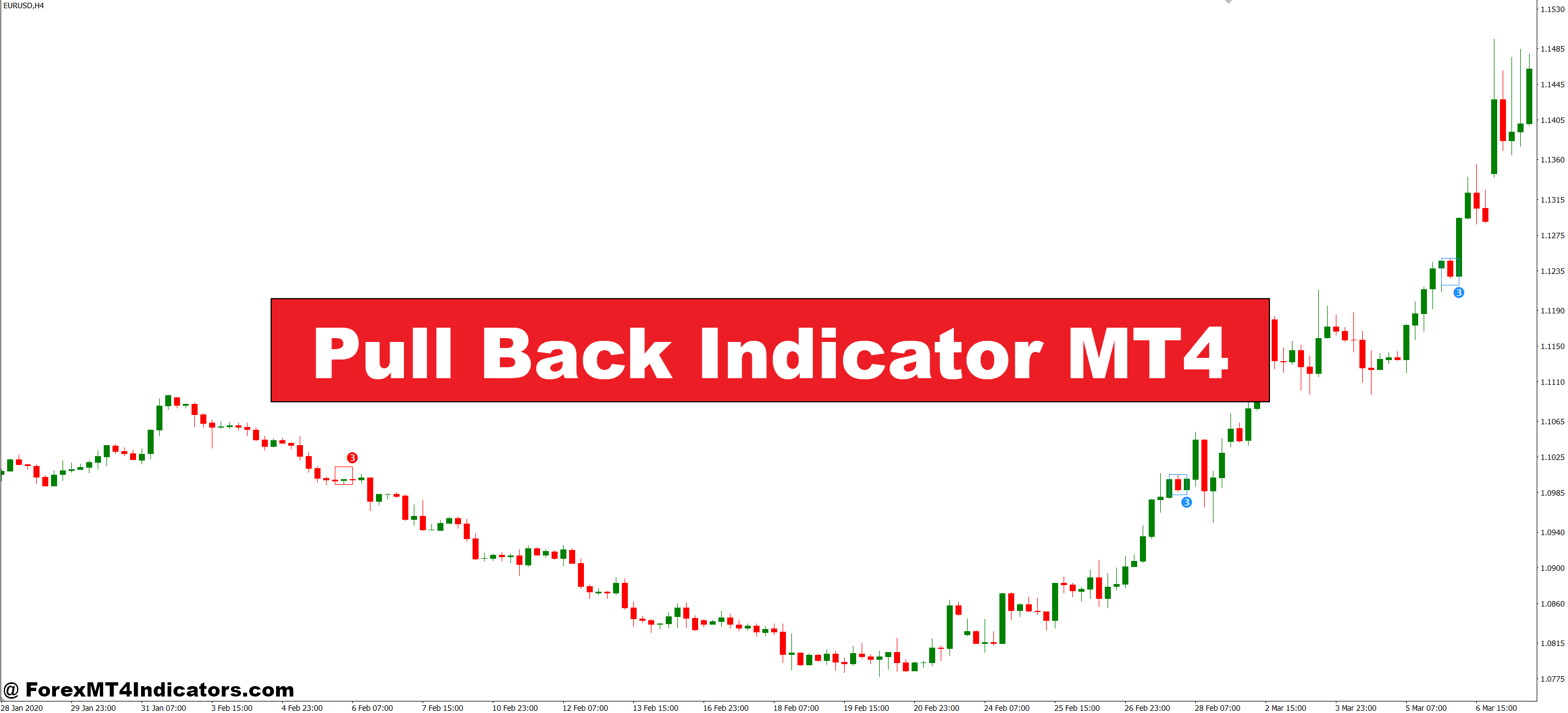
The Pull Back Indicator MT4 is a technical analysis tool designed to identify retracement zones within trending markets. Unlike oscillators that measure momentum, this indicator focuses on price structure and swing points. When properly configured, it marks areas where price pulls back against the prevailing trend before potentially resuming its original direction.
The indicator typically displays visual signals—arrows, dots, or colored bars—on the chart when specific conditions align. Most versions track swing highs and lows using a lookback period, then calculate percentage retracements from recent extremes. Think of it as an automated spotter for pullback entries that experienced traders would identify manually through price action analysis.
How the Calculation Works
The core logic behind most pull back indicators involves measuring the distance between swing points and monitoring how far price retraces. Here’s what happens under the hood: The indicator identifies the most recent swing high and swing low within a defined period (commonly 20-50 bars). It then calculates percentage retracements—often 38.2%, 50%, or 61.8% Fibonacci levels—from that swing range.
When price hits these predetermined retracement zones AND other confirmation criteria align (like a candlestick pattern or moving average bounce), the indicator generates a signal. Some advanced versions incorporate multiple timeframe analysis, checking if the higher timeframe trend remains intact before flagging a pullback opportunity.
The math isn’t complicated. If EUR/USD rallies from 1.0800 to 1.0950, that’s a 150-pip move. A 50% retracement would occur at 1.0875. The indicator watches for price to reach this zone, then validates whether conditions favor trend continuation.
Real Trading Application
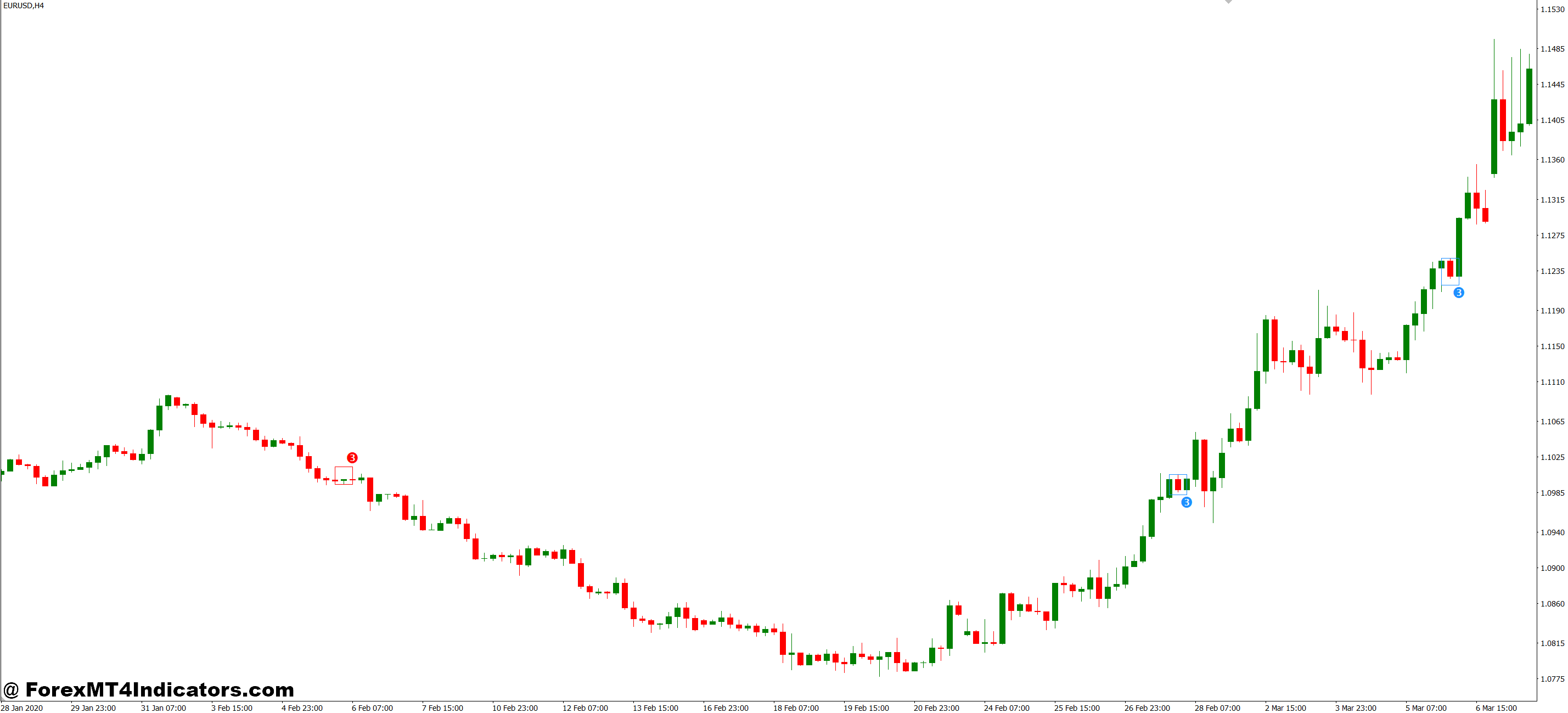
Testing this indicator on GBP/USD’s 4-hour chart during the September 2024 rally revealed something interesting. The pair trended higher for two weeks, producing six pullback signals. Four delivered profitable swing trades with 80-150 pip moves. Two failed, triggering during a brief consolidation phase that preceded a deeper correction.
Here’s what worked: Signals generated when price pulled back to the 20-period EMA while the indicator flashed entry arrows produced the cleanest setups. The winning trades shared a common trait—they occurred mid-trend, not at exhaustion points where volume dried up.
The failed signals taught an equally valuable lesson. When the indicator fires during sideways action or after extended trends (200+ pips without correction), the setup lacks the same probability edge. Traders who combine the Pull Back Indicator with simple trend filters—like requiring price to remain above the 50-period MA on the daily chart—eliminate many false entries.
On 1-hour charts, the indicator becomes more sensitive. It catches smaller retracements but also generates more noise. USD/JPY traders using this timeframe during the Tokyo session often see 3-5 signals daily. Not all warrant trades. The best approach involves filtering signals by time of day (avoiding low-volume Asian hours for EUR pairs) and confirming with candlestick patterns at the signal bar.
Customizing Settings for Different Markets
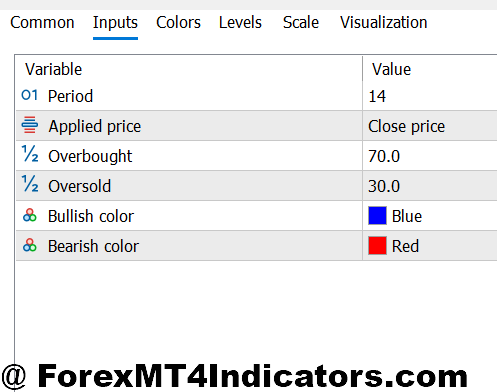
The default settings suit medium-term swing trading, but they’re not one-size-fits-all. The lookback period parameter controls how many bars the indicator analyzes for swing points. Setting this to 20 makes the tool more responsive—useful for scalping EUR/USD on 15-minute charts during London open volatility. Extending it to 50 smooths signals, filtering out minor whipsaws on daily charts.
Retracement depth matters too. Some traders prefer shallow pullbacks (23.6%-38.2%) for momentum continuation plays. Others wait for deeper 61.8% retracements, accepting fewer signals in exchange for better risk-reward entries. There’s no “correct” setting—it depends on trading style and market conditions.
Volatile pairs like GBP/JPY need wider parameters. A 30-pip pullback on this pair means less than a 20-pip retrace on EUR/CHF. Smart traders adjust the minimum pullback distance (measured in pips or percentage) to match the instrument’s average true range. For GBP/JPY with a 100-pip daily ATR, requiring at least 40 pips of retracement prevents the indicator from firing on meaningless noise.
What It Does Well (And What It Doesn’t)
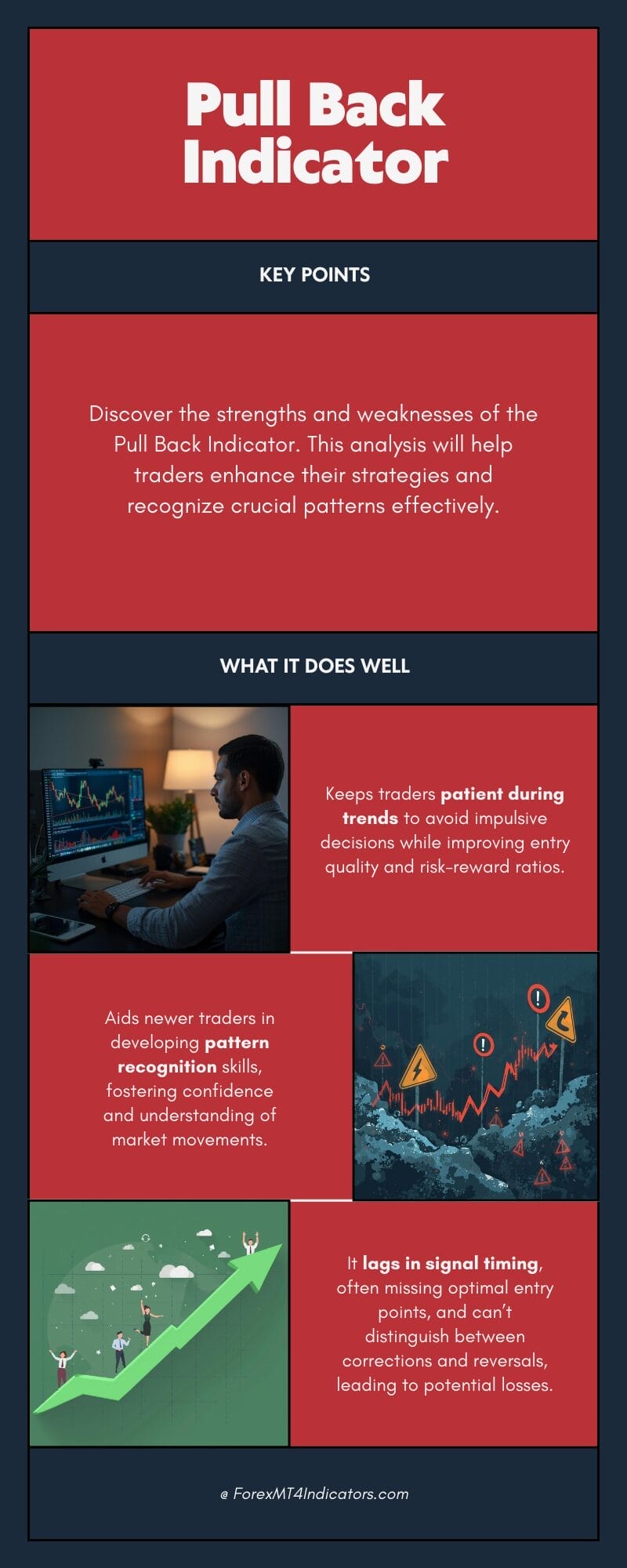
The Pull Back Indicator excels at one thing: keeping traders patient during trends. Instead of chasing breakouts at inflated prices, it forces a wait for price to come back to value zones. This alone improves entry quality and risk-reward ratios.
It also helps newer traders develop pattern recognition. After watching the indicator identify pullbacks for a few months, traders start seeing these setups without the tool. That educational value shouldn’t be dismissed.
But here’s the reality check: This indicator won’t fix poor risk management or lack of market understanding. It can’t distinguish between a healthy correction and the early stages of a reversal. During trend transitions—when markets shift from bullish to bearish—the indicator produces false signals because it assumes the trend will resume.
The tool also lags. Signals typically appear after the pullback has already started, sometimes halfway through the retracement. Aggressive entries at the first sign of a pullback often outperform waiting for indicator confirmation, though they carry more risk.
Choppy, range-bound markets destroy this indicator’s effectiveness. When GBP/USD spent three weeks grinding between 1.2650 and 1.2750 in October, the indicator fired repeatedly with minimal follow-through. Traders who ignored it during obvious consolidation avoided frustration.
How It Compares to Alternatives
The Parabolic SAR offers similar pullback identification but uses trailing stops that flip with trend changes. It’s more aggressive, catching earlier entries but getting stopped out more frequently. The Pull Back Indicator waits for deeper retracements, sacrificing some profit potential for higher win rates.
Moving average crossovers (like 8/21 EMA crosses) signal trend resumptions but don’t specifically target pullback zones. They tend to lag more than dedicated pullback indicators. Fibonacci retracement tools provide precise levels but require manual drawing and subjective swing point selection. The Pull Back Indicator automates this process, though it removes the discretionary element some traders value.
For pure pullback trading, combining this indicator with RSI oversold/overbought levels (during trends, not ranges) creates a two-confirmation system. When EUR/USD pulls back to trigger the indicator AND RSI drops to 35 during an uptrend, the probability of trend continuation rises compared to either signal alone.
How to Trade with Pull Back Indicator MT4
Buy Entry

- Wait for uptrend confirmation – Only take buy signals when price is above the 50-period MA on the daily chart; ignore signals during downtrends or sideways chop.
- Enter at the arrow – Place buy order 2-5 pips above the pullback signal candle’s high on 4-hour EUR/USD setups to confirm momentum resumption.
- Check the retracement depth – Best signals occur when price pulls back 38-50% of the prior leg; avoid signals after shallow 15-20% dips that lack follow-through.
- Set stops below structure – Place stop-loss 10-15 pips below the pullback low or recent swing support, not arbitrary round numbers.
- Target 2:1 minimum – If risking 40 pips on GBP/USD, aim for at least 80 pips profit; pullback trades naturally offer better risk-reward than breakout entries.
- Skip signals at resistance – Don’t buy when the pullback signal fires within 20 pips of major resistance zones or previous swing highs where rejection risk spikes.
- Confirm with volume – Stronger buy signals show declining volume during the pullback and expansion when price resumes upward after the signal.
- Avoid London close signals – Signals appearing in the final 30 minutes before London session close (4:30 PM GMT) often lead to false moves and overnight gaps.
Sell Entry

- Verify downtrend structure – Only short when price trades below the 50-period MA on daily charts; skip sell signals during uptrends regardless of how attractive they appear.
- Enter below the signal candle – Place sell order 2-5 pips beneath the pullback signal bar’s low on 1-hour USD/JPY to catch momentum continuation.
- Measure the bounce – Ideal sell signals occur after price retraces 38-61.8% of the previous down-leg; avoid signals after minimal 20% bounces.
- Position stops above highs – Set stop-loss 10-15 pips above the pullback high or nearest swing resistance, adjusted for pair volatility and ATR.
- Scale out at targets – Close half position at 1.5:1, let remainder run to 3:1 or trailing stop; pullback shorts on GBP/USD can run 100+ pips.
- Ignore signals at support – Never short when signal appears within 15-20 pips of daily support, psychological levels (1.0800 on EUR/USD), or 200-period MA.
- Filter Friday afternoon setups – Sell signals after 3 PM EST on Fridays carry weekend gap risk; require stronger confirmation or skip entirely.
- Watch for divergence – Skip sell signals when RSI makes higher lows while price makes lower lows—indicates weakening downtrend and reversal risk.
The Bottom Line
The Pull Back Indicator MT4 serves trending markets well when traders understand its limitations. It won’t predict reversals or work during consolidation. What it does is automate the identification of potential retracement entries, saving time and reducing the temptation to chase prices.
Traders who combine this tool with basic trend analysis, volume confirmation, and proper position sizing find it adds value to their process. Those expecting it to work as a standalone system will face disappointment. Risk management remains paramount—no indicator changes the fact that trading forex carries substantial risk, and pullback entries can fail just like any other strategy.
The real question isn’t whether this indicator works, but whether it fits your trading approach. Test it on demo accounts across multiple market conditions. Track its performance on the pairs and timeframes you actually trade. Some will find it indispensable. Others will discover their naked chart reading already captures these setups. Either outcome beats blindly adding another arrow-drawing tool to an overcrowded chart.
Recommended MT4/MT5 Broker
XM Broker
- Free $50 To Start Trading Instantly! (Withdraw-able Profit)
- Deposit Bonus up to $5,000
- Unlimited Loyalty Program
- Award Winning Forex Broker
- Additional Exclusive Bonuses Throughout The Year
- Exclusive 90% VIP Cash Rebates for all Trades!

Already an XM client but missing out on cashback? Open New Real Account and Enter this Partner Code: VIP90
(Free MT4 Indicators Download)


Enter Your Email Address below, download link will be sent to you.