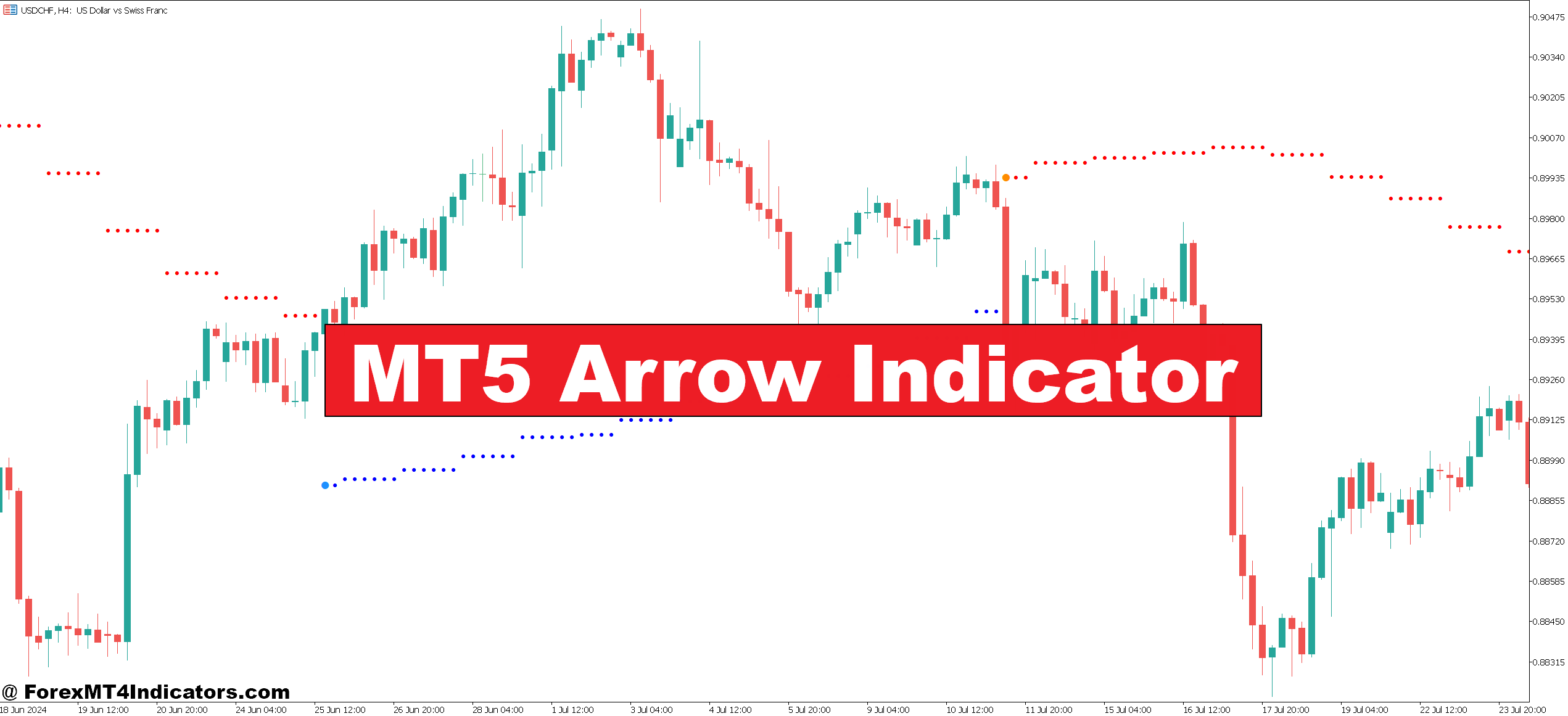
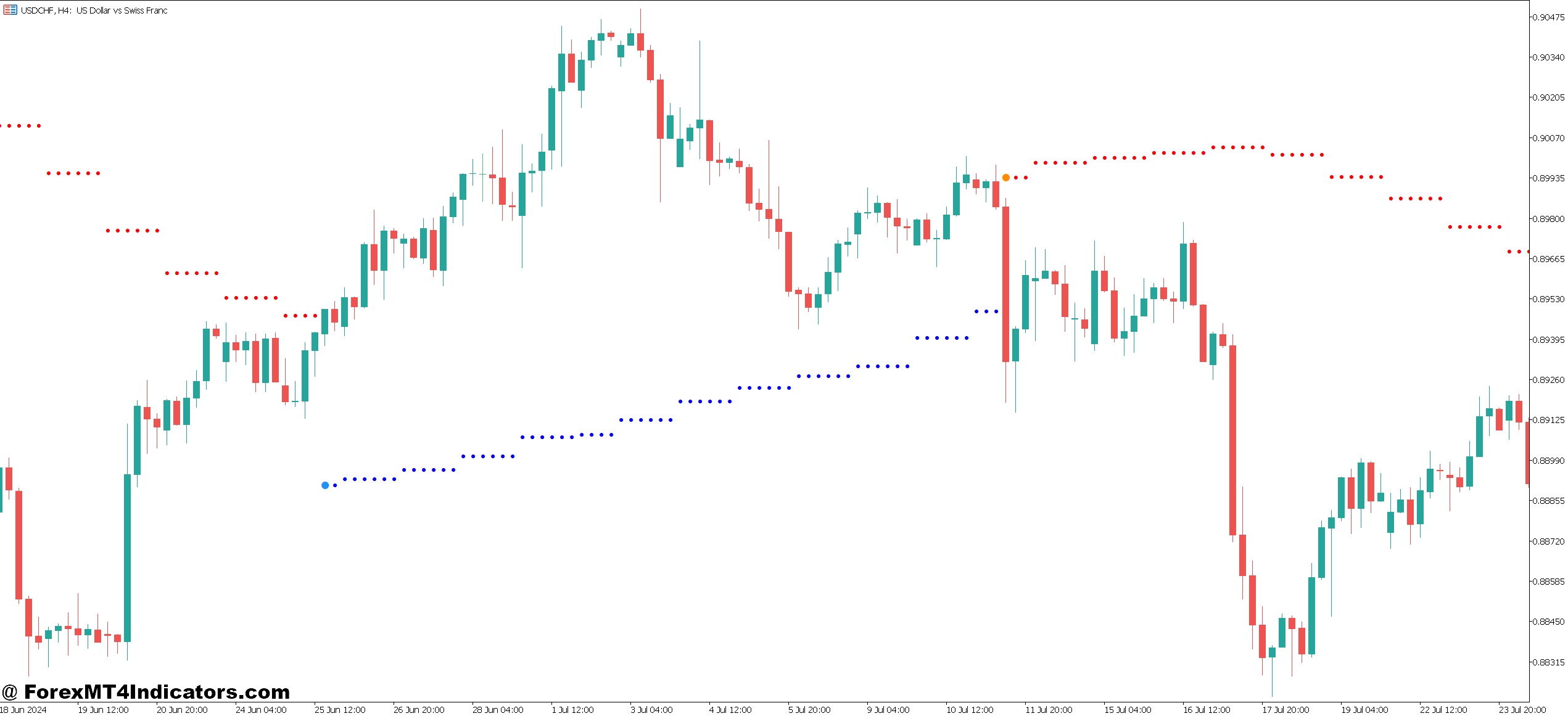
The MT5 Arrow Indicator is a custom technical tool designed for the MetaTrader 5 platform that displays directional arrows on price charts. When conditions align for a potential bullish move, a green or blue arrow appears below the candle. For bearish setups, a red or orange arrow shows up above the candle. These aren’t random placements—the indicator uses predefined technical criteria to identify moments where price momentum might shift.
Different versions of this indicator exist because it’s not a single, standardized tool. Some traders code their own variations using moving average crossovers, RSI divergence, or candlestick pattern recognition. Others download pre-built versions from trading forums or indicator libraries. The core concept remains the same: visual alerts that highlight potential trade opportunities without cluttering your chart with multiple oscillators and overlays.
How the Signal Logic Works
Most MT5 arrow indicators operate on a combination of technical factors. A common approach involves monitoring when fast-moving averages cross slower ones while confirming momentum through an oscillator like RSI or Stochastic. For example, one popular configuration triggers a buy arrow when the 10-period EMA crosses above the 50-period EMA, and the RSI simultaneously moves above 50 from below.
The calculation runs on every new candle close. If all conditions meet the programmed criteria, the indicator plots an arrow. Here’s where it gets interesting: some versions include filters to reduce false signals. These might require the price to break above a recent swing high or confirm the signal with increased volume. More sophisticated variants use multiple timeframe analysis—checking that the 15-minute signal aligns with the hourly trend direction.
But there’s a catch. The indicator doesn’t predict the future; it reacts to what already happened. That one-candle delay means you’re entering after the initial move starts. On the GBP/JPY during London open, this lag might cost you 15-20 pips of the move. In ranging markets, it can lead to whipsaws where the arrow appears, you enter, and price immediately reverses.
Real-World Trading Scenarios
Testing this indicator on the USD/JPY 1-hour chart during trending sessions showed interesting results. When the pair was climbing steadily from 142.50 to 145.00 over three days, buy arrows appeared at logical pullback zones. The first signal came at 143.20 after a minor retracement, giving traders a decent 80-pip run before the next consolidation. The indicator stayed quiet during choppy Asian sessions, which actually helped avoid bad trades.
However, switching to the EUR/GBP on a 15-minute timeframe told a different story. During a sideways day with a 60-pip range, the indicator fired eight signals. Only three resulted in profitable moves exceeding 15 pips, while the others stopped out within 20 pips. This highlights the tool’s weakness: it struggles when the market lacks directional bias.
Experienced traders pair these arrows with support and resistance zones. When a buy arrow appears right at a major support level that’s held twice before, the signal carries more weight. On its own, an arrow in the middle of nowhere doesn’t mean much. One trader mentioned using it specifically on the AUD/USD 4-hour chart, only taking arrows that align with the daily trend. His win rate jumped from 52% to 63% just by adding that filter.
Customizing Settings for Different Markets
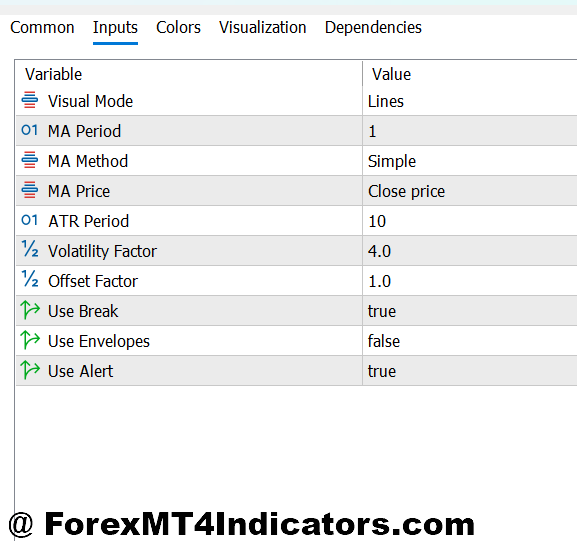
The default parameters in most MT5 arrow indicators don’t fit all trading styles. Scalpers working the EUR/USD on 5-minute charts need faster signals, so they’ll reduce the moving average periods—maybe from 50 to 20. This creates more arrows but also more noise. Day traders on hourly charts prefer the standard settings or even slower parameters to filter out minor fluctuations.
Period adjustments matter. If you’re trading the GBP/NZD, known for volatile swings, increasing the signal sensitivity might trigger too many arrows during normal price movement. Dialing it back helps focus on genuine momentum shifts. Some versions let you adjust the arrow colors and sizes, which sounds cosmetic but actually helps when you’re scanning multiple charts quickly.
The alert function is crucial. Setting up push notifications to your phone means you don’t need to stare at charts all day. When an arrow prints on your EUR/CHF setup, you get alerted, review the context, and decide if it aligns with your broader analysis. That said, alerts can become overwhelming if you’re monitoring five pairs with aggressive settings.
The Honest Assessment: Pros and Cons
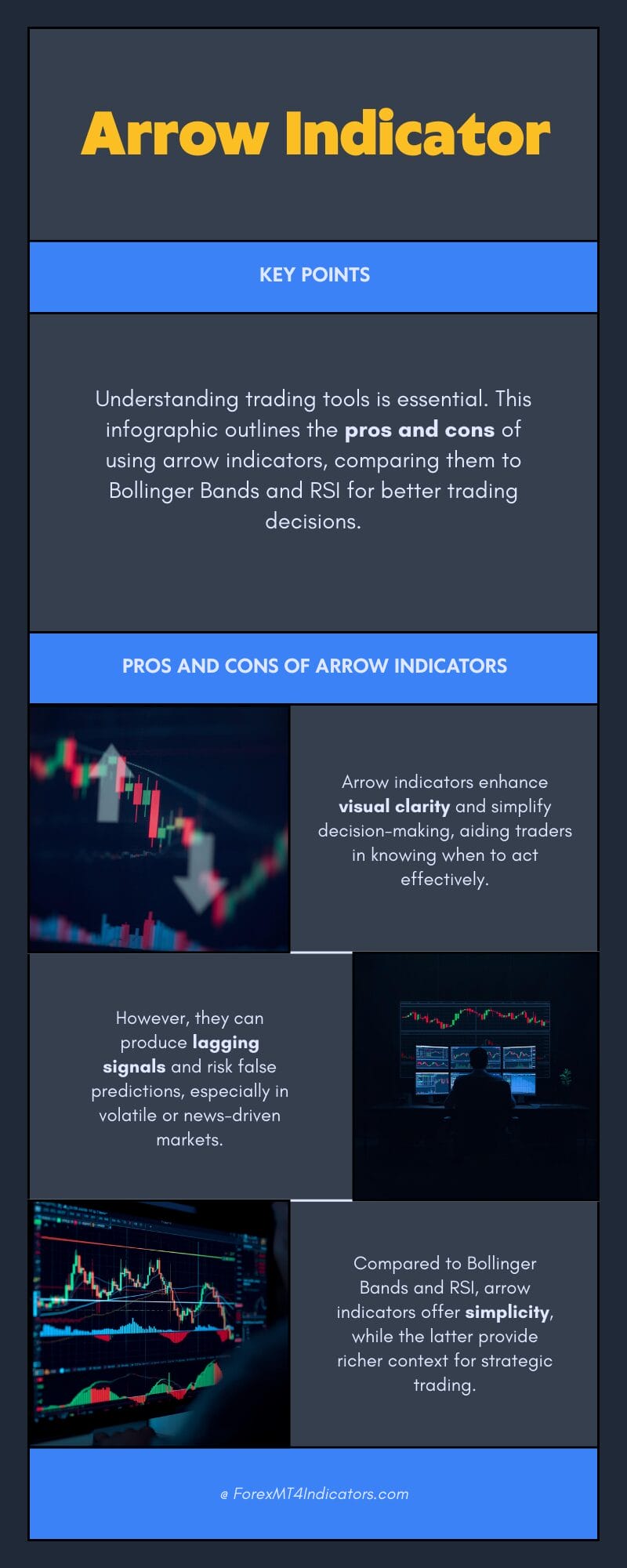
This indicator excels at providing visual clarity. Instead of mentally tracking three indicators plus price action, you get a single arrow that says “something’s happening here.” For newer traders, it removes some of the interpretation guesswork. It also helps maintain discipline—when there’s no arrow, you stay out, reducing the urge to force trades.
The downsides are significant. Arrow indicators lag by nature since they need candle confirmation. In fast markets, you’re always entering after the initial spike. False signals in ranging conditions can chop up your account if you take every arrow blindly. And here’s the thing: any indicator based on historical price data can’t predict sudden news events. When the ECB surprises markets with a rate decision, your arrow indicator won’t save you from the volatility spike.
Comparing it to something like Bollinger Bands with RSI divergence, the arrow indicator is simpler but less nuanced. Bollinger Bands show you volatility expansion and contraction, giving context. RSI shows momentum strength. The arrow just says “go” without explaining why. That’s both its strength (simplicity) and weakness (lack of depth).
Trading With Arrows Safely
Smart traders don’t rely on this as a standalone system. They’ll wait for an arrow at a confluence zone—maybe where the 200-period moving average meets a Fibonacci retracement level. The arrow confirms what the chart structure already suggests. Position sizing matters even more with indicator-based trading. Just because an arrow appears doesn’t mean you risk 5% of your account. Most professionals cap it at 1-2% per trade, knowing some signals will fail.
Stop placement requires thought. Don’t just put your stop 20 pips away because that’s your usual practice. Look at where the signal would be invalidated. If a buy arrow appeared after price bounced off 1.0850 support on EUR/USD, your stop goes below that level—maybe at 1.0830. Give it room to breathe, but not so much that one bad signal wipes out three winners.
How to Trade with MT5 Arrow Indicator
Buy Entry
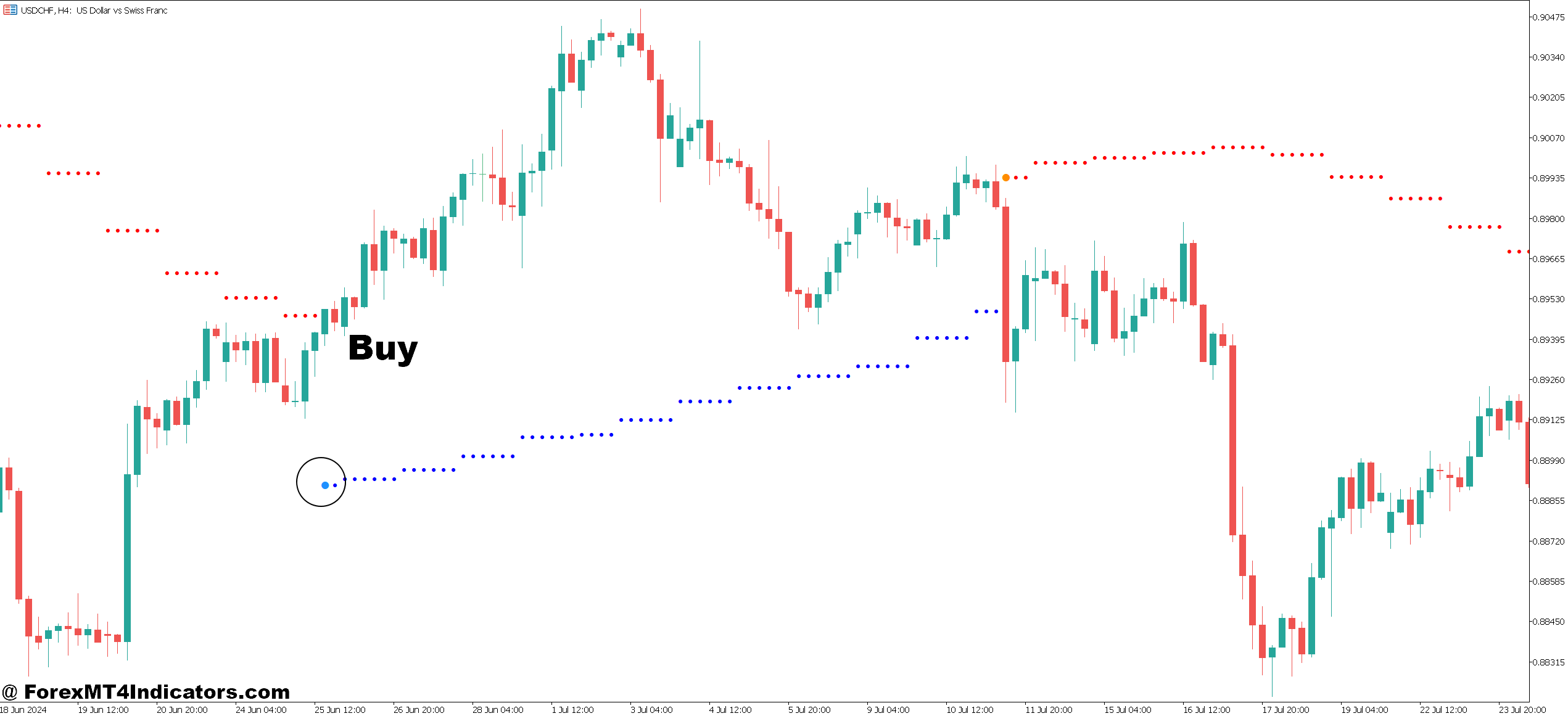
- Wait for arrow confirmation below the candle – Don’t enter mid-candle; wait for the close to confirm the signal isn’t repainting on EUR/USD or GBP/USD pairs.
- Check the trend on higher timeframe first – If trading 1-hour arrows, verify the 4-hour chart shows bullish structure; avoid counter-trend signals that fail 70% of the time.
- Enter 2-5 pips above the arrow candle high – This filters out weak signals that reverse immediately; skip the trade if price doesn’t break the high within three candles.
- Place stop-loss 10-15 pips below the arrow candle low – Gives breathing room for EUR/USD normal volatility while protecting against false breakouts.
- Risk only 1-2% per signal – Arrow indicators generate multiple signals; taking every one with 3% risk will drain your account during choppy sessions.
- Avoid buy arrows within 20 pips of major resistance – The signal might be valid, but overhead supply often kills the move before hitting your target on GBP/USD.
- Skip signals during high-impact news events – Don’t take arrows 30 minutes before NFP, CPI, or central bank decisions; volatility spikes invalidate technical setups.
- Target minimum 1:2 risk-reward ratio – If risking 15 pips, aim for at least 30 pips profit; exit partial position at 1:1 and let remainder run on 4-hour chart trades.
Sell Entry
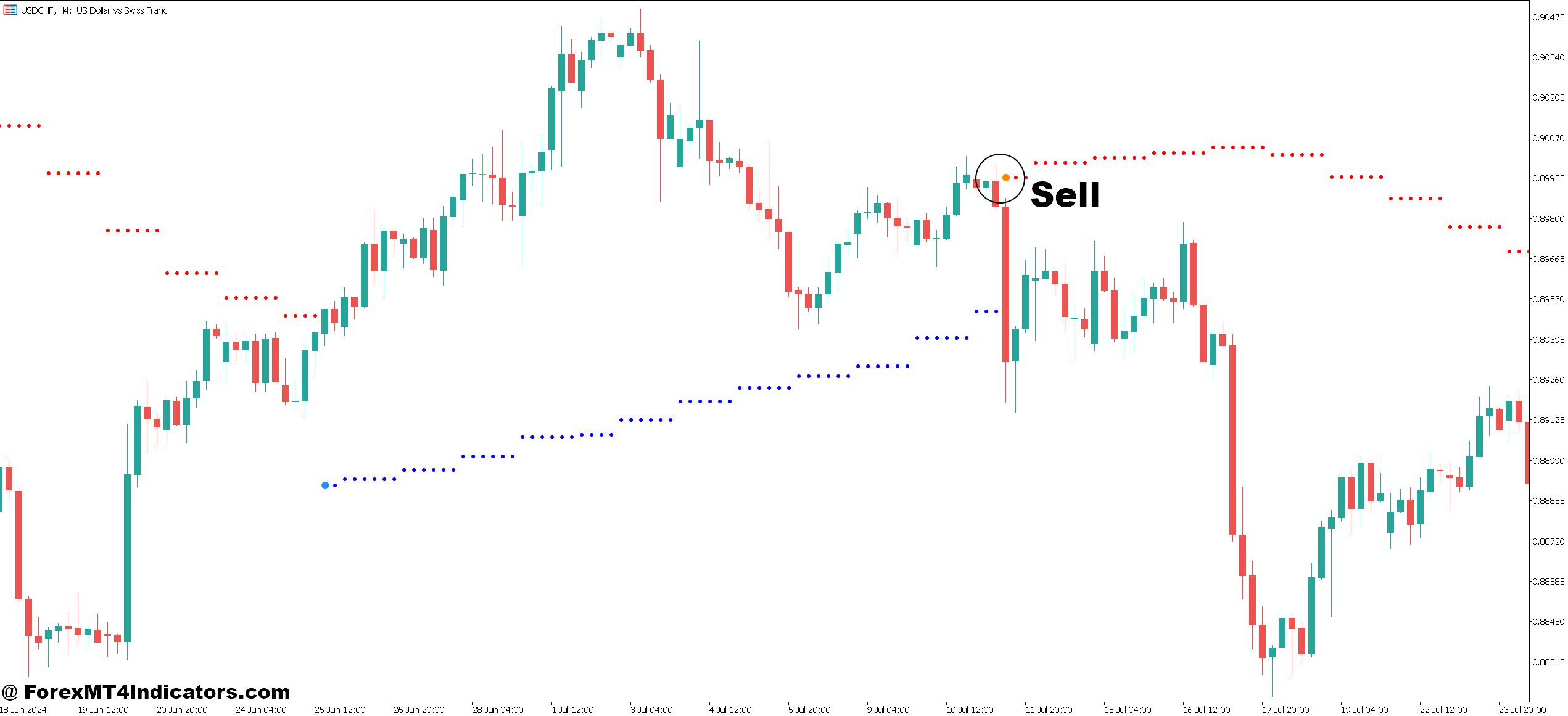
- Confirm red arrow appears above the candle – Wait for full candle close on 1-hour or 4-hour timeframes; early entries on incomplete candles lead to 60% false signals.
- Verify bearish alignment on daily chart – Don’t fade the daily uptrend with 15-minute sell arrows; trade with the bigger picture for higher probability setups.
- Enter 2-5 pips below the arrow candle low – Ensures momentum follows through; if price stalls and doesn’t break lower within two candles, cancel the trade.
- Set stop-loss 10-20 pips above the arrow high – Adjust based on pair volatility; GBP/JPY needs wider stops (20 pips) than EUR/CHF (12 pips).
- Never take sell signals at strong support zones – Arrow at 1.0800 EUR/USD support level that held five times will likely fail; wait for support break confirmation.
- Reduce position size after three losing arrows – If the last three signals stopped out, cut your risk to 0.5% until the indicator realigns with market conditions.
- Ignore arrows during Asian consolidation – EUR/USD ranging between 40-pip zones generates false sell signals; wait for London or New York session directional moves.
- Trail stops to breakeven after 15-pip profit – Protects against reversals common with arrow indicators; move to breakeven when trade moves 1:1 in your favor.
Final Thoughts on Arrow-Based Trading
The MT5 Arrow Indicator works best as a confirmation tool rather than a primary decision-maker. It helps traders spot potential opportunities they might have missed while providing clear entry markers that reduce hesitation. But it’s not a money-printing machine. Markets shift between trending and ranging constantly, and no indicator adapts perfectly to both conditions.
Trading forex carries substantial risk, and no indicator guarantees profits. Even the best arrow signals fail in certain market environments. The traders who succeed with these tools combine them with solid understanding of price action, risk management, and market context. If you’re considering adding this to your MT5 platform, test it thoroughly on a demo account across different pairs and timeframes. Track your results honestly—not just wins, but where the signals failed and why. That data will tell you whether this indicator fits your trading personality, or if you’re better off with a different approach.
Level up your trading
Learn to read the chart — not just the indicator
eBook · Instant PDF
Video Course · 12 modules
Recommended MT4/MT5 Brokers
- ✓ *FREE *$50 to start (withdrawable)
- ✓ Deposit bonus up to $5,000
- ✓ Negative balance protection
Trading forex and CFDs carries a significant risk of loss and is not suitable for everyone. Broker links are affiliate links — we may earn a commission at no cost to you.
Free MT4 Indicator Download
Enter Your Email Address below, download link will be sent to you.