

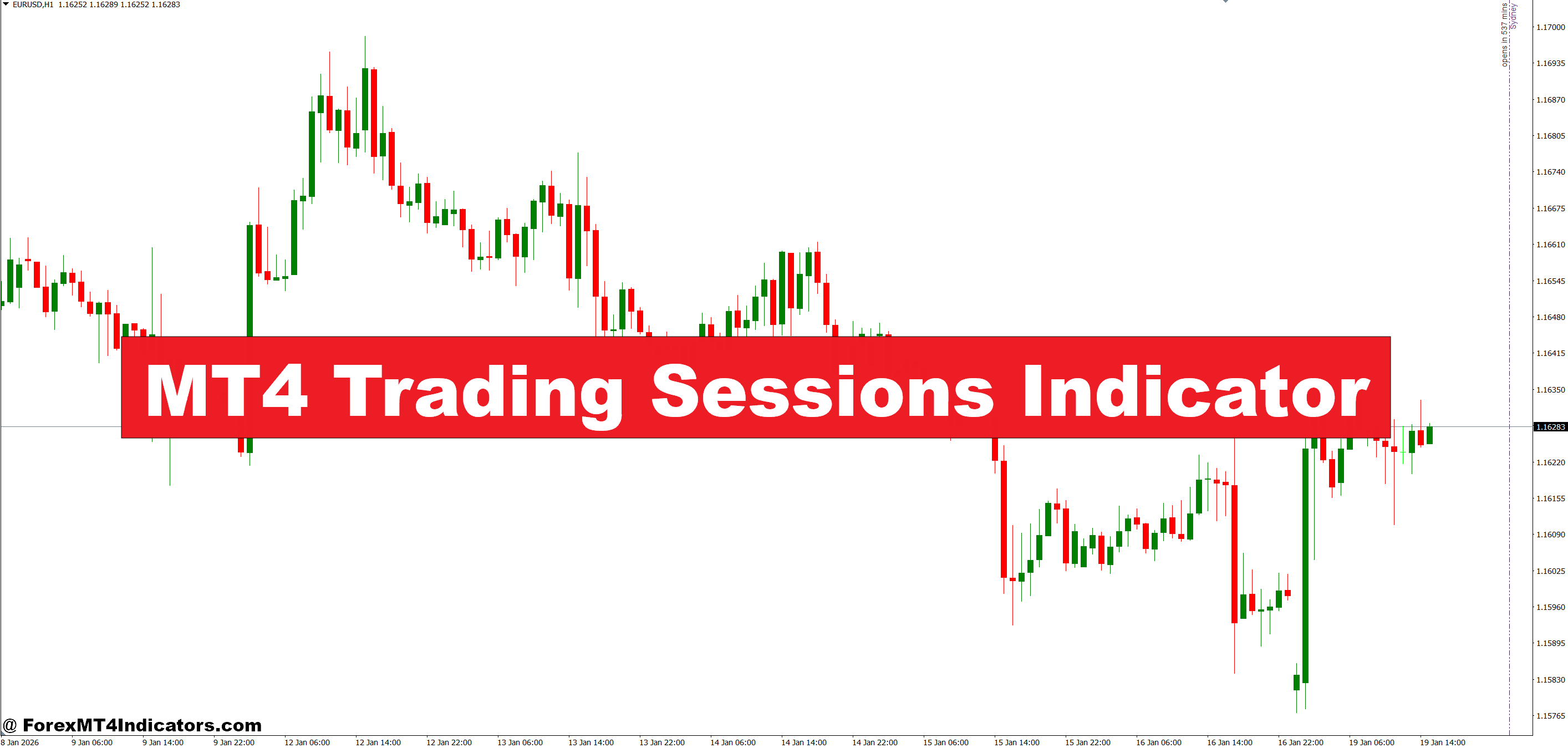
The MT4 Trading Sessions Indicator solves this timing problem by visually mapping when major financial centers are active. Instead of guessing whether London traders are at their desks or New York is winding down, traders get clear session boundaries overlaid directly on their charts. This simple addition helps align strategies with market conditions, improving entry timing and reducing exposure during dead zones.
Understanding the Sessions Indicator
The MT4 Trading Sessions Indicator marks three primary trading windows on price charts: Asian (Tokyo), European (London), and North American (New York) sessions. Each region’s trading hours are displayed as vertical zones or background shading, typically color-coded for quick recognition.
Here’s what separates this from a basic clock: the indicator accounts for overlapping sessions. When London and New York both operate simultaneously—roughly 8 AM to noon EST—volume surges. This overlap period often produces the day’s largest moves. The indicator highlights these windows differently, giving traders visual confirmation of high-liquidity periods.
The technical setup is straightforward. The indicator pulls session times from preset GMT offsets, adjusting for each region’s market open and close. Tokyo runs from approximately 12 AM to 9 AM GMT, London from 8 AM to 4 PM GMT, and New York from 1 PM to 10 PM GMT. Most versions include DST (Daylight Saving Time) adjustments, though traders should verify this works correctly for their broker’s server time.
Practical Application in Live Trading
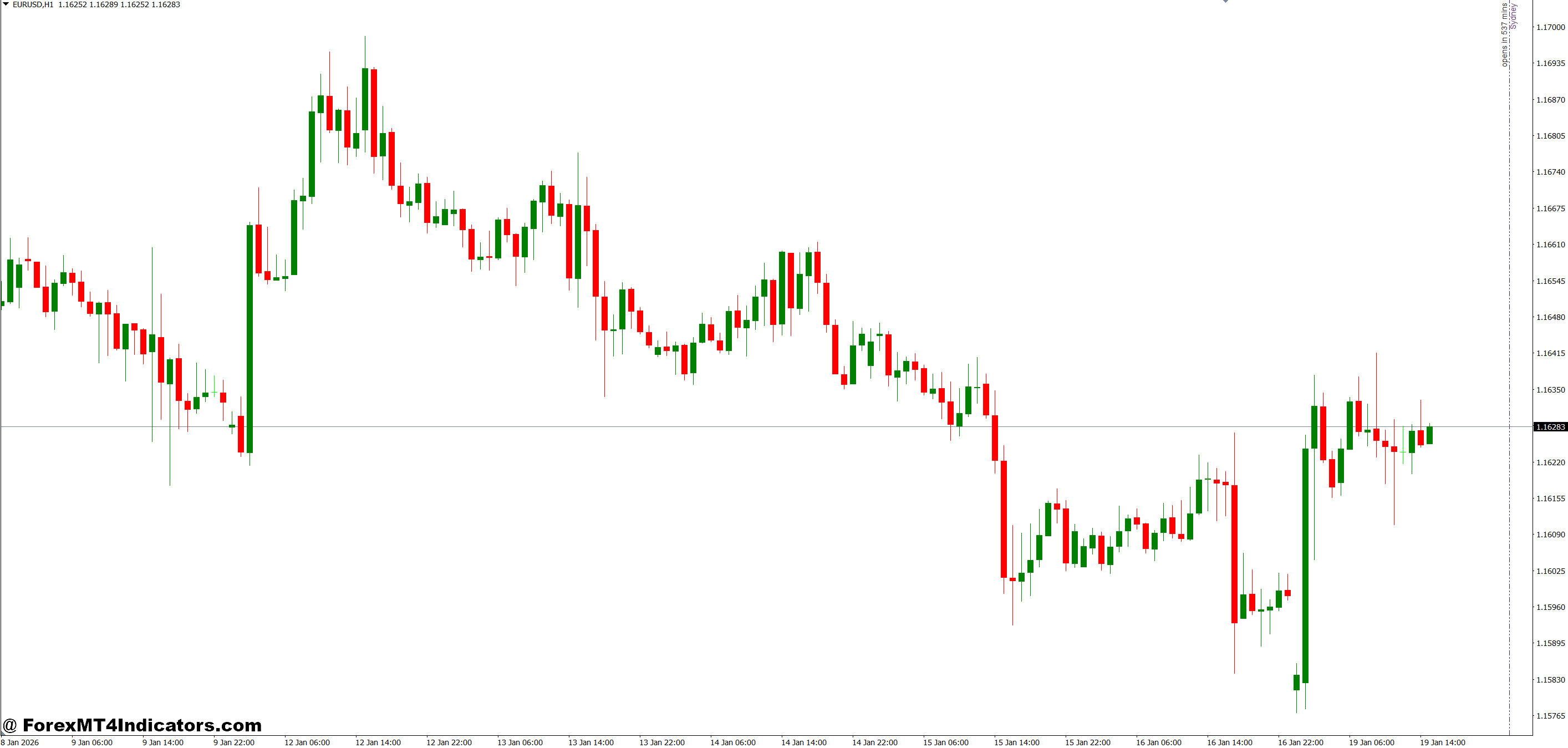
Consider a scalper working GBP/JPY on the 15-minute chart. During Asian hours, this pair typically ranges with an average 30-pip movement. Breakout strategies fail miserably here—price respects support and resistance, then reverses. The sessions indicator shows this trader exactly when to switch from breakout to range tactics.
When the European session opens at 3 AM EST, everything shifts. The same GBP/JPY pair might gap 15 pips and establish a new directional bias within the first hour. Traders watching the session marker know to prepare for momentum plays rather than fading moves. That’s actionable intelligence, not guesswork.
Swing traders benefit differently. Someone holding a USD/CAD position overnight can see when North American data releases will hit—right as the New York session begins. They’ll tighten stops before 8:30 AM EST employment reports instead of getting surprised by 80-pip spikes. The visual reminder keeps risk management front and center.
There’s also a session-end strategy worth noting. Many institutional desks square positions before their close. This creates predictable retracements in the final hour of each session, particularly visible on pairs like EUR/USD. Traders spot these patterns faster when session boundaries are clearly marked. What looked random on a bare chart becomes a repeating structure.
Customization for Different Trading Styles
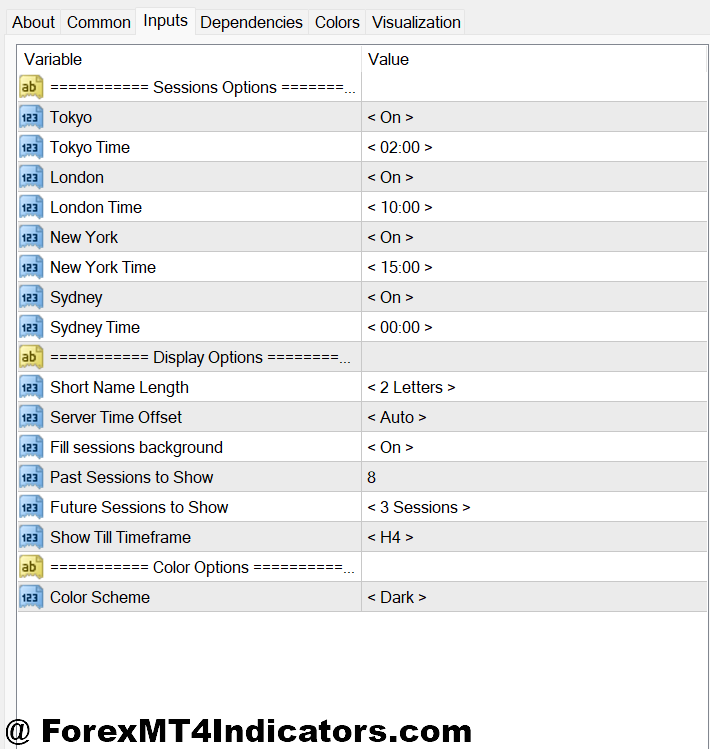
The indicator’s default settings work fine for most traders, but customization improves effectiveness. Session colors matter more than they seem. Using subtle shading (10-15% opacity) keeps price action visible while providing context. Overly bright backgrounds create eyestrain during screen time.
Some versions allow traders to toggle individual sessions on or off. A European-focused trader might disable the Asian session entirely to reduce visual clutter. This works well on lower timeframes where three session zones can make charts feel crowded. The 5-minute chart benefits from showing only the trader’s active hours.
Alert features add another layer. Setting notifications for session opens ensures traders don’t miss the London breakout while reviewing other pairs. A quick beep 5 minutes before New York’s open provides prep time to adjust positions or place pending orders. These small automations prevent costly oversights.
Advanced traders adjust session times based on their broker’s server. A broker using GMT+2 during summer requires different settings than one on GMT. Testing the indicator’s alignment with known session characteristics—like increased EUR/USD volatility at London’s open—confirms accuracy. That 20 minutes of verification saves headaches later.
Strengths and Realistic Limitations
The sessions indicator excels at solving the “when to trade” question. New traders especially benefit from the visual reinforcement that 2 AM entries during Asian consolidation probably won’t perform like 8 AM European breakouts. This awareness alone can prevent a significant portion of mistimed trades.
Pair selection becomes clearer too. AUD/USD naturally shows more movement during Asian and early European hours. Trying to trade it aggressively during late New York hours fights against declining liquidity. The indicator makes these mismatches obvious, steering traders toward better pair-session combinations.
But here’s the reality check: session boundaries don’t control price. They provide context, not signals. A trade taken solely because “London just opened” without confirming trend, support levels, or momentum will still fail. The indicator works as part of a complete strategy, not as a standalone system.
Certain market conditions override normal session behavior. Major news events create volatility regardless of which session is technically active. Central bank announcements during Asian hours can produce moves rivaling any European open. Traders need judgment to recognize when session-based expectations should be adjusted.
There’s also the overreliance trap. Some traders become so session-focused they ignore valid setups outside “prime” hours. A strong trend continuation during Asian hours on EUR/USD might offer a better risk-reward than a choppy European open. Good trading requires flexibility, not rigid adherence to session timing.
How It Compares to Other Time-Based Tools
Trading forex carries substantial risk. No indicator guarantees profits, and past performance of any strategy doesn’t ensure future results.
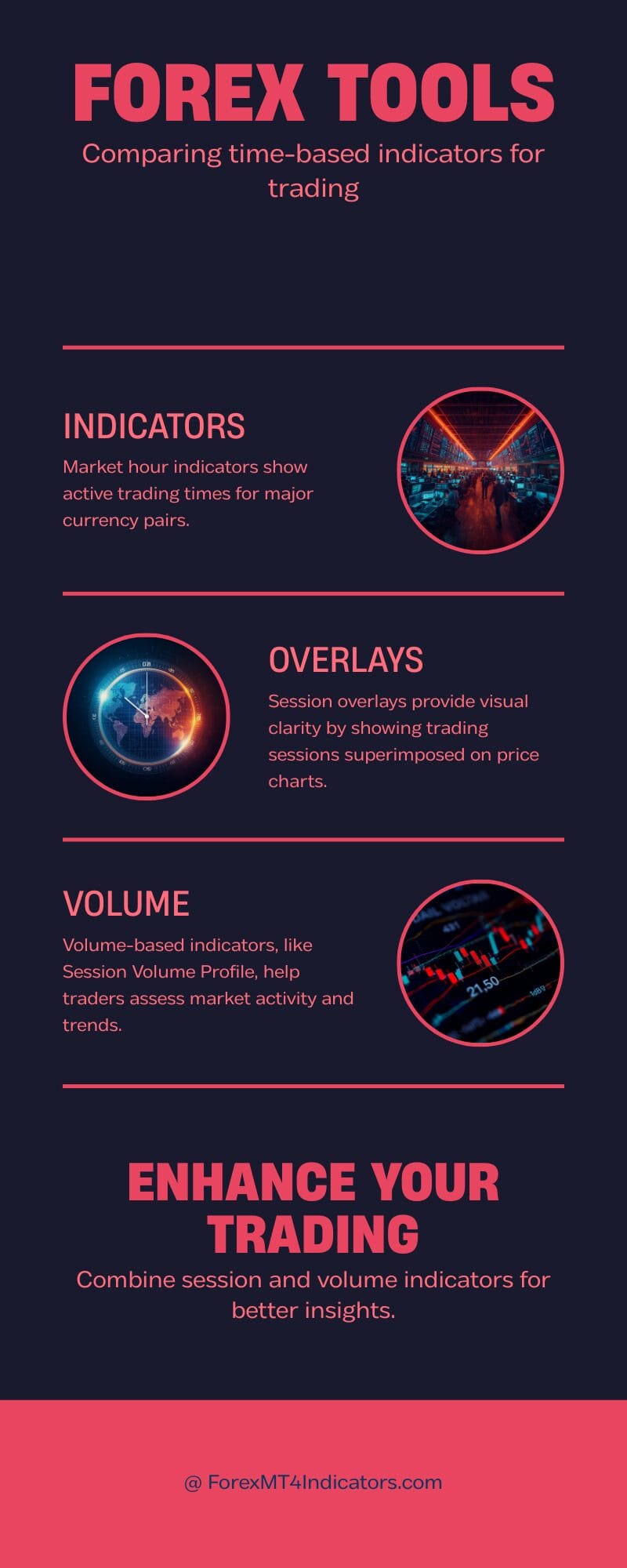
Market hour indicators and session overlays serve similar functions but differ in execution. Some tools only mark session opens with vertical lines rather than shading entire periods. This minimalist approach reduces chart clutter but provides less visual emphasis on session duration.
Volume-based indicators like the Session Volume Profile offer complementary data. While the sessions indicator shows when markets are open, volume profiles reveal where within those sessions most trading occurred. Combining both creates a fuller picture—timing plus price levels where liquidity concentrated.
Clock displays and timezone converters handle the same problem differently. They tell traders what time it is in London or New York but require mental conversion to apply that to chart analysis. The sessions indicator eliminates that step by making the information contextual to price action.
For a browser reference, open the live forex session clock and select your time zone before comparing those windows with your broker-server chart time.
The real advantage over checking session times manually is consistency. Every chart automatically shows the relevant sessions. Check the indicator’s session definitions, broker-server time and daylight-saving settings when comparing it with a session clock. The automation ensures the context is always present, making session-aware trading a habit rather than an occasional consideration.
Key Takeaways for Session-Based Trading
The MT4 Trading Sessions Indicator transforms abstract timezone knowledge into visual, actionable chart context. Traders gain immediate awareness of which global markets are active, enabling better strategy alignment with liquidity conditions. Range strategies work during quiet Asian hours; breakout approaches fit volatile European opens. This matching of method to market condition improves consistency.
Session overlaps deserve special attention. The London-New York window consistently produces the highest volume and largest moves across major pairs. Concentrating trading activity during these periods naturally increases the probability of catching meaningful price action. The indicator makes these windows impossible to miss.
That said, the tool works best as part of a broader analytical framework. Price action, trend analysis, and risk management still determine trade outcomes. Session timing provides an edge by ensuring traders operate when markets offer the best conditions for their specific approach. It’s about working with the market’s rhythm, not against it.
For traders serious about improving their timing, adding this indicator takes five minutes but shifts perspective permanently. Those colored zones become a constant reminder that the forex market isn’t uniform—it breathes in cycles driven by where the world’s money is currently awake and active.
Level up your trading
Learn to read the chart — not just the indicator
eBook · Instant PDF
Video Course · 12 modules
Recommended MT4/MT5 Brokers
- ✓ *FREE *$50 to start (withdrawable)
- ✓ Deposit bonus up to $5,000
- ✓ Negative balance protection
Trading forex and CFDs carries a significant risk of loss and is not suitable for everyone. Broker links are affiliate links — we may earn a commission at no cost to you.
Free MT4 Indicator Download
Enter Your Email Address below, download link will be sent to you.