

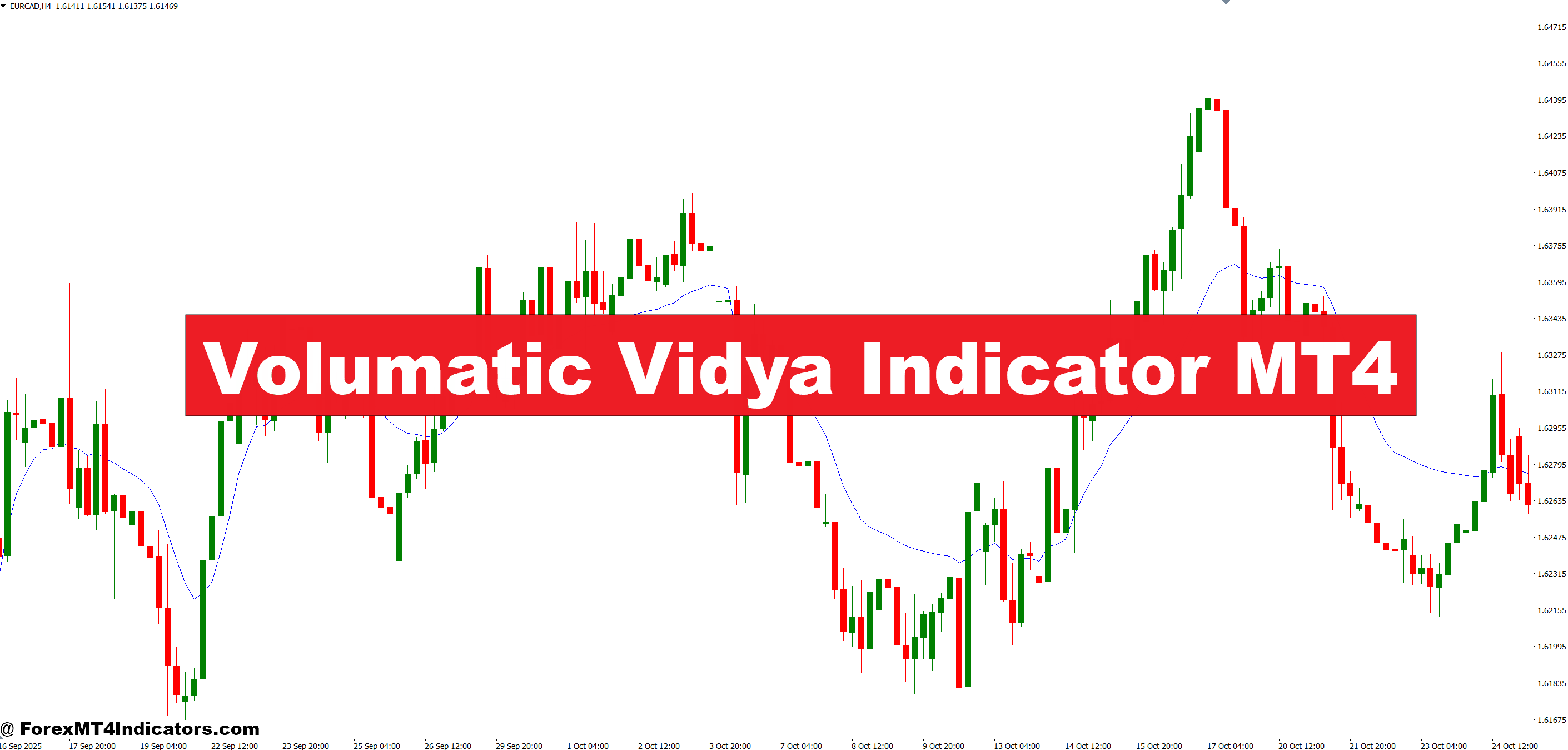
The Volumatic Vidya Indicator MT4 solves this by combining two powerful concepts: volume-weighted price data and adaptive smoothing. Instead of treating every candle the same, it adjusts its sensitivity based on both volatility AND trading volume. This creates a moving average that responds quickly during genuine moves but filters out the noise during choppy, low-conviction periods.
What Makes the Volumatic Vidya Different from Standard Indicators
The Volumatic Vidya Indicator isn’t just another moving average clone. It’s built on the VIDYA (Variable Index Dynamic Average) foundation, which already stands out by adjusting its smoothing factor based on market volatility. But here’s where things get interesting: the “volumatic” component adds volume analysis into the mix.
Most moving averages use a fixed period—say, 20 or 50—and calculate the same way regardless of market conditions. A 20-period EMA responds identically whether the market is trending hard or chopping sideways. The standard VIDYA improves on this by speeding up during volatile moves and slowing down during consolidation, using the Chande Momentum Oscillator to measure volatility.
The volumatic version takes it further. It weighs recent price data by volume, meaning a big move on heavy volume gets more influence than the same move on thin volume. When EUR/USD rallies 50 pips on double the average volume, that data point carries significantly more weight than a similar move during a quiet Friday afternoon. This volume sensitivity helps the indicator distinguish between meaningful breakouts and head-fakes.
How the Calculation Works Under the Hood
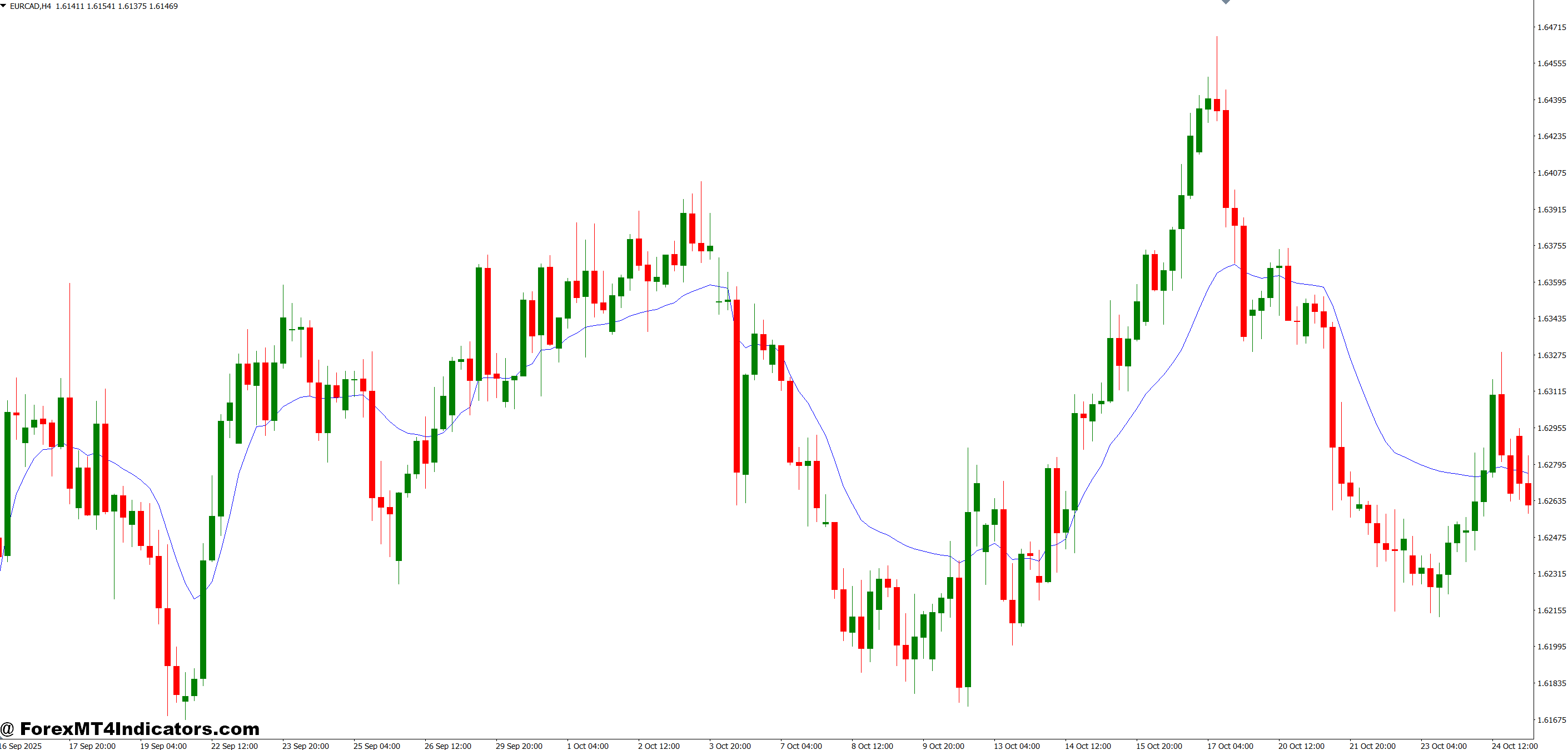
Understanding the math helps traders use this tool effectively. The standard VIDYA calculation starts with the Chande Momentum Oscillator (CMO), which measures momentum on a scale typically using a 9-period setting. The CMO value determines how “fast” the moving average responds—higher volatility produces higher CMO values, making the average more responsive.
The formula applies an alpha smoothing factor that adjusts based on the CMO reading. During low volatility, the alpha approaches zero, making the indicator behave like a slow-moving average. During high volatility, alpha increases, allowing the line to track price more closely.
The volumatic modification incorporates volume into this framework. Each price point gets multiplied by its corresponding volume before averaging. A simplified view: if today’s close is 1.1050 with volume at 50,000 contracts, while yesterday closed at 1.1040 with only 20,000 contracts, today’s price weighs more heavily in the calculation.
This dual adaptation—to both volatility and volume—creates a responsive tool that doesn’t get easily fooled by low-volume spikes or consolidation whipsaws.
Real-World Trading Scenarios
On USD/JPY during the New York session open, the Volumatic Vidya can help identify when institutional money enters. Say price has been grinding sideways between 149.20 and 149.50 on light volume. Suddenly, at 8:30 AM EST (a common news release time), price breaks above 149.50 with volume spiking to three times the hourly average.
A standard 20 EMA might lag, crossing above the breakout point only after price has already moved 30 pips. The Volumatic Vidya, sensing both the volatility increase and volume surge, adjusts faster. It might cross above the breakout level within 10-15 pips, giving traders a clearer entry signal while still filtering out minor noise.
Here’s another example: EUR/USD on a 4-hour chart during a weak trending phase. Price makes higher highs, but volume steadily decreases with each push. Traditional moving averages continue sloping upward, suggesting trend continuation. The Volumatic Vidya, however, flattens out or slopes less aggressively because it’s weighting those recent highs less heavily due to declining volume. This divergence can warn traders that the trend is losing steam before a reversal occurs.
That said, no indicator works in isolation. When testing this on AUD/USD during the Asian session—typically lower volume hours—the indicator can become choppy even with proper settings. The key is combining it with support and resistance levels or other confirmation tools.
Optimal Settings for Different Trading Styles
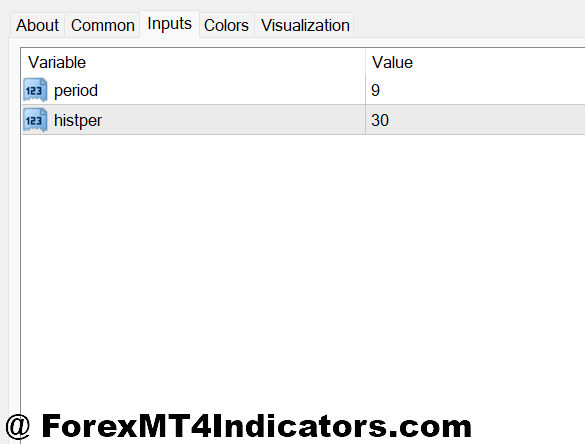
The default VIDYA period often sits around 9-20, depending on the implementation. For the volumatic version on MT4, traders typically adjust two main parameters: the base period and the CMO period.
Scalpers working 5-minute charts on volatile pairs like GBP/JPY might use a shorter base period (9-12) with a CMO period of 5-7. This makes the indicator highly responsive, catching quick moves during London or New York sessions. The trade-off? More false signals during ranging periods.
Swing traders on daily charts usually extend the base period to 20-30 with a CMO period around 14. This configuration smooths out intraday noise while still adapting to genuine trend changes. Testing this on EUR/USD daily charts shows it works well for identifying trend direction without getting caught in every minor pullback.
Day traders often find a middle ground: 14-period base with 9-period CMO on hourly or 4-hour charts. This balance provides decent responsiveness without excessive whipsaws. But volume characteristics matter. The same settings that work on EUR/USD—which trades massive volume—might need adjustment for a pair like NZD/CAD, where volume is lighter and more erratic.
Advantages That Actually Matter
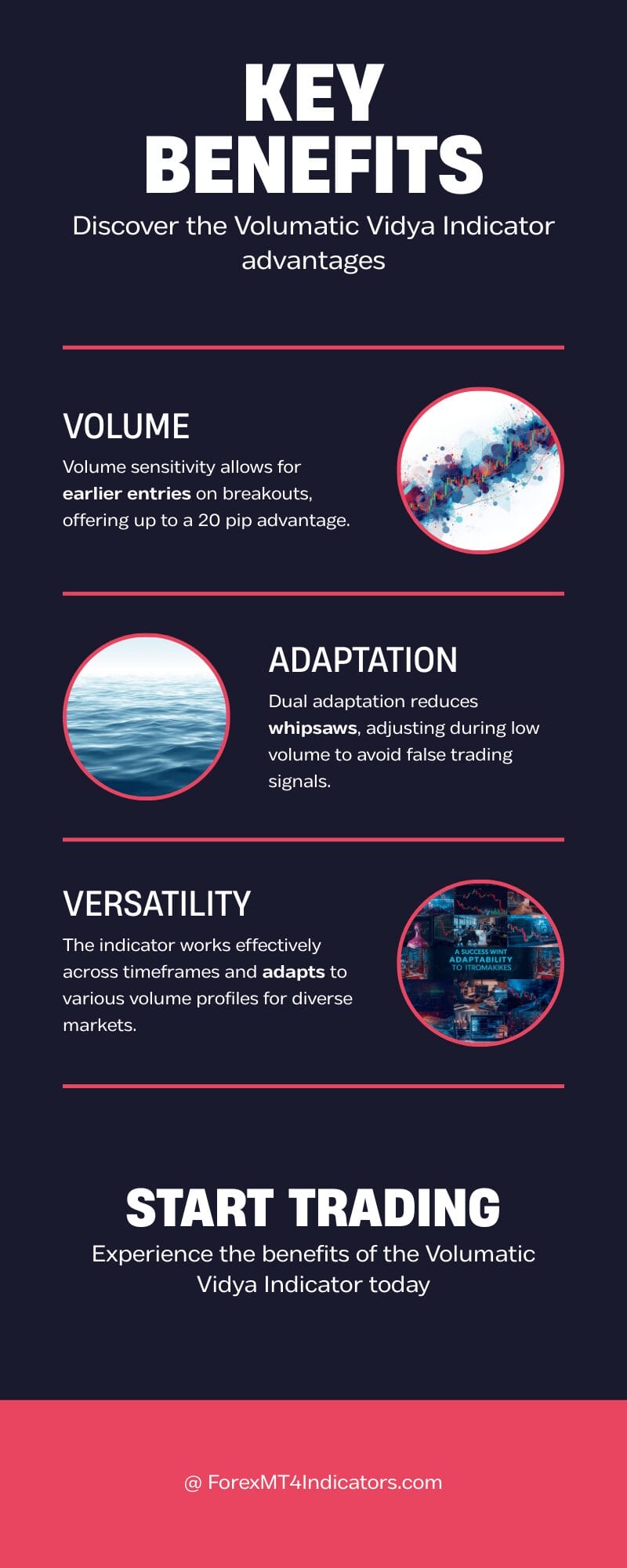
The volume sensitivity is the standout feature. During breakouts, when volume confirms the move, the indicator accelerates faster than traditional adaptive averages. This means earlier entries on legitimate moves. On a GBP/USD breakout from a 200-pip range, the difference might be 15-20 pips—not huge, but meaningful over dozens of trades.
The dual adaptation also reduces whipsaws compared to standard moving averages. When price chops around on low volume, the indicator becomes sluggish, avoiding false crossover signals. Traders who’ve struggled with moving average crossover systems in ranging markets often appreciate this behavior.
Another plus: it works across timeframes. Unlike some volume-based indicators that need heavy volume to function (making them useless on forex compared to stocks), the Volumatic Vidya adapts its expectations based on the pair’s typical volume profile.
Honest Limitations Every Trader Should Know
Trading forex carries substantial risk. No indicator guarantees profits, and the Volumatic Vidya isn’t exempt from that reality.
First, it’s a lagging indicator despite its adaptive features. Even with fast settings, it confirms moves after they start—not before. Don’t expect it to predict reversals. It follows trends once they establish.
Second, volume in forex is tricky. Unlike centralized exchanges, forex volume data represents only the broker’s feed, not the entire interbank market. This means volume readings can vary between brokers, potentially affecting the indicator’s behavior. A volume spike on one platform might not appear on another.
The indicator also struggles during major news events. When NFP or FOMC announcements hit, price can gap or spike erratically. The volume might surge, but the price action is so chaotic that the indicator provides little useful guidance. Most experienced traders simply step aside during these events rather than relying on any technical tool.
Finally, it requires optimization for each trading style and pair. What works for EUR/USD won’t necessarily work for USD/ZAR. That means backtesting and forward testing before committing real capital—a time investment many traders skip to their detriment.
How to Trade with Volumatic Vidya Indicator MT4
Buy Entry
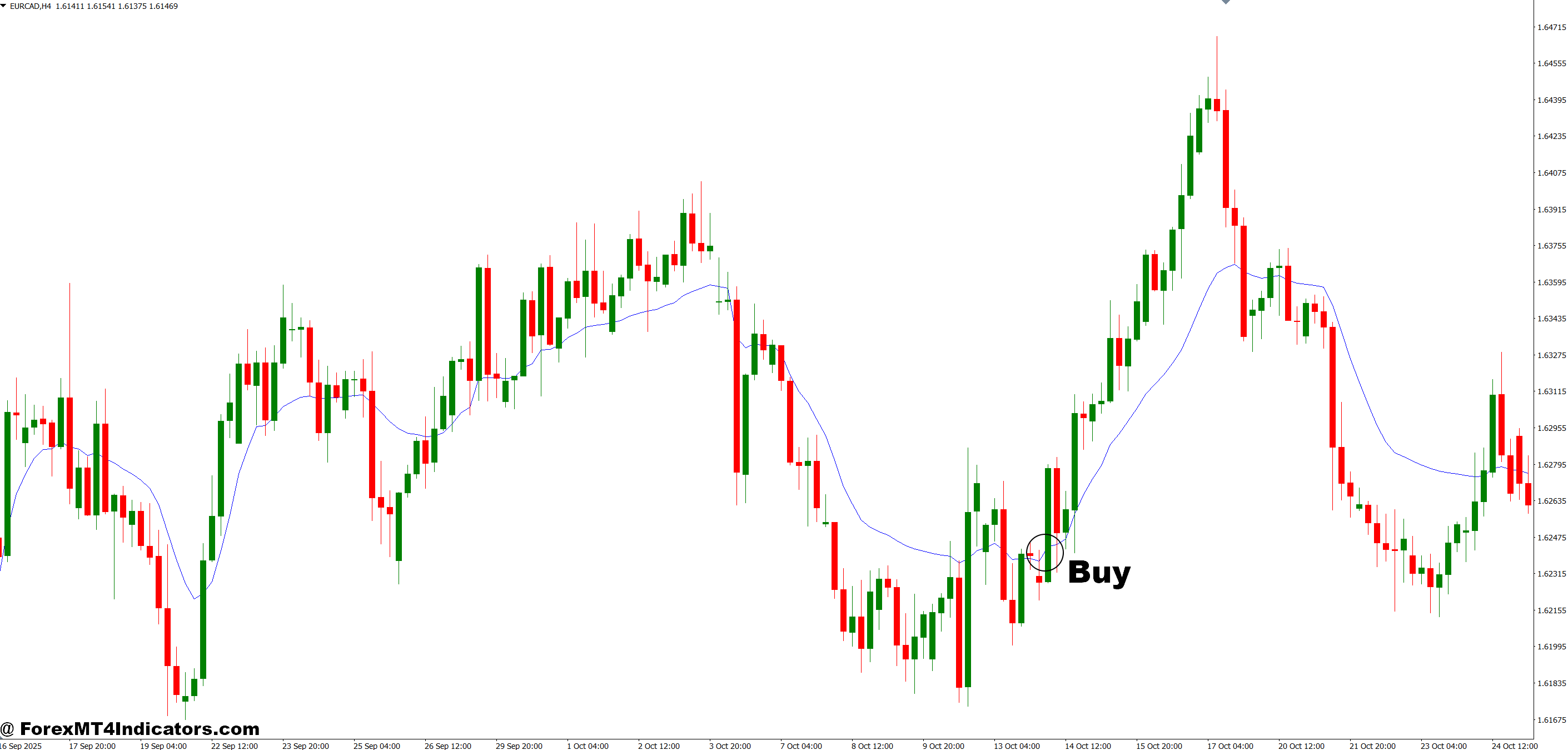
- Price crosses above the Volumatic Vidya line – Enter long when price closes above the indicator on your chosen timeframe (1-hour or 4-hour for EUR/USD), but only if volume is at least 1.5x the average. This confirms genuine buying pressure, not a weak bounce.
- Volume spike with upward slope – Look for the indicator curving upward with at least 30-40% volume increase on GBP/USD. This combination suggests institutional buying. Avoid entry if volume spike happens during news events.
- Pullback to the line on uptrend – When price retraces to touch the Volumatic Vidya during an established uptrend, enter long with a 20-30 pip stop below the line. Best on 4-hour charts during London or New York sessions.
- Daily chart slope turns positive – If the indicator flips from downward to upward slope on EUR/USD daily chart with rising volume, enter on the next 4-hour bullish candle close. Target 80-100 pips and risk no more than 2% of account.
- Crossover above 50-period SMA – When Volumatic Vidya crosses above a standard 50 SMA while both are rising, enter long on pairs like USD/JPY. Skip this signal if Asian session shows thin volume.
- Higher lows pattern with volume confirmation – Price makes higher lows while touching the indicator, and each bounce shows increasing volume. Enter on the third bounce with stops 15 pips below the line.
- Divergence reversal from oversold – After strong downtrend on GBP/USD, if price makes lower lows but the indicator starts flattening or rising, wait for one bullish engulfing candle above the line before entering. Don’t force entries during Friday afternoons.
- Break of consolidation with volume – When price breaks above a 50-pip range on 1-hour chart and the Volumatic Vidya accelerates upward with 2x volume, enter within 10 pips of breakout. Avoid if the range is less than 4 hours old.
Sell Entry
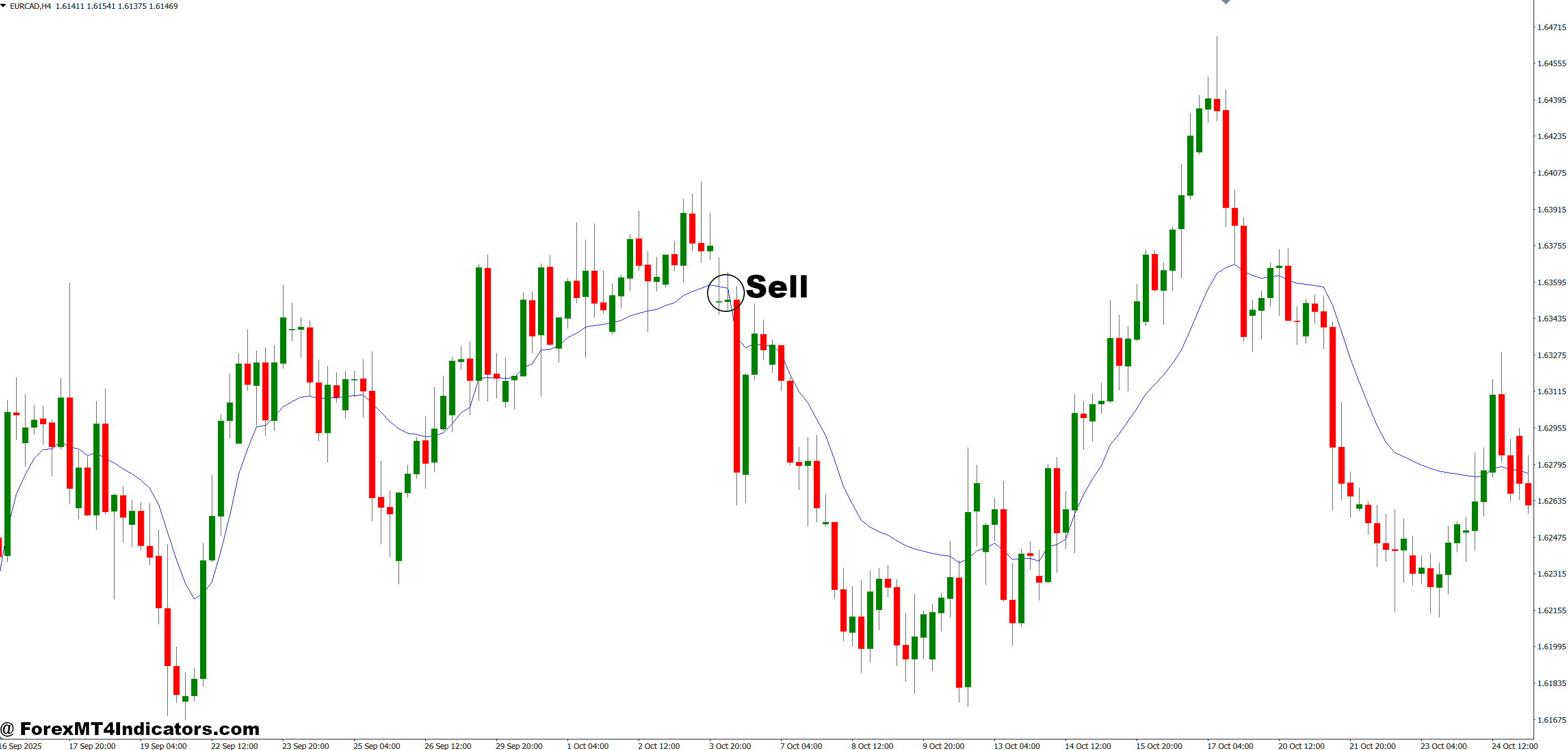
- Price crosses below the Volumatic Vidya line – Enter short when price closes beneath the indicator on 4-hour EUR/USD charts, especially if volume jumps above 1.5x average. This signals distribution from larger players.
- Volume increase with downward angle – Watch for the indicator sloping down sharply with 40%+ volume spike on GBP/USD. Enter short but skip the signal within 30 minutes before major news releases like NFP.
- Rejection from the line during downtrend – When price rallies to test the Volumatic Vidya from below during a downtrend, enter short with 25-30 pip stop above the line. Works best on 1-hour and 4-hour timeframes.
- Daily chart turns negative – If the indicator flips from upward to downward slope on USD/JPY daily with growing volume, enter short on next 4-hour bearish close. Risk maximum 2% and target 100+ pips.
- Crossover below 50-period SMA – When Volumatic Vidya crosses under a standard 50 SMA while both decline, enter short on EUR/USD or GBP/USD. Don’t take this signal during thin Asian session volume.
- Lower highs with volume spikes – Price forms lower highs while hitting the indicator, each rejection showing increased volume. Enter on the third rejection with 20-pip stop above the line.
- Divergence after strong rally – Following extended uptrend, if price makes higher highs but indicator flattens or dips, wait for one strong bearish candle below the line. Never enter during Monday morning gaps or Sunday night opens.
- Breakdown with volume confirmation – Price breaks below 60-pip consolidation on 1-hour chart and Volumatic Vidya drops sharply with 2x normal volume. Enter within 15 pips of breakdown, but avoid if breakdown happens in last hour before market close.
Final Thoughts on Practical Application
The Volumatic Vidya Indicator MT4 offers a smarter approach to moving averages by accounting for market participation. It’s not going to magically fix a broken trading strategy, but it can improve entry timing and reduce false signals for traders who already understand price action basics.
The best application combines it with key support and resistance levels. When price approaches a major level and the Volumatic Vidya shows strong trend alignment with increasing volume, that’s a higher-probability setup than the indicator alone would suggest. The volume-weighted adaptive nature helps confirm whether other traders are committing capital at those same levels.
Risk management remains paramount. Even with volume confirmation and adaptive smoothing, losing trades happen. Position sizing, stop losses, and realistic profit targets matter far more than any indicator’s sophistication. Use this tool as part of a complete approach, not as a standalone solution. Test it thoroughly on a demo account before risking real money, and keep expectations grounded in the reality that forex trading involves substantial risk and uncertainty.
Level up your trading
Learn to read the chart — not just the indicator
eBook · Instant PDF
Video Course · 12 modules
Recommended MT4/MT5 Brokers
- ✓ *FREE *$50 to start (withdrawable)
- ✓ Deposit bonus up to $5,000
- ✓ Negative balance protection
Trading forex and CFDs carries a significant risk of loss and is not suitable for everyone. Broker links are affiliate links — we may earn a commission at no cost to you.
Free MT4 Indicator Download

Enter Your Email Address below, download link will be sent to you.