

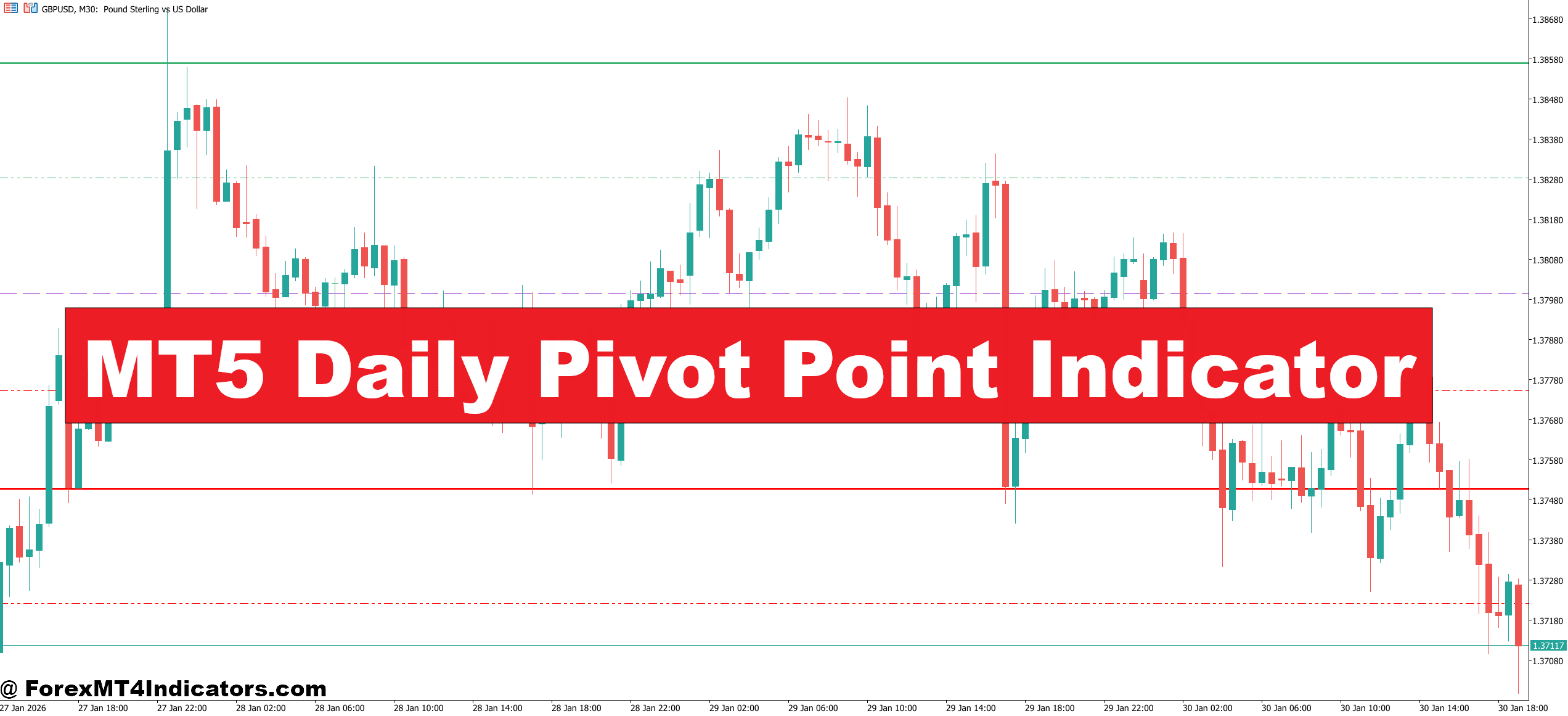
The MT5 Daily Pivot Point Indicator solves this by giving you mathematically-derived price levels that institutional traders and algorithms watch closely. These aren’t random lines—they’re calculated reference points based on the previous day’s price action, and when the market approaches them, things tend to happen.
What Makes Daily Pivot Points Different
Daily pivot points are price levels calculated using yesterday’s high, low, and close. The central pivot point (PP) serves as the primary reference, with support (S1, S2, S3) and resistance (R1, R2, R3) levels extending above and below it.
Here’s the standard calculation:
- Pivot Point = (High + Low + Close) / 3
- R1 = (2 × PP) – Low
- S1 = (2 × PP) – High
- R2 = PP + (High – Low)
- S2 = PP – (High – Low)
What sets this indicator apart is its universal adoption. Unlike proprietary indicators that only you’re watching, pivot points appear on thousands of trading screens worldwide. When GBP/USD approaches R1, you’re not the only one noticing—algorithmic systems, bank traders, and retail traders globally are watching that same level.
That collective attention creates real market behavior. Price often stalls, reverses, or breaks through with momentum at these levels because so many participants are making decisions there.
How Traders Actually Use These Levels
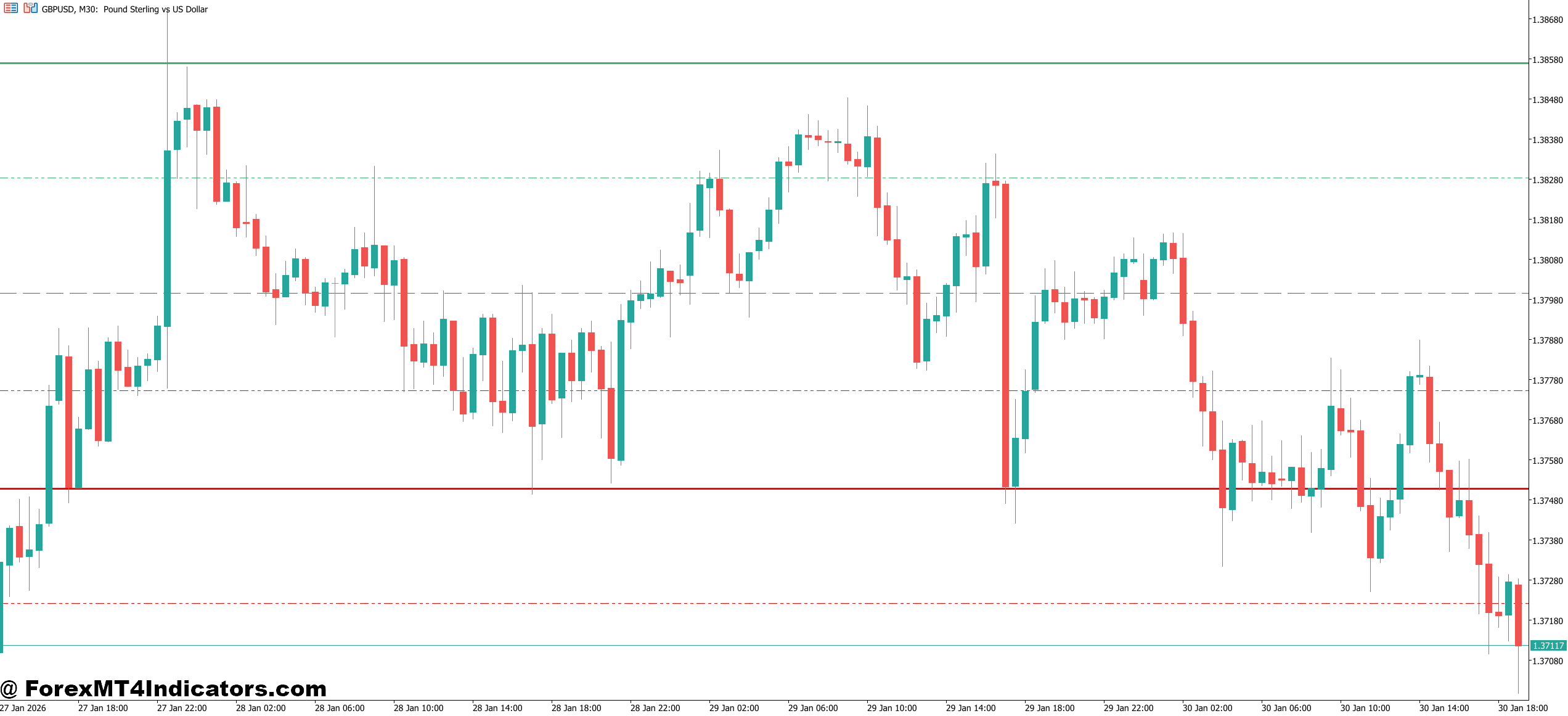
The most straightforward application is range trading between the pivot and first support/resistance levels. Let’s say USD/JPY opens near the daily pivot at 148.50. S1 sits at 147.90 and R1 at 149.10. During the Asian session, which tends toward consolidation, traders might buy near S1 with a target at the pivot or R1, then reverse the trade if price reaches R1.
But here’s where experience matters. Not every pivot level holds equally well. The central pivot point typically carries the most weight, followed by R1 and S1. The outer levels (R2, R3, S2, S3) are hit less frequently but can serve as strong reversal zones when reached.
I’ve noticed pivot points work best on pairs with healthy liquidity—EUR/USD, GBP/USD, USD/JPY. On exotic pairs with erratic spreads and choppy movement, these levels become less reliable. The math stays the same, but market behavior changes when fewer participants trade the pair.
One practical approach: if price opens above the pivot, bias your trades toward the long side with R1 and R2 as targets. Opening below the pivot? Look for short opportunities toward S1 and S2. This simple framework keeps you aligned with the day’s directional bias rather than fighting it.
MT5 Daily Pivot Point Indicator Settings
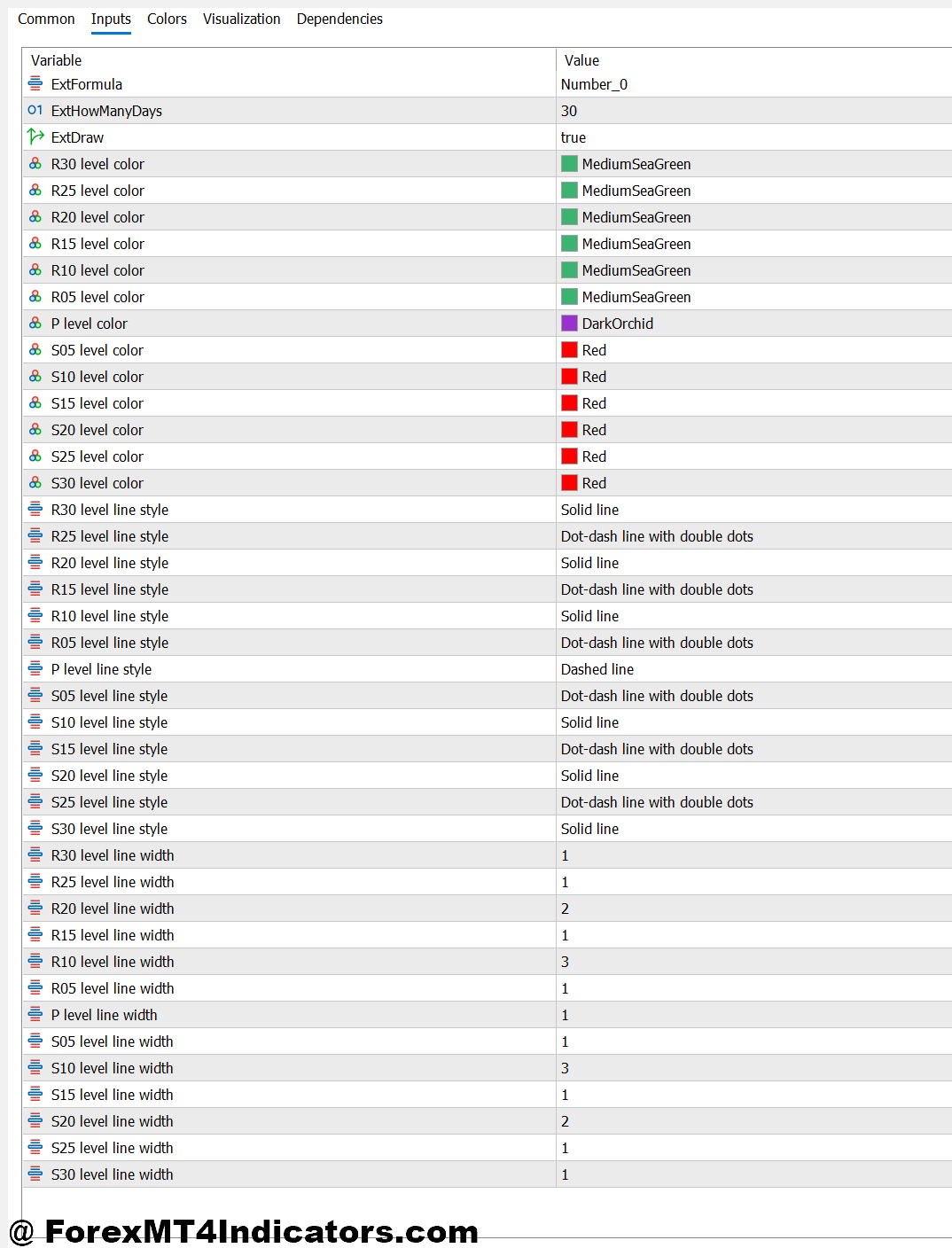
The MT5 version of this indicator usually offers several calculation methods beyond the standard formula. Woodie’s pivots give more weight to the closing price, while Camarilla pivots create tighter levels suited for scalping. Fibonacci pivots incorporate those golden ratios traders obsess over.
For day trading on 5-minute or 15-minute charts, I’d stick with standard or Camarilla pivots. The tighter levels give you more opportunities throughout the day. Swing traders working off 4-hour or daily charts might prefer standard or Fibonacci pivots since they’re planning to hold positions longer.
Color and line style adjustments matter more than you’d think. Trading during the New York session means your chart gets crowded with indicators, news markers, and position lines. Making your pivot points a distinct color—something that pops against your background—prevents you from overlooking them when price approaches.
Some traders display all seven levels (PP, R1-R3, S1-S3). Others find that cluttered and only show the pivot plus R1/S1. There’s no right answer, but I’d suggest starting with all levels visible, then removing the ones you rarely use after a few weeks of testing.
The Real Advantages and Honest Limitations
The biggest advantage is objectivity. These levels don’t care about your opinion or bias—they’re pure math based on yesterday’s price action. When you’re tempted to force a trade because you’ve been sitting on your hands all morning, pivot points give you discipline. No setup near a level? No trade.
They also work across all timeframes and pairs, which means you’re not relearning a new system every time you switch from scalping EUR/USD to swing trading gold. The same principles apply whether you’re holding for 30 minutes or three days.
That said, pivot points have clear limitations. They’re lagging by nature—calculated from yesterday’s data, so they don’t predict the future. Price can blow right through R1 without blinking during high-impact news like NFP or central bank announcements. I’ve watched USD/CAD gap through multiple pivot levels when oil prices crater overnight.
False breaks happen too. Price touches S1, you enter long thinking it’ll bounce, and it drops another 20 pips before finally reversing. No level is a brick wall. You still need confirmation—candlestick patterns, volume, momentum indicators—before pulling the trigger.
Pivot Points vs Moving Averages and Fibonacci Retracements
Traders often ask whether they should use pivot points or stick with moving averages. The truth is they serve different purposes. Moving averages show trend direction and dynamic support/resistance. Pivot points provide static intraday levels. Combining a 50-period EMA with daily pivots gives you both trend context and specific entry zones.
Fibonacci retracements require you to identify the swing high and low, which introduces subjectivity. Did the swing start at the wick or the close? Different traders get different levels. Pivot points eliminate that guesswork—everyone gets the same numbers based on the same data.
That doesn’t make pivots superior. Fibonacci levels often align with pivot points, creating confluence zones where both methods agree. When EUR/USD’s S1 lines up with a 61.8% Fib retracement from yesterday’s rally, you’ve got a higher-probability setup than either level alone would provide.
How to Trade with MT5 Daily Pivot Point Indicator
Buy Entry
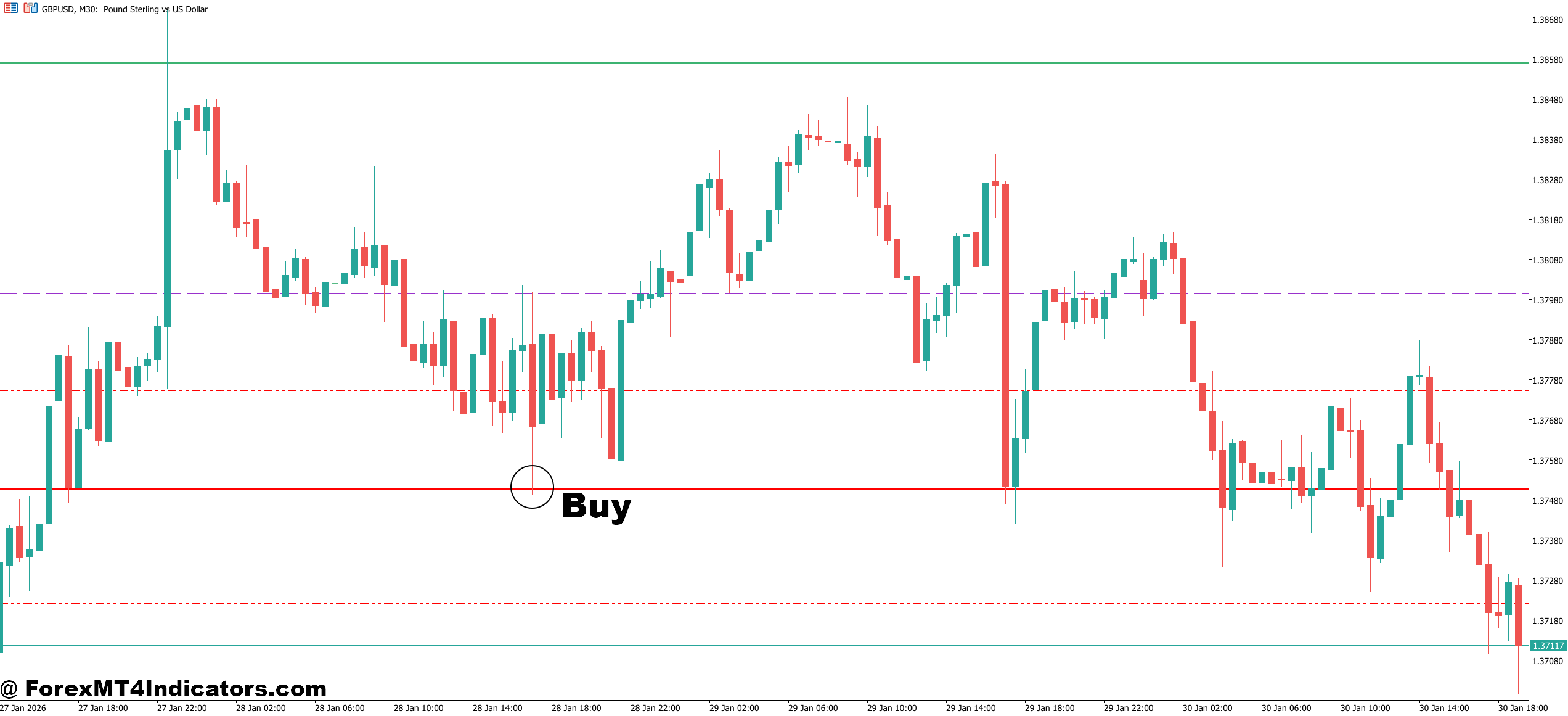
- Price bounces off S1 or S2 with bullish confirmation – Wait for a strong bullish candlestick close (engulfing pattern or pin bar) at S1 before entering long, with stop-loss 10-15 pips below the support level.
- Morning open above the daily pivot point – If EUR/USD opens 20+ pips above PP during the London session, look for pullbacks to the pivot as buying opportunities with R1 as your first target.
- Breakout above R1 with momentum – Enter long when price closes a 1-hour candle above R1 with increased volume, targeting R2, but skip this if price has already moved 50+ pips from the pivot.
- Double bottom forms near S2 on 4-hour chart – Two swing lows touching S2 within 12-24 hours signals strong support; buy on the retest with a tight 20-pip stop.
- Bullish divergence at S1 with RSI – When GBP/USD makes lower lows but RSI makes higher lows at S1, enter long on the next bullish candle close with 1:2 risk-reward ratio.
- Price consolidates between PP and S1, then breaks upward – If a pair like USD/JPY ranges for 3+ hours between these levels, buy the breakout above PP with stop below the range low.
- Gap fill completes at the pivot point – When price gaps down at the open but climbs back to close the gap at PP, enter long with a 25-pip stop, but avoid this on major news days.
- Pivot point aligns with major psychological level – If PP lands at 1.1000 on EUR/USD, wait for bullish price action there since round numbers amplify support strength.
Sell Entry
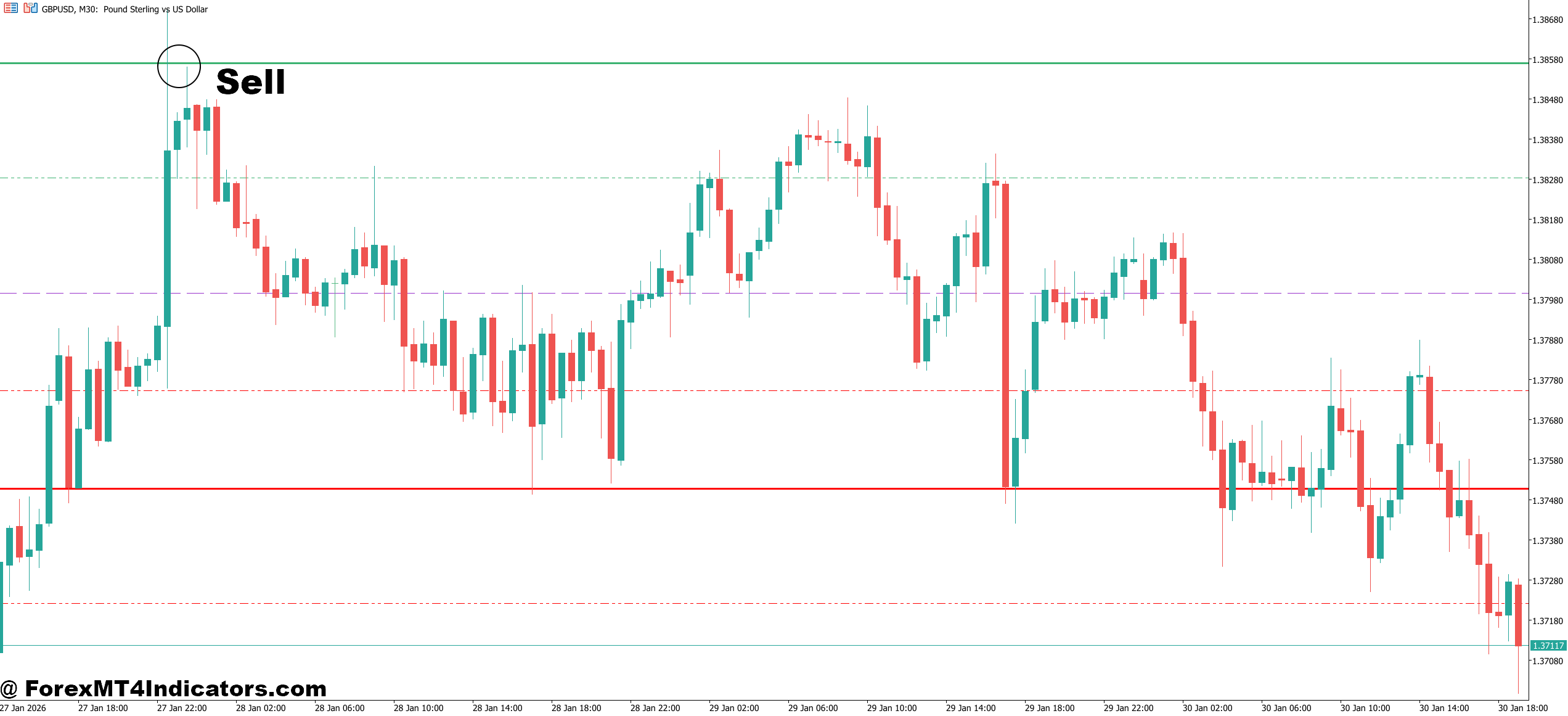
- Price rejects R1 or R2 with bearish pattern – Enter short when you see a shooting star or bearish engulfing candle at R1, placing your stop 10-15 pips above the resistance level.
- Morning open below the daily pivot point – If GBP/USD opens 20+ pips below PP during Asian session, sell rallies back to the pivot with S1 as your target zone.
- False breakout above R1 quickly reverses – When price spikes above R1 but closes back below within the same 15-minute candle, short the breakdown with R1 as your stop level.
- Double top forms near R2 on 1-hour chart – Two failed attempts to break R2 within 4-6 hours indicates strong resistance; sell on the breakdown with PP or R1 as targets.
- Bearish divergence at R1 with stochastic – If EUR/USD makes higher highs but stochastic makes lower highs at R1, short the next bearish candle close with 30-pip stop.
- Price opens between R2 and R3 during high volatility – Extreme openings above R2 often reverse; short toward R1 or PP, but reduce position size by 50% due to increased risk.
- Breakdown below the pivot after failed rally – When price attempts to break above PP twice within the same trading session then fails, short with S1 as target and 20-pip stop above PP.
- Avoid selling at S1 during strong downtrends – Don’t short support levels when price has already dropped 80+ pips from the open; oversold bounces can stop you out quickly.
Final Thoughts on Trading with Daily Pivots
The MT5 Daily Pivot Point Indicator won’t make trading easy—nothing does. What it provides is structure. Instead of staring at a blank chart wondering where to enter, you’ve got reference points that the broader market respects. Price opens above the pivot, you’re thinking long. It approaches R1, you’re watching for rejection or breakout. That’s a framework, which is exactly what consistent trading requires.
Use these levels as part of a complete strategy, not as standalone signals. Combine them with price action confirmation, proper position sizing, and risk management that keeps you alive during losing streaks. Trading forex carries substantial risk, and no indicator guarantees profits, but pivot points stack the odds in your favor when used correctly.
Test them on a demo account first. Track how your preferred pairs behave around these levels during different sessions. You’ll quickly notice patterns—maybe GBP/USD respects S1/R1 during London but blows through them during New York. That’s the kind of insight that turns a simple indicator into a genuine edge.
Level up your trading
Learn to read the chart — not just the indicator
eBook · Instant PDF
Video Course · 12 modules
Recommended MT4/MT5 Brokers
- ✓ *FREE *$50 to start (withdrawable)
- ✓ Deposit bonus up to $5,000
- ✓ Negative balance protection
Trading forex and CFDs carries a significant risk of loss and is not suitable for everyone. Broker links are affiliate links — we may earn a commission at no cost to you.
Free MT4 Indicator Download

Enter Your Email Address below, download link will be sent to you.