

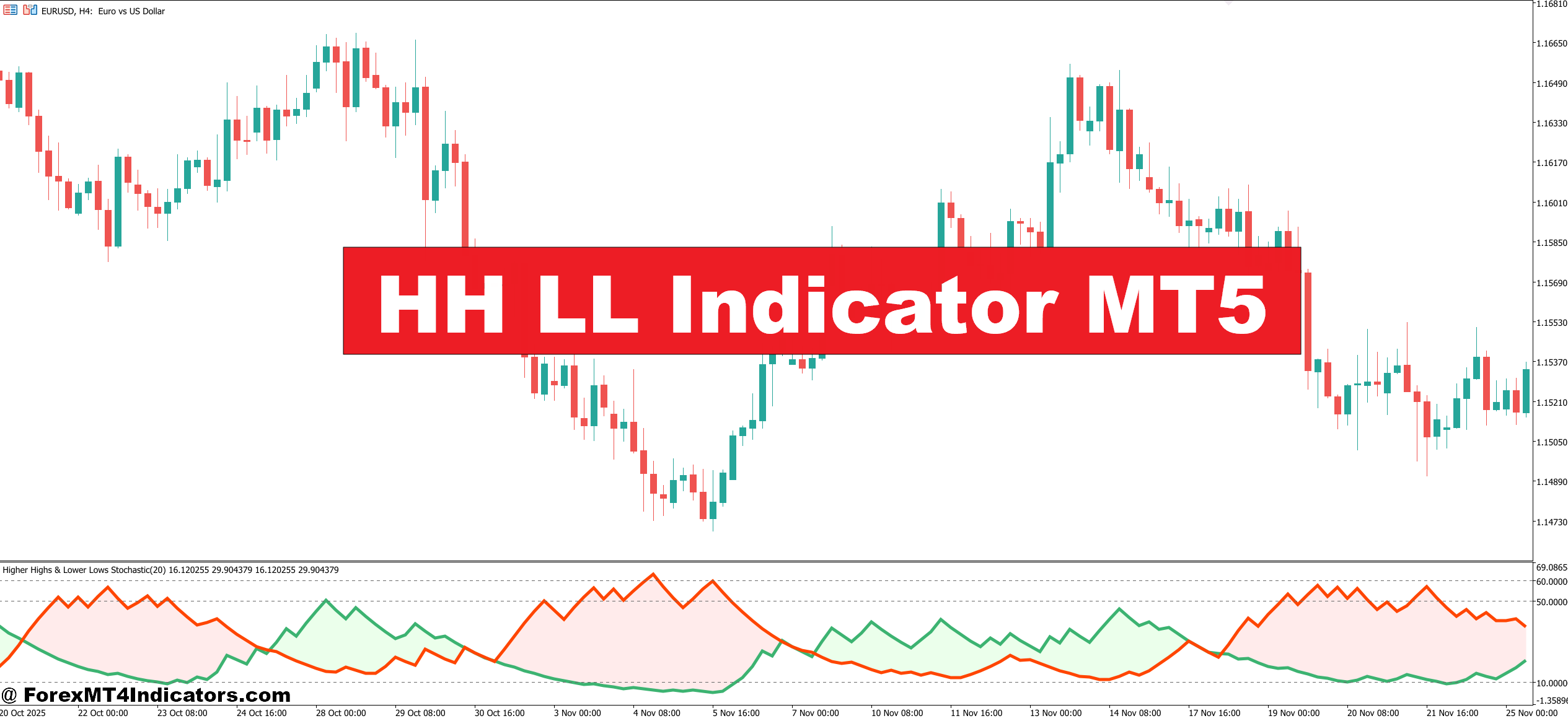
The HH LL Indicator MT5 is a technical analysis tool that identifies and labels swing points in price movement. It scans the chart for peaks and troughs based on a lookback period you define, then marks them with labels: HH for higher highs, HL for higher lows, LH for lower highs, and LL for lower lows.
This isn’t some magic formula. The indicator uses a simple but effective method: it compares the current swing point to the previous one. If the latest high is above the previous high, it gets marked as HH. If the latest low is above the previous low, that’s an HL. The same logic applies in reverse for downtrends with LH and LL.
What makes this useful is the visual clarity. When you see a series of HH and HL forming on GBP/JPY during a 4-hour uptrend, you know the bullish structure is intact. The moment you spot an LH forming, that’s your first warning sign that momentum might be shifting. Traders who follow Dow Theory or market structure concepts will immediately recognize the value here.
How Traders Use It in Real Market Conditions
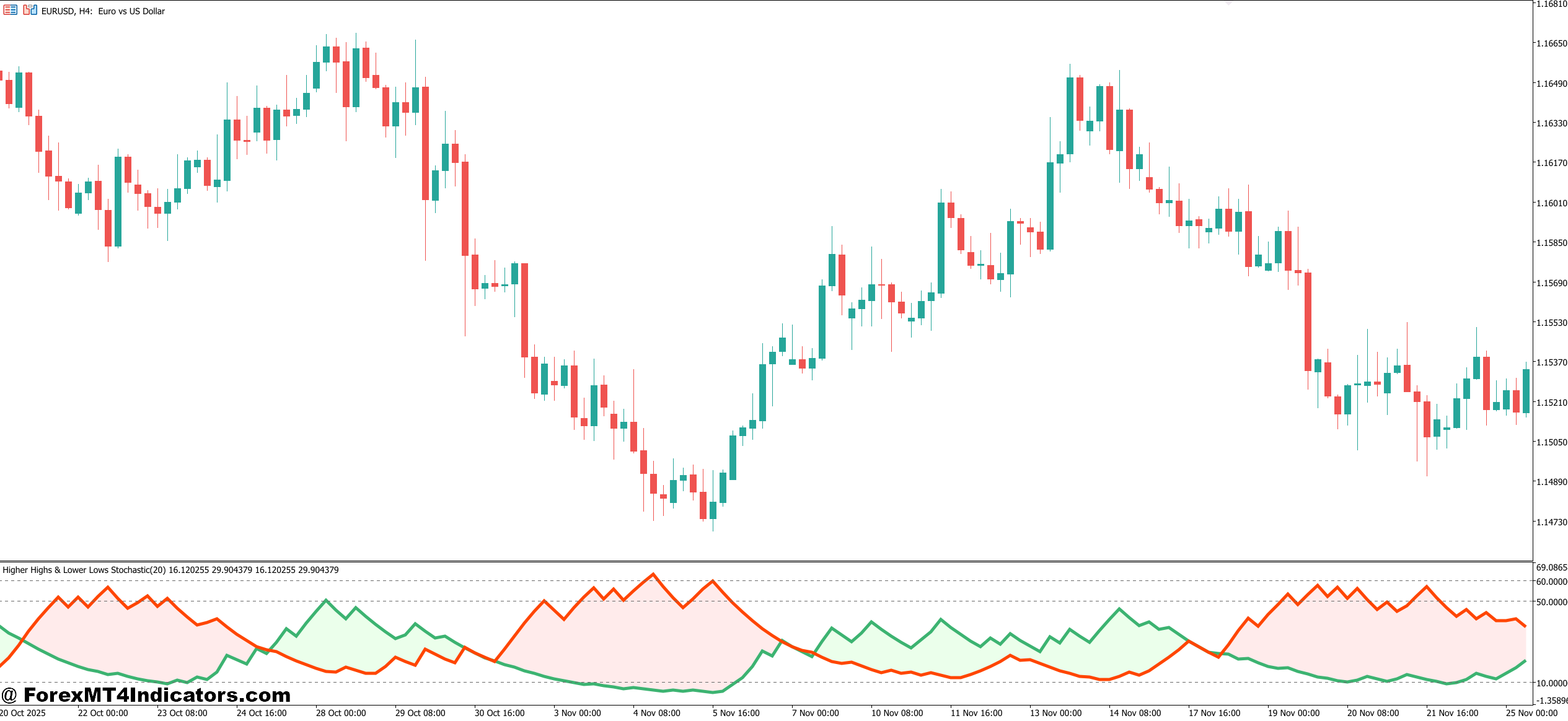
The real power shows up when you combine this indicator with your existing strategy. Let’s say you’re trading USD/CAD on the daily chart. You notice the indicator has marked three consecutive HH and HL points over the past two weeks. Price pulls back to test the most recent HL, which also happens to align with the 50-period moving average. That confluence gives you a high-probability long entry.
Here’s the thing: the indicator won’t tell you when to enter. It shows you the market structure, but you still need a trigger. Some traders wait for a bullish engulfing candle at an HL in an uptrend. Others use it to set trailing stops—if you’re long and the indicator marks a new LH, that might be your signal to tighten your stop or take partial profits.
During ranging markets, you’ll see the indicator flip between HH/HL and LH/LL frequently. That’s actually useful information. It tells you the market hasn’t committed to a direction yet, which means trend-following strategies will likely get chopped up. I’ve seen traders use this as a filter—when the structure keeps alternating, they switch to range-trading tactics or sit on the sidelines.
One pattern that shows up often: false breakouts. Price makes what looks like a new HH, the indicator marks it, traders pile in long, and then price reverses hard. The indicator marked the swing point correctly based on its logic, but the market rejected that level. That’s why you need confirmation. The indicator identifies structure; your job is to determine if that structure is reliable based on volume, support/resistance, or other factors.
HH LL Indicator MT5 Adjusting Settings
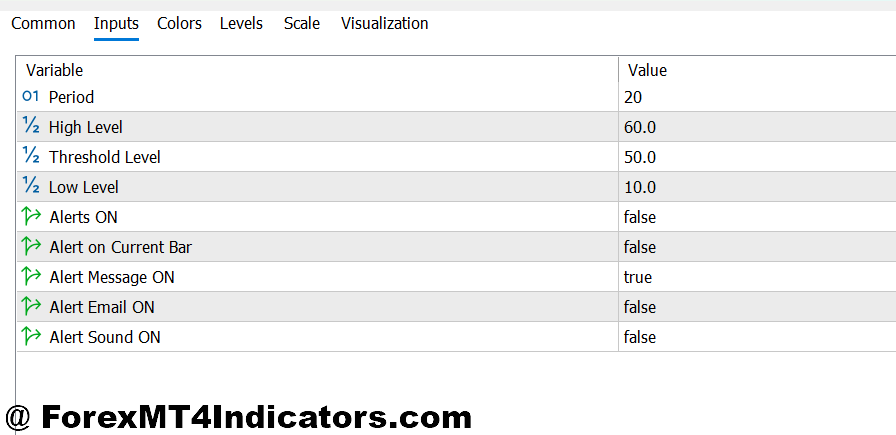
The main parameter you’ll adjust is the lookback period, sometimes called the swing strength or pivot period. The default is often set around 5-10 bars. A lower number (3-5) makes the indicator more sensitive—it’ll mark more swing points, which works well for scalpers on 5-minute or 15-minute charts. You’ll catch smaller moves, but you’ll also get more noise.
Bump that setting up to 15-20, and the indicator becomes more conservative. It only marks significant swing points, filtering out minor price fluctuations. This suits daily or weekly chart traders who want to see the major market structure without getting distracted by every small wiggle.
For currency pairs like EUR/GBP that tend to move in tighter ranges, a lower setting helps you catch the subtle shifts in structure. But for something volatile like XAU/USD (gold), you might want a higher setting to avoid getting overwhelmed with signals during whipsaw conditions.
Some versions of the indicator let you customize the label colors and positions. That’s mostly aesthetic, but it matters if you’re running multiple indicators and need visual clarity. You don’t want your HH labels overlapping with resistance zones or other plot points.
The Honest Assessment: What Works and What Doesn’t
The biggest advantage is objectivity. Two traders looking at the same chart will see the same HH and HL points marked by the indicator. That removes the “is this really a higher high?” debate. It’s either marked or it isn’t. This is especially helpful for new traders still learning to read price action.
The indicator also helps maintain discipline. When you’re in a long position and you see an LH form, that’s an objective signal that the uptrend structure is compromised. You might not want to see it, but the indicator doesn’t care about your position bias. That forced awareness has saved traders from riding winners all the way back to breakeven.
But here are the limitations. The indicator is backward-looking. It needs at least the lookback period number of bars to confirm a swing point. That means in fast-moving markets, it’ll mark the HH or LL after the move has already happened. You won’t catch the absolute high or low in real-time.
It also doesn’t account for fundamental catalysts. The indicator might show a perfect series of HH and HL on USD/JPY, suggesting a strong uptrend. Then the Bank of Japan announces an unexpected policy change, and price gaps down 200 pips. The market structure meant nothing in the face of that news. Trading forex carries substantial risk. No indicator guarantees profits, and market conditions can override technical patterns instantly.
During consolidation phases, the indicator becomes less useful. You’ll see a jumbled mix of HH, HL, LH, and LL all clustered together. That’s technically accurate—price is making random highs and lows—but it doesn’t give you actionable information. You need trending conditions for this tool to shine.
How It Compares to Similar Tools
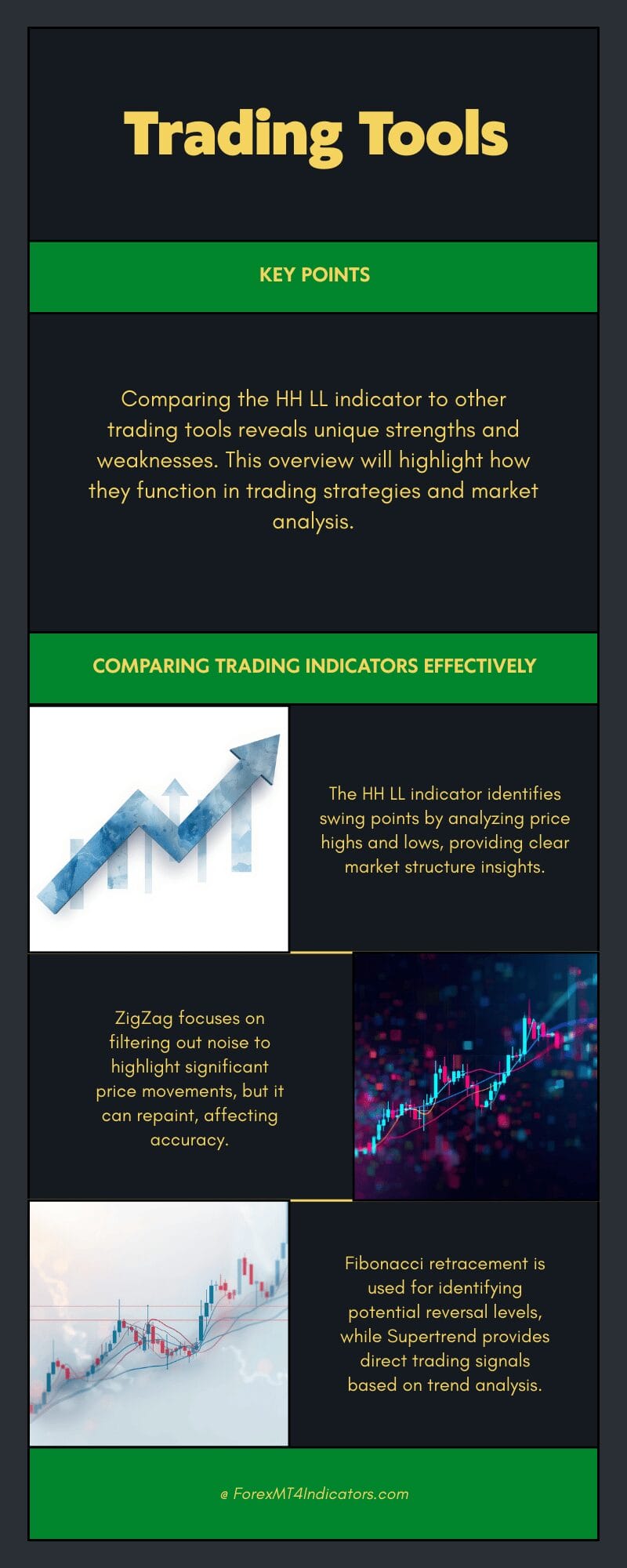
Many traders compare this to the ZigZag indicator. Both identify swing points, but they work differently. ZigZag redraws historical swings as new data comes in, which makes backtesting tricky. The HH LL indicator marks points based on confirmed data and generally doesn’t repaint (though this depends on the specific version you’re using—always test it first).
Fibonacci retracement tools serve a related purpose—identifying potential reversal zones based on recent swings. The HH LL indicator can actually make Fib drawing more accurate. You know exactly which swing high to which swing low you should be measuring because the indicator has already identified them objectively.
Compared to something like the Supertrend indicator, which gives direct buy/sell signals, the HH LL indicator is more passive. It provides information about market structure but leaves the trading decisions to you. That’s either an advantage or disadvantage depending on what you need. Discretionary traders usually prefer it; automated system traders might want something more directive.
How to Trade with HH LL Indicator MT5
Buy Entry
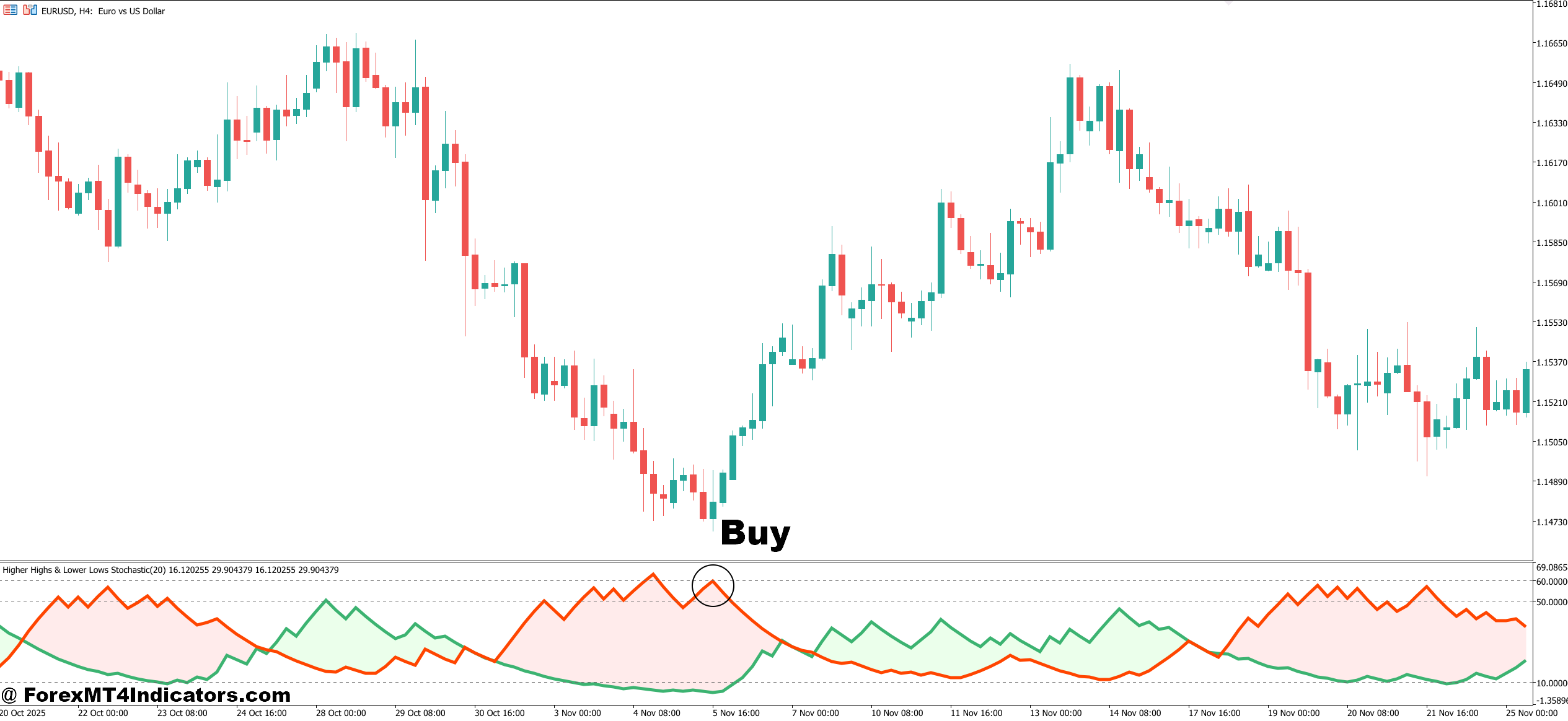
- Wait for HH confirmation – Enter long only after price forms a higher high above the previous peak, then pulls back to test the most recent HL on EUR/USD 4-hour charts.
- Combine with support levels – Look for HL formation at a key support zone or round number like 1.0800 on GBP/USD; enter when price bounces with a 20-30 pip stop below the HL.
- Check the sequence – Confirm at least two consecutive HH and HL patterns before entering; a single HH after downtrend isn’t enough on daily timeframes.
- Use pending buy stops – Place a buy stop order 5-10 pips above the most recent HH on 1-hour charts; this catches breakout momentum if structure continues.
- Set stops at structure breaks – Position your stop loss 15-20 pips below the last confirmed HL; if price breaks this point, the uptrend structure is invalidated.
- Avoid choppy markets – Skip buy signals when the indicator shows alternating HH/LH patterns within 50 pips on EUR/GBP; this signals consolidation, not trend.
- Scale in on HL retests – Add to winning positions only when price returns to a previous HL that held as support; risk 1% per additional entry.
- Exit when structure breaks – Close long positions immediately when the indicator marks the first LH after your entry; don’t wait for a full reversal.
Sell Entry
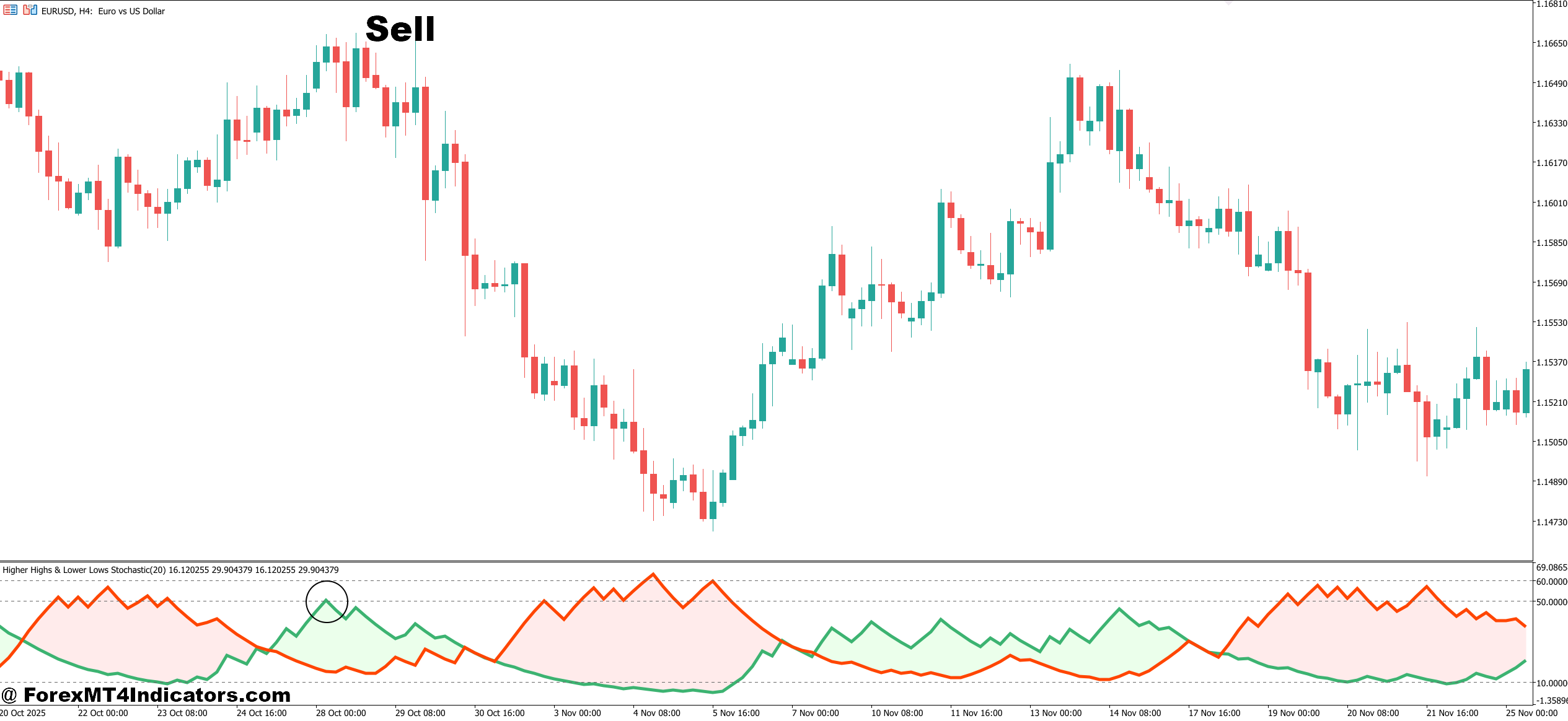
- Wait for LL confirmation – Enter short only after price forms a lower low beneath the previous trough, then rallies to test the most recent LH on GBP/USD 4-hour charts.
- Combine with resistance levels – Look for LH formation at a key resistance zone or psychological level like 1.1000 on EUR/USD; enter when price rejects with a 20-30 pip stop above the LH.
- Check the sequence – Confirm at least two consecutive LL and LH patterns before shorting; a single LL after uptrend isn’t reliable on daily charts.
- Use pending sell stops – Place a sell stop order 5-10 pips below the most recent LL on 1-hour timeframes; this captures breakdown momentum if bearish structure holds.
- Set stops at structure breaks – Position your stop loss 15-20 pips above the last confirmed LH; if price exceeds this level, the downtrend is compromised.
- Avoid ranging conditions – Skip sell signals when price creates LH and HH within the same 100-pip zone on USD/JPY; wait for clear directional bias.
- Scale in on LH retests – Add to winning shorts only when price rallies back to a previous LH that held as resistance; never risk more than 1-2% per trade.
- Exit when structure breaks – Close short positions immediately when the indicator marks the first HH after your entry; protecting capital beats hoping for reversal continuation.
Wrapping This Up
The HH LL Indicator MT5 serves a specific purpose: it removes the subjectivity from identifying swing points and market structure. It marks higher highs, higher lows, lower highs, and lower lows automatically, giving traders clear visual reference points for trend analysis. This works best when you combine it with other confirmation methods—support and resistance levels, candlestick patterns, or momentum indicators.
The tool won’t make trading decisions for you, and it won’t work well in choppy, directionless markets. What it will do is give you an objective framework for understanding whether the market is trending up, trending down, or going nowhere. That alone makes it worth considering, especially if you trade based on price action and market structure principles. Just remember that market structure can change quickly, and what looks like a solid trend today can reverse tomorrow. Test it on a demo account, adjust the settings to match your timeframe and trading style, and see if it fits your approach.
Level up your trading Learn to read the chart — not just the indicator eBook · Instant PDF Video Course · 12 modules Trading forex and CFDs carries a significant risk of loss and is not suitable for everyone. Broker links are affiliate links — we may earn a commission at no cost to you.Recommended MT4/MT5 Brokers
Free MT4 Indicator Download

Enter Your Email Address below, download link will be sent to you.