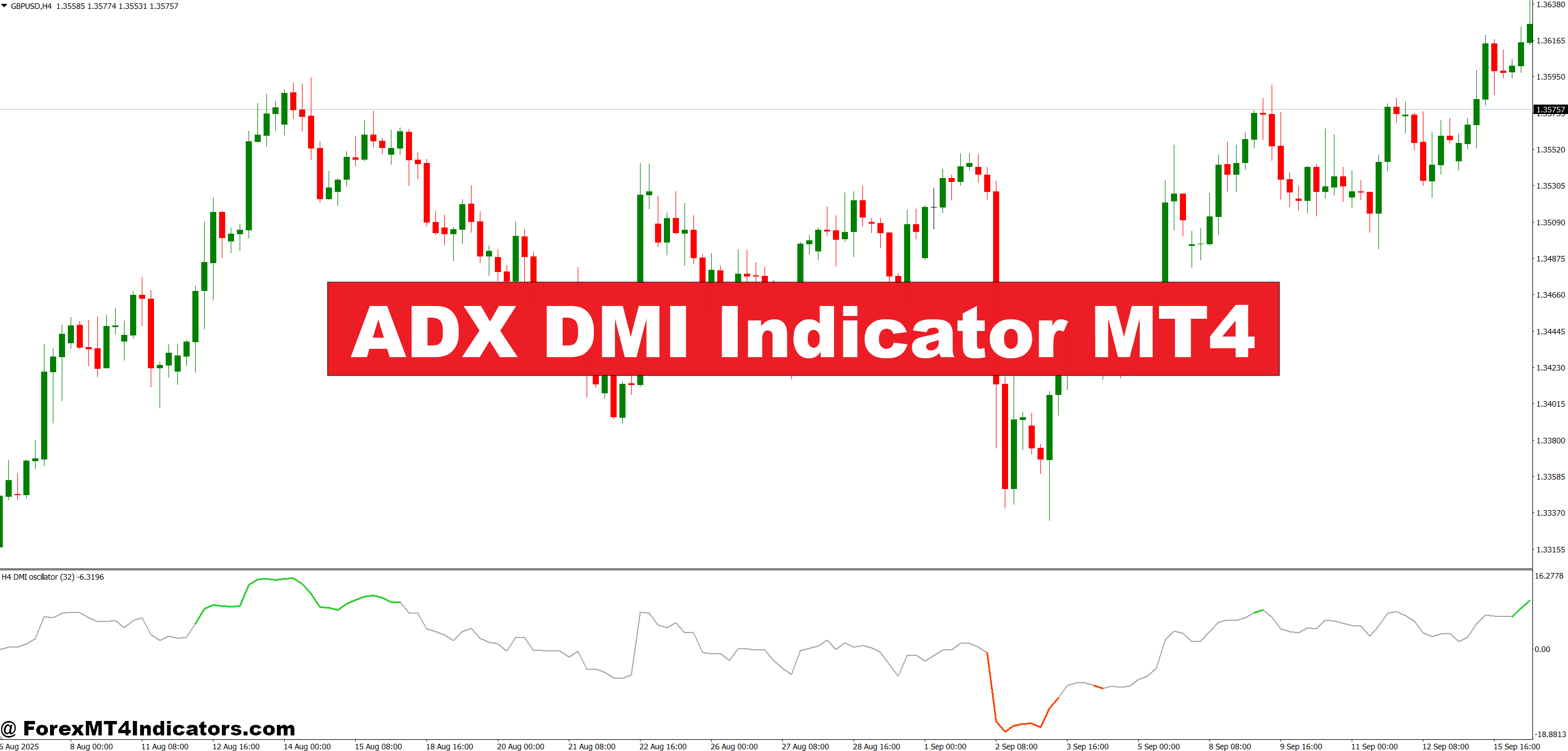
ADX stands for Average Directional Index. DMI stands for Directional Movement Index. They’re two components of the same system, developed by J. Welles Wilder and introduced in his 1978 book New Concepts in Technical Trading Systems.
On an MT4 chart, the indicator plots three lines: the +DI line, the –DI line, and the ADX line itself. The +DI measures upward directional pressure. The –DI measures downward directional pressure. The ADX measures how strong the trend is — regardless of direction.
That last point matters. ADX doesn’t care whether price is going up or down. A rising ADX line just means something is trending, not what direction. Traders need the +DI and –DI crossovers to determine that.
How the Calculation Works (And Why It Matters)
Wilder’s directional movement logic compares each candle’s range to the previous candle’s range. If today’s high exceeds yesterday’s high, that excess is positive directional movement (+DM). If today’s low falls below yesterday’s low, that excess is negative directional movement (–DM).
Those raw values get smoothed over a period — typically 14 bars, which remains the most widely used setting — and then divided by the Average True Range to normalize them into the +DI and –DI values plotted on screen.
The ADX line itself is derived from the difference between +DI and –DI, smoothed again over the same period. Because of all that smoothing, the ADX lags. It reacts after a trend has developed, not before. Traders who understand this use ADX to confirm rather than predict — a subtle but critical distinction that separates profitable use from repeated false entries.
Reading the Indicator in Real Market Conditions
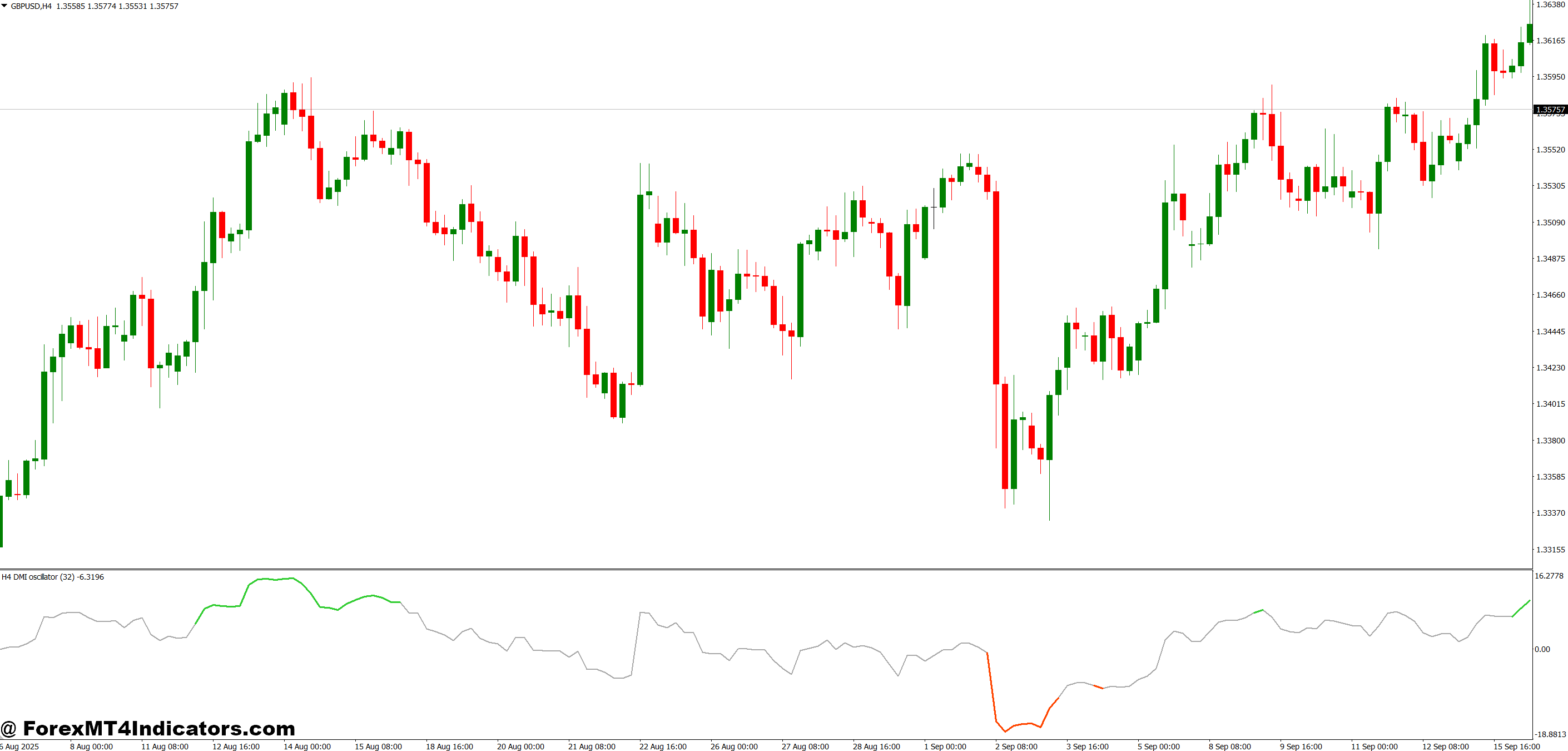
Here’s how this plays out in practice. Take GBP/USD on the 4-hour chart during the London-New York overlap. When the ADX reads below 20, price is almost certainly chopping. Breakout trades taken in that environment tend to fail. The range is real, but there’s no momentum pushing price cleanly through it.
Once ADX climbs above 25 — and especially when it crosses 30 — the market has shifted into trending mode. On that same GBP/USD chart, traders who waited for ADX to confirm before entering trend-following setups in early 2024 avoided a lot of the low-volatility chop that plagued the pair during the consolidation phase preceding the breakout.
The +DI and –DI crossover provides the directional signal. When +DI crosses above –DI while ADX is rising through 25, that’s a high-probability long setup by traditional ADX standards. The reverse applies for shorts. But — and this is key — taking that crossover signal when ADX sits at 15 and flat tends to produce nothing but frustration and whipsaw entries.
ADX DMI Indicator MT4 Settings and Customization
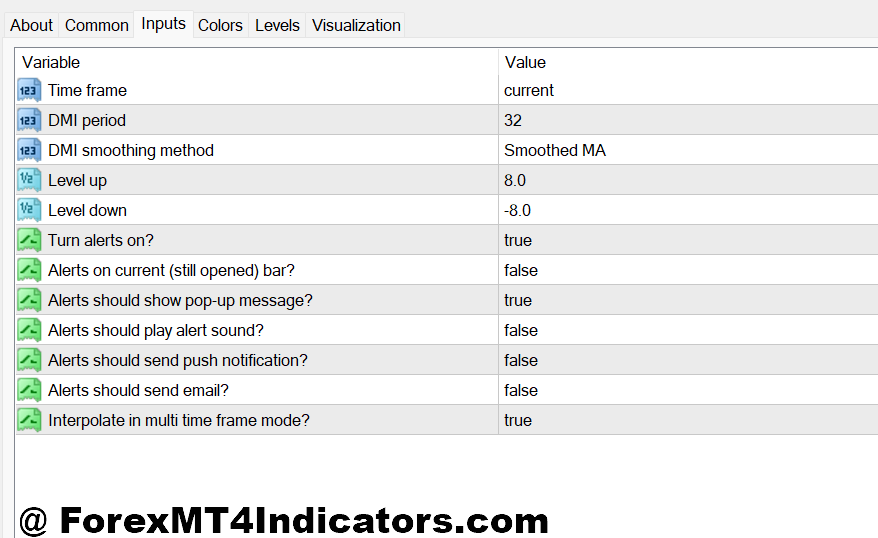
The default period on MT4 is 14, matching Wilder’s original specification. That works well on the 1-hour, 4-hour, and daily timeframes for major pairs like EUR/USD, USD/JPY, and GBP/USD.
Shorter periods — say, 7 or 8 — make the indicator faster and more sensitive. That sounds appealing, but it generates significantly more noise on smaller timeframes like the 15-minute chart. Traders scalping on M5 or M15 sometimes drop to a period of 5 or 6, though at that point the signals become inconsistent enough to require additional filters.
For swing traders working daily charts, some prefer a 20 or 21 period to reduce false signals during news-driven spikes. The thresholds for “trending” vs. “ranging” also shift slightly — on longer timeframes, some traders treat ADX above 20 as sufficient trend confirmation rather than waiting for 25.
The visual presentation in MT4’s default ADX/DMI template puts all three lines in the indicator subwindow. Colors matter: keeping +DI in green, –DI in red, and ADX in a neutral color like white or yellow makes the chart easier to read under pressure during live trading.
Honest Strengths and Limitations
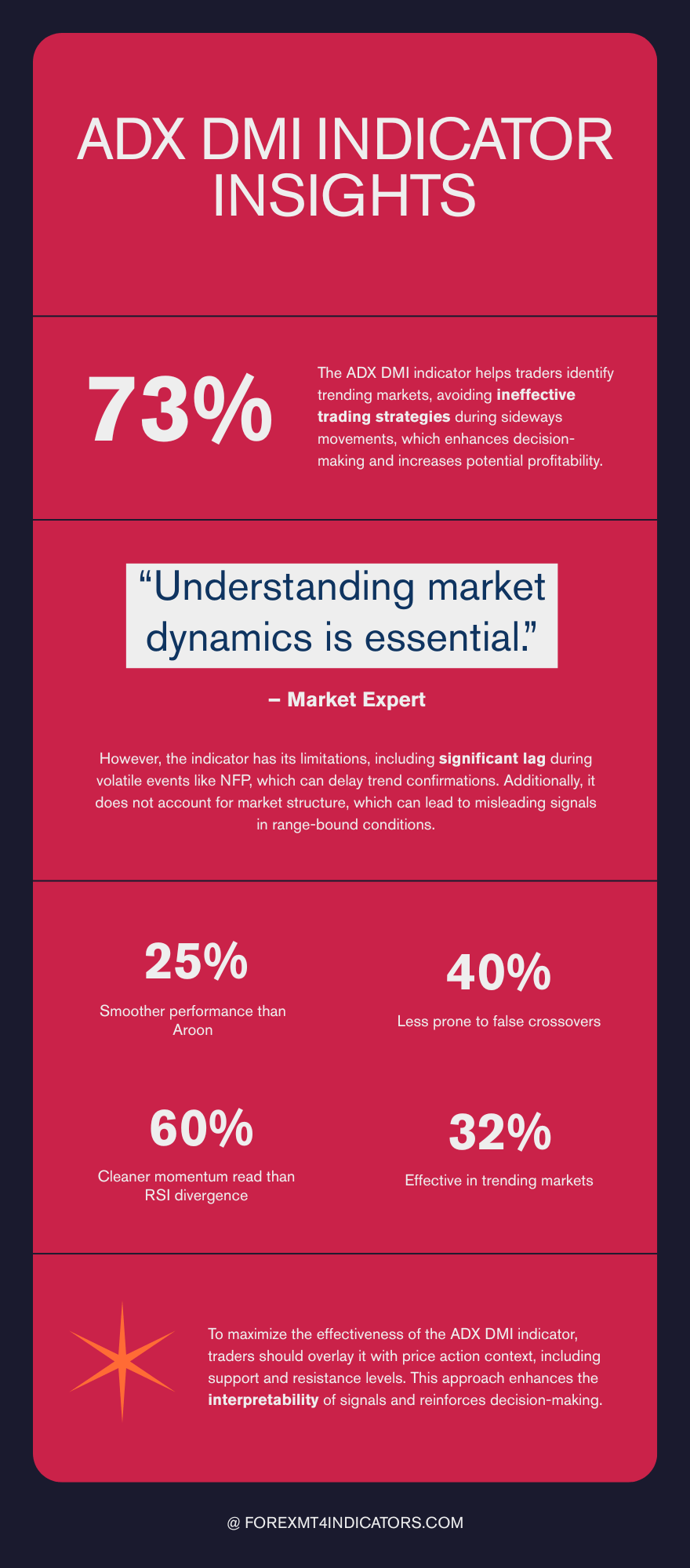
The ADX DMI indicator genuinely helps traders avoid one of the most common mistakes: trading trend strategies in ranging markets. That alone justifies learning it.
But it’s not without problems. The lag is real. By the time ADX confirms a strong trend, a significant portion of the move may already be priced in. On the 1-hour EUR/USD chart during volatile NFP days, ADX can spike sharply and then collapse just as fast — giving a “trend confirmed” signal right near exhaustion.
It also doesn’t account for market structure. A rising ADX above 30 could reflect a strong impulse move into a major resistance level. The indicator won’t flag that conflict. Traders need to overlay ADX readings with basic price action context: support and resistance levels, prior swing points, session highs and lows.
Compared to something like the Aroon indicator — which also measures trend strength and direction — ADX is smoother and less prone to false crossovers but also slower to react. Compared to using raw RSI divergence for trend confirmation, ADX gives a cleaner, more direct read on directional momentum without requiring interpretation of oscillator behavior.
How to Trade with ADX DMI Indicator MT4
Buy Entry
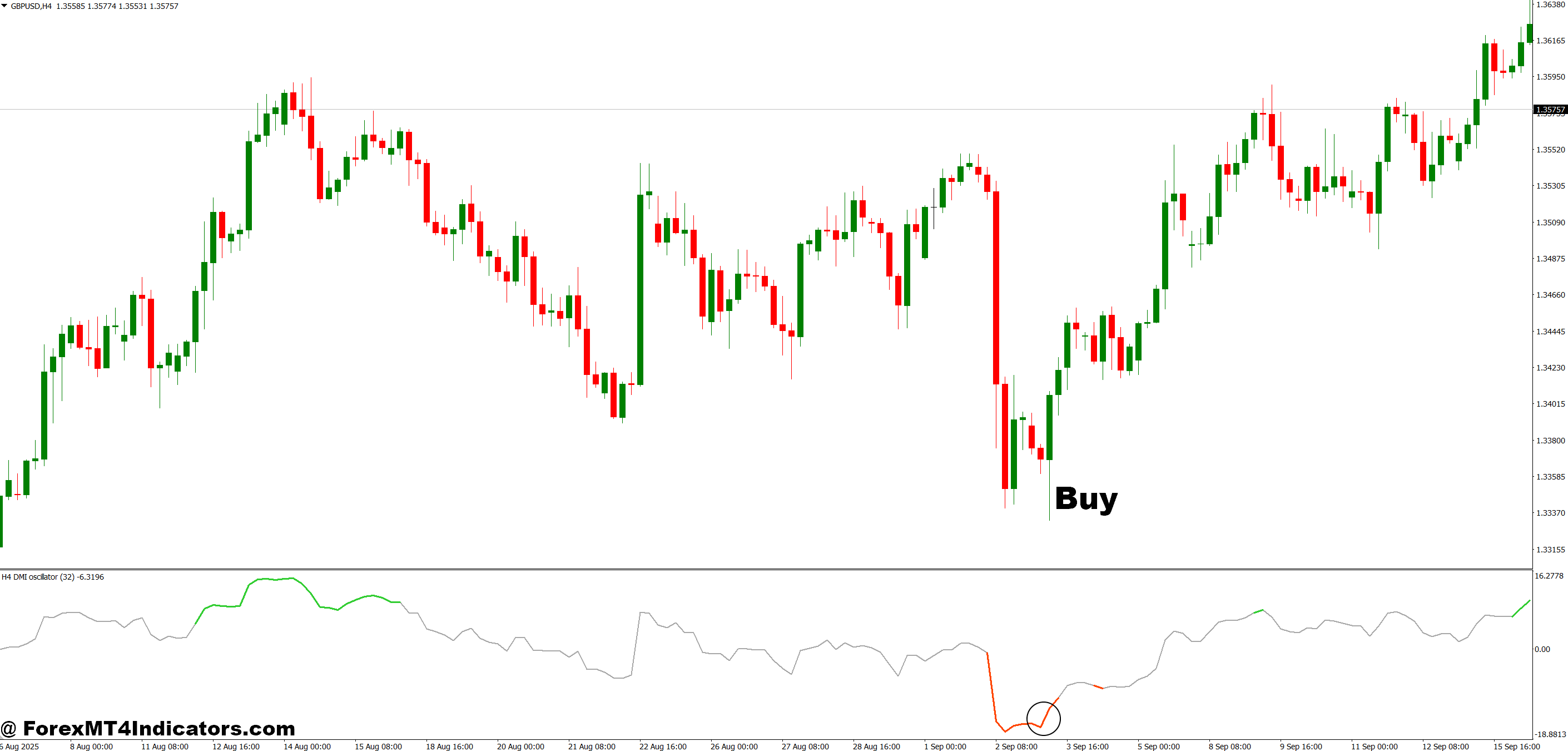
- +DI crosses above –DI – Enter long when +DI moves above –DI and ADX is above 25, confirming real upward momentum behind the move.
- ADX rising above 20 – Wait for ADX to slope upward past 20 before entering. Flat ADX means the market is ranging — skip the trade.
- +DI gap widening – When the gap between +DI and –DI expands after the crossover on a 4-hour EUR/USD chart, that signals strengthening bullish pressure worth riding.
- Price holds above key support – Confirm the +DI crossover only when price is trading above a recent swing low. Crossovers below support often fail fast.
- ADX climbs above 30 on daily chart – On GBP/USD daily, an ADX push through 30 with +DI leading is a strong swing long setup. Target 80–100 pips minimum.
- 1-hour pullback entry – If ADX is above 25 on the 4-hour but price dips on the 1-hour, wait for +DI to recross above –DI on the lower timeframe before entering.
- Avoid buy signals during London open chop – If ADX reads below 18 in the first 30 minutes of the London session, hold off — the trend hasn’t committed yet.
- Set stop below the most recent swing low – Place stops 10–15 pips below the last higher low, not below an arbitrary fixed distance.
Sell Entry
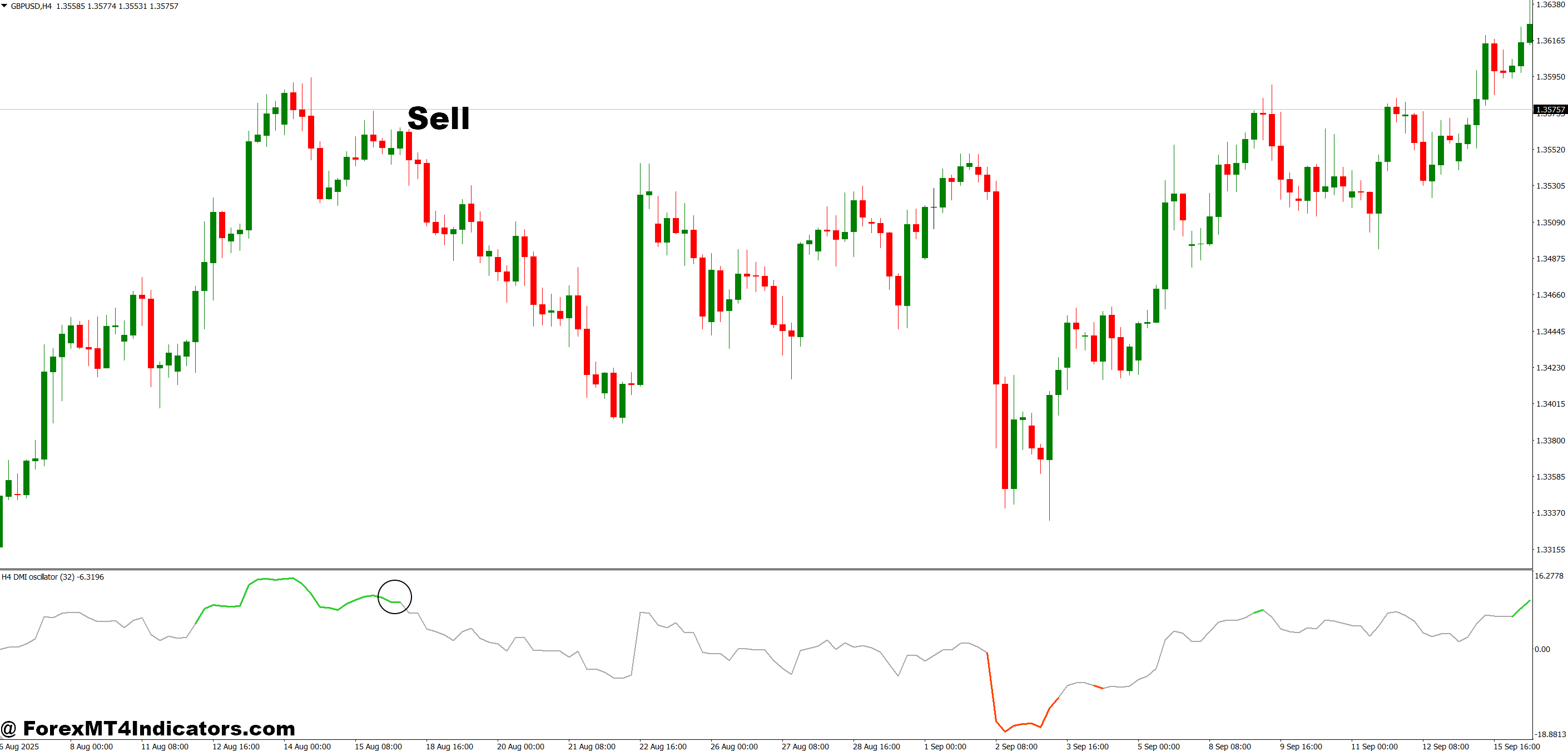
- –DI crosses above +DI – Enter short when –DI moves above +DI with ADX above 25. That crossover without ADX confirmation is just noise — don’t act on it alone.
- ADX trending up while –DI leads – A rising ADX alongside a dominant –DI line on EUR/USD 4-hour confirms sellers are in control, not just testing lows.
- –DI gap expanding after crossover – When the spread between –DI and +DI grows with each candle close, the sell pressure is building. That’s the momentum traders want behind a short.
- Price fails at resistance – Only take the –DI crossover signal if price has just rejected a clear resistance level. Selling into open air with no structure above is low-probability.
- ADX above 30 on GBP/USD daily – When ADX clears 30 and –DI is leading on the daily, short setups targeting 80–120 pips become viable with a clean entry on the 4-hour.
- 1-hour retest entry on shorts – After a –DI crossover on the 4-hour, wait for a pullback to the prior breakdown level on the 1-hour, then re-enter short when –DI reasserts dominance.
- Skip sell signals near major support zones – If ADX is showing a bearish crossover but price is sitting 10–15 pips above a strong weekly support, the risk/reward doesn’t hold up.
- Place stop 10–15 pips above the swing high – Never use a wide arbitrary stop. Structure-based stops keep risk tight and trade logic intact.
Putting It to Work
The ADX DMI indicator on MT4 gives traders something genuinely useful: an objective way to measure trend conviction before risking capital. Used on its own, it has clear limitations — lag, no structural awareness, potential for spikes during news events. But paired with basic support/resistance work and applied during confirmed high-ADX conditions, it filters out a meaningful amount of low-quality setups.
Traders who’ve integrated it into their workflow often describe the same shift: they stop fighting choppy markets. They sit on their hands when ADX sits flat under 20, and they get more selective about when conditions actually favor trend-following entries. That patience tends to show up in better risk-adjusted results over time.
Level up your trading Learn to read the chart — not just the indicator eBook · Instant PDF Video Course · 12 modules Trading forex and CFDs carries a significant risk of loss and is not suitable for everyone. Broker links are affiliate links — we may earn a commission at no cost to you.Recommended MT4/MT5 Brokers
Free MT4 Indicator Download

Enter Your Email Address below, download link will be sent to you.