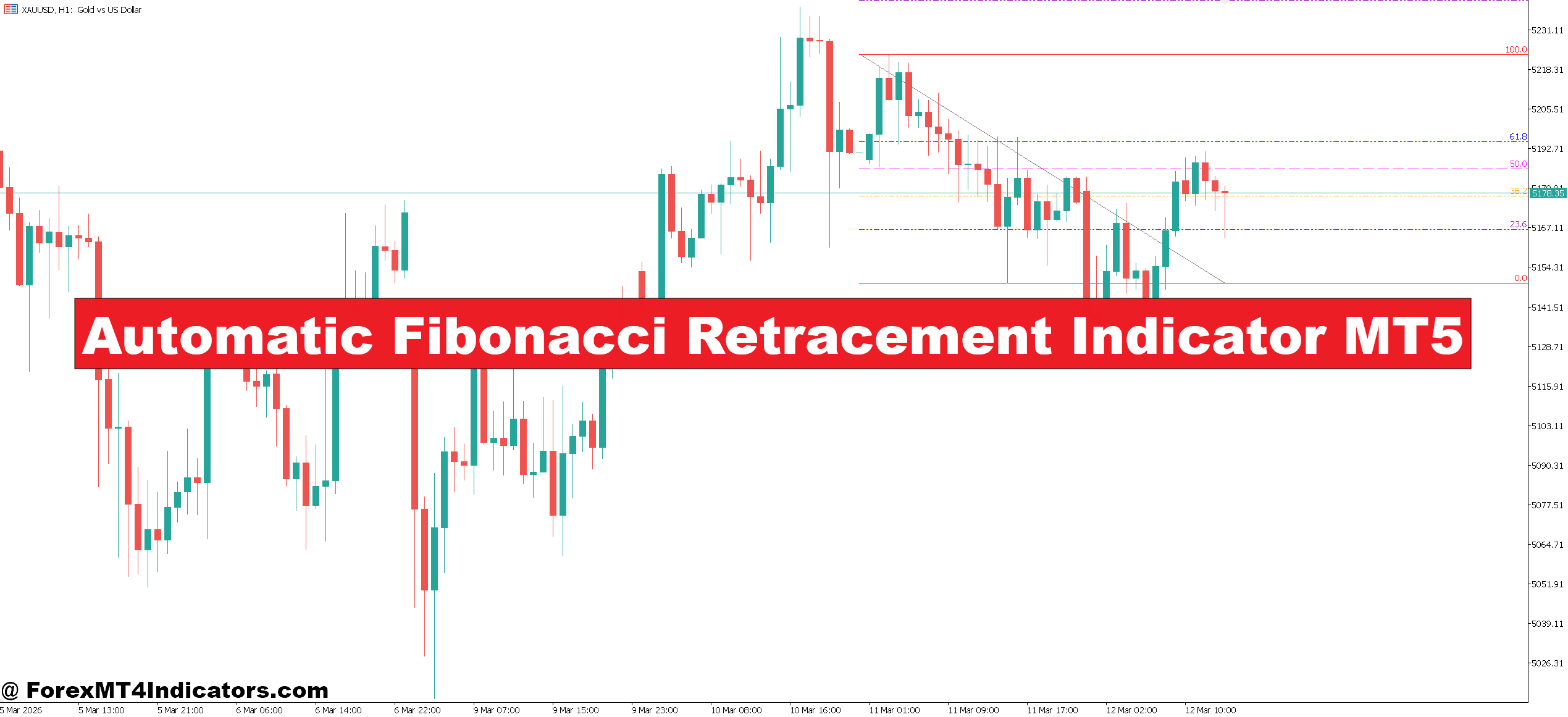
The Automatic Fibonacci Retracement Indicator MT5 is a technical analysis tool that automatically draws Fibonacci retracement levels on the chart. Instead of manually selecting swing highs and lows, the indicator detects them based on market structure.
It typically plots key levels such as 23.6%, 38.2%, 50%, 61.8%, and 78.6%. These levels act as potential support and resistance zones during a retracement.
Unlike the manual Fibonacci tool, this version updates dynamically. When price forms a new high or low, the levels adjust accordingly. This is especially useful in fast-moving markets where structure changes quickly.
Traders often combine this indicator with price action, trend direction, or confirmation tools like RSI or moving averages.
How the Indicator Works in Real Market Conditions
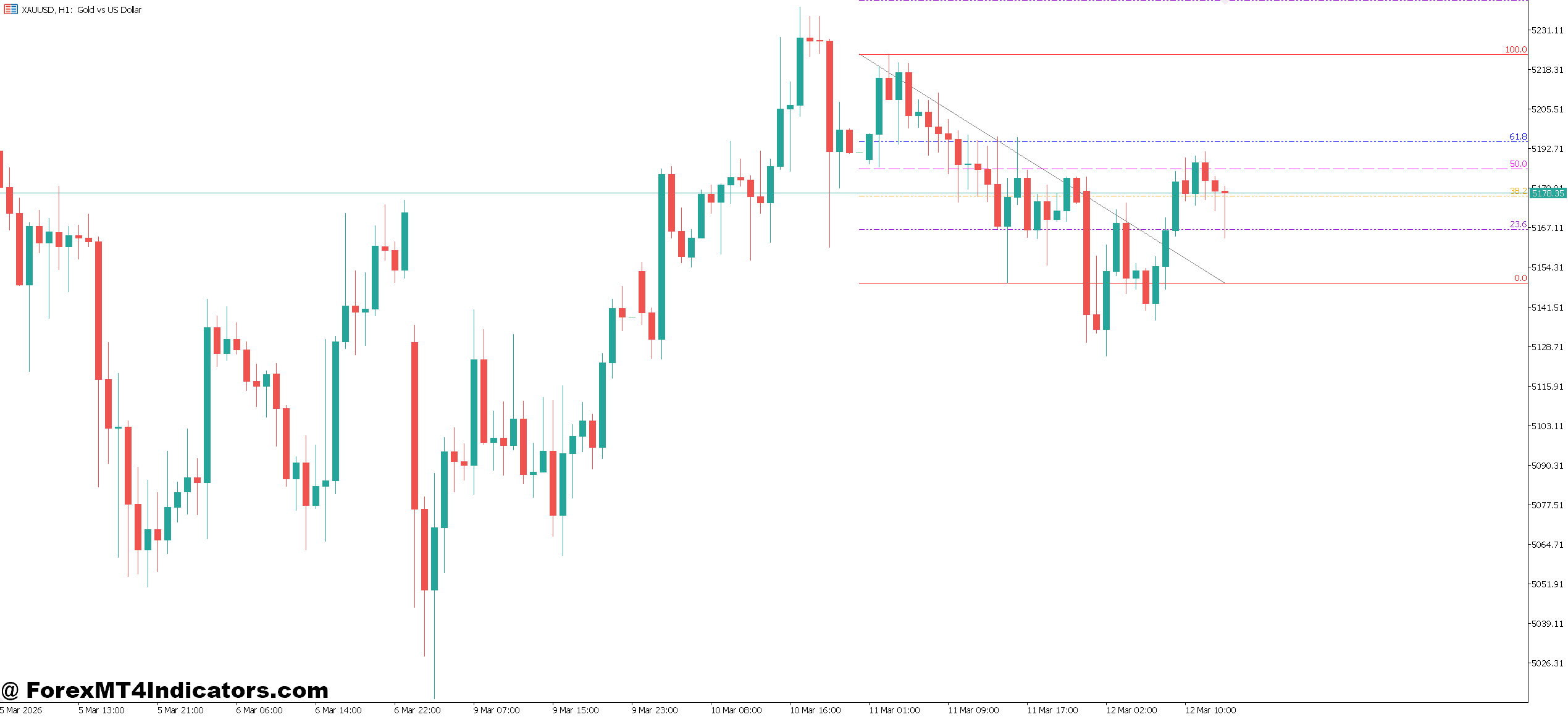
At its core, the indicator identifies swing highs and lows using built-in algorithms. Most versions rely on fractals, zigzag logic, or recent candle extremes to determine the range.
Once a valid swing is detected, it draws Fibonacci levels between those points. For example:
- On a bullish trend, it draws from the recent swing low to swing high
- On a bearish trend, it draws from swing high to swing low
Here’s a practical example:
On EUR/USD (1-hour chart), price moves from 1.0800 to 1.1000. The indicator plots retracement levels automatically. When price pulls back to the 61.8% level near 1.0875, traders watch for bullish confirmation. If a strong bullish candle forms there, it often signals continuation.
During testing on volatile NFP days, this indicator tends to redraw levels frequently due to rapid price shifts. That’s something traders need to keep in mind—fast markets can cause temporary confusion if the swing points change too quickly.
Practical Trading Applications and Strategies
Traders don’t use Fibonacci levels alone. The real edge comes from combining them with market context.
Trend Pullback Entries
In trending markets, the indicator helps identify pullback zones. For instance:
- In an uptrend on GBP/USD (4-hour chart), price retraces to the 50% level
- A bullish engulfing candle forms
- Traders enter buy positions with a stop loss below the 61.8% level
This approach often gives better risk-to-reward compared to chasing breakouts.
Confluence Trading
The strongest setups happen when Fibonacci levels align with other factors:
- Previous support/resistance zones
- Moving averages (like 50 EMA)
- Psychological levels (e.g., 1.2000)
For example, if USD/JPY hits the 38.2% retracement and aligns with a key resistance level, traders may look for sell opportunities.
Scalping Opportunities
On lower timeframes like M15 or M5, the indicator helps scalpers identify quick retracements. A 20–30 pip pullback to the 38.2% level can offer short-term trades, especially during active sessions.
But lower timeframes also bring more noise. False signals are more common, so confirmation is essential.
Automatic Fibonacci Retracement Indicator MT5 Settings, Customization, and Optimization
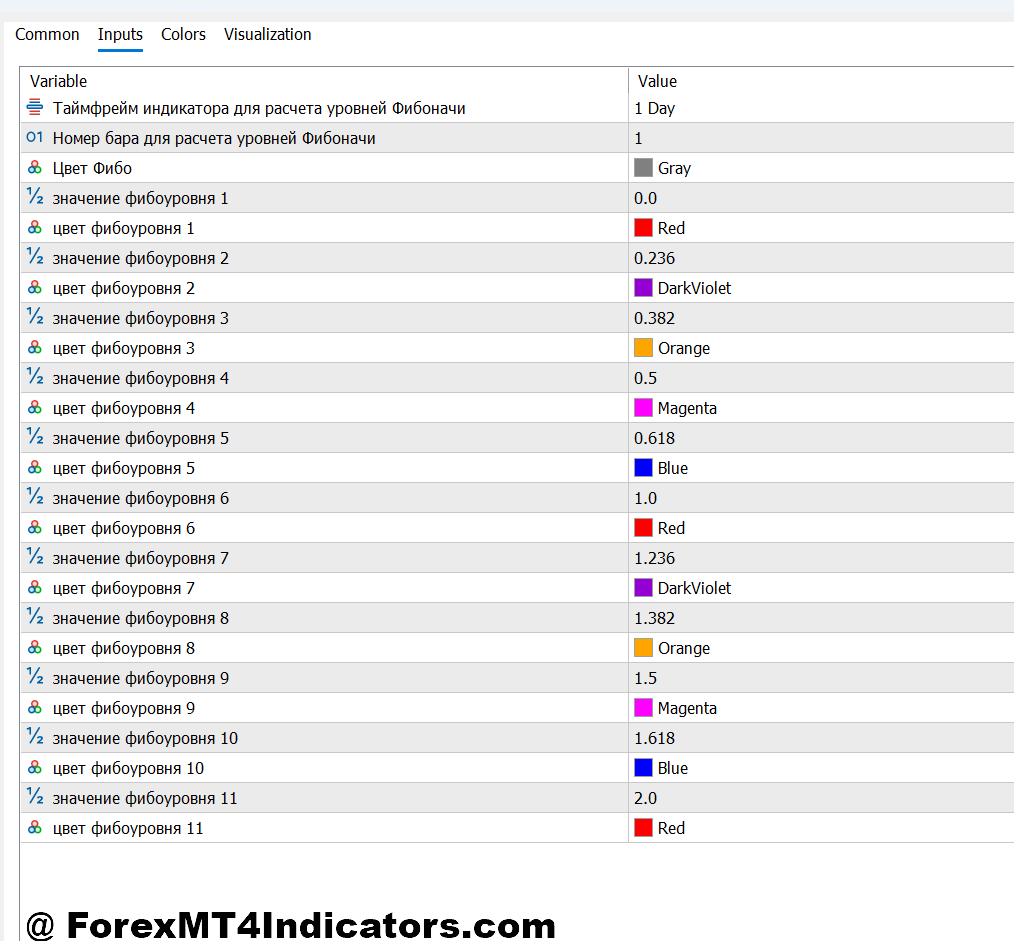
Most versions of the Automatic Fibonacci Retracement Indicator MT5 allow customization. Fine-tuning these settings can improve performance depending on trading style.
Key Parameters
- Swing sensitivity (depth) – Controls how large a price move must be to qualify as a swing
- Number of bars – Defines how far back the indicator looks
- Fibonacci levels visibility – Traders can enable or disable specific levels
For scalping, lower sensitivity works better because it captures smaller moves. For swing trading, higher sensitivity helps filter out noise.
Timeframe Considerations
- M5–M15: Best for quick entries, but requires strong confirmation
- H1–H4: Balanced signals with moderate reliability
- Daily: Strong levels, often respected by institutional traders
From experience, the 1-hour timeframe offers a good balance between signal frequency and reliability.
Advantages, Limitations, and Comparison
Advantages
The biggest advantage is consistency. Traders don’t need to manually draw Fibonacci levels, which reduces bias. It also saves time, especially when monitoring multiple pairs.
Another benefit is adaptability. The indicator adjusts automatically as price structure changes, making it useful in trending conditions.
Limitations
But it’s not perfect.
In ranging markets, the indicator may produce unreliable levels because there’s no clear trend. Price often moves sideways, causing multiple redraws.
Also, different versions use different algorithms. One indicator might pick a swing point differently than another, leading to slightly different levels.
And here’s the reality—Fibonacci levels alone don’t guarantee anything. Price can easily break through them during strong momentum.
Comparison with Manual Fibonacci Tool
Manual Fibonacci gives traders full control. They can choose major swing points based on experience. But that also introduces subjectivity.
The automatic version removes that subjectivity but sacrifices some flexibility. Experienced traders often use both—automatic for quick analysis and manual for refining key levels.
How to Trade with Automatic Fibonacci Retracement Indicator MT5
Buy Entry
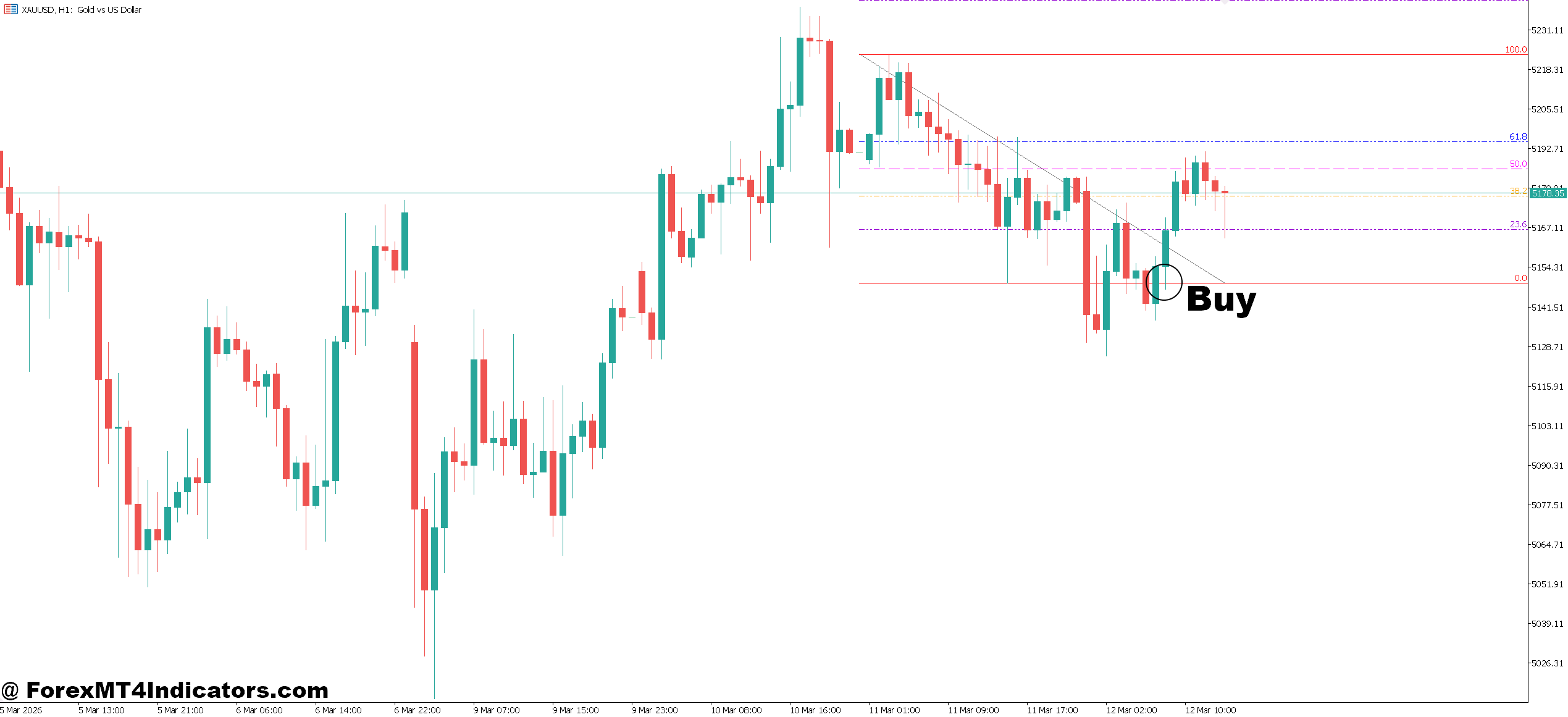
- Buy at 61.8% retracement in uptrend – On EUR/USD (1-hour), wait for price to pull back 40–70 pips to the 61.8% level and form a bullish candle; this level often acts as strong support in trending markets.
- Enter after bullish confirmation candle – Don’t buy immediately at Fibonacci level; wait for engulfing or pin bar confirmation on GBP/USD (4-hour) to avoid fake-outs.
- Use 50% level with trend continuation – If price retraces around 30–50 pips to the 50% level and trend remains strong, enter with momentum and target previous high.
- Place stop-loss below 78.6% level – Keep a safety margin of 15–25 pips below the 78.6% retracement to protect against deeper pullbacks.
- Combine with moving average support – When 50 EMA aligns with 38.2% or 61.8% level on H1, it increases probability of bounce and gives stronger entry confirmation.
- Trade during active sessions only – Take buy setups during London or New York session; avoid Asian session where 10–20 pip moves can cause choppy behavior.
- Target previous swing high (30–100 pips) – Set take-profit near last high; on EUR/USD H1, typical moves range between 40–80 pips depending on volatility.
- Avoid trades in sideways markets – If price is ranging within 20–30 pips and no clear trend exists, skip buy signals as Fibonacci levels lose reliability.
Sell Entry
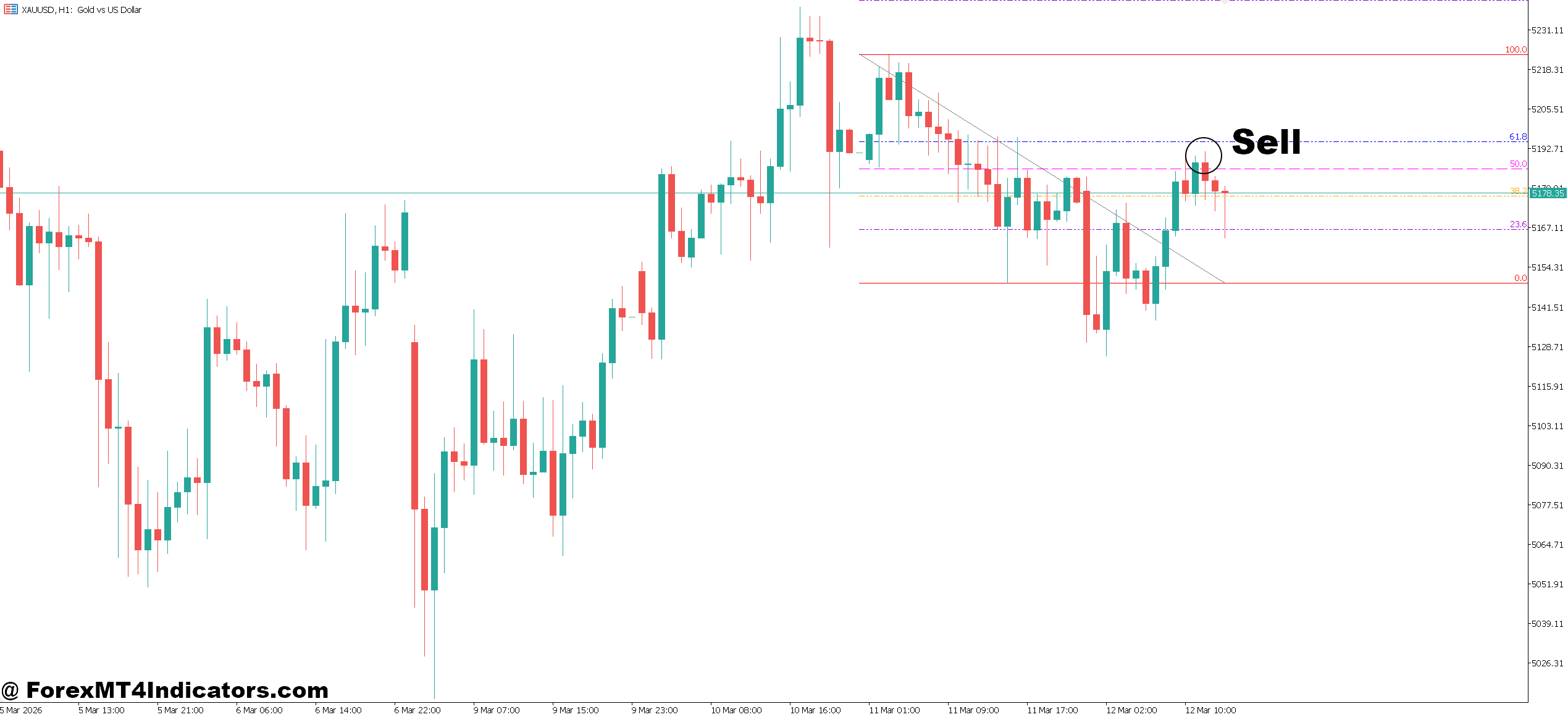
- Sell at 61.8% retracement in downtrend – On GBP/USD (1-hour), wait for a pullback of 50–80 pips to the 61.8% level, then look for bearish rejection.
- Enter after bearish confirmation candle – Use engulfing or shooting star pattern on 4-hour chart before selling to reduce risk of false entries.
- Use 38.2% for aggressive entries – In strong downtrends, price may only retrace 20–40 pips to 38.2%; enter early but manage risk tightly.
- Place stop-loss above 78.6% level – Keep stop-loss 15–30 pips above this level to avoid getting stopped out by minor spikes.
- Align with resistance zones – If Fibonacci level matches previous resistance or psychological level (like 1.3000), it strengthens the sell setup.
- Trade high-volatility pairs carefully – On GBP/USD, spreads and spikes can exceed 20–30 pips, so adjust lot size and avoid overexposure.
- Set take-profit near swing low (40–120 pips) – Aim for realistic targets based on timeframe; H4 trades often yield larger moves.
- Avoid trading during major news events – During NFP or interest rate news, price can break all Fibonacci levels quickly, making signals unreliable.
Conclusion
The Automatic Fibonacci Retracement Indicator MT5 offers a structured way to identify retracement zones without constant manual adjustments. It helps traders stay consistent, especially when tracking multiple markets. In practice, it works best when combined with trend analysis and confirmation signals, rather than used alone. Key takeaways include its ability to highlight pullback entries, its usefulness across multiple timeframes, and the need to adjust settings based on trading style. At the same time, traders should remain aware of its limitations in choppy markets and during high volatility.
Trading forex carries substantial risk. No indicator guarantees profits. The smart approach is to test this tool on a demo account, observe how it reacts in different conditions, and then decide how it fits into a broader trading plan.
Level up your trading Learn to read the chart — not just the indicator eBook · Instant PDF Video Course · 12 modules Trading forex and CFDs carries a significant risk of loss and is not suitable for everyone. Broker links are affiliate links — we may earn a commission at no cost to you.Recommended MT4/MT5 Brokers
Free MT4 Indicator Download
Enter Your Email Address below, download link will be sent to you.