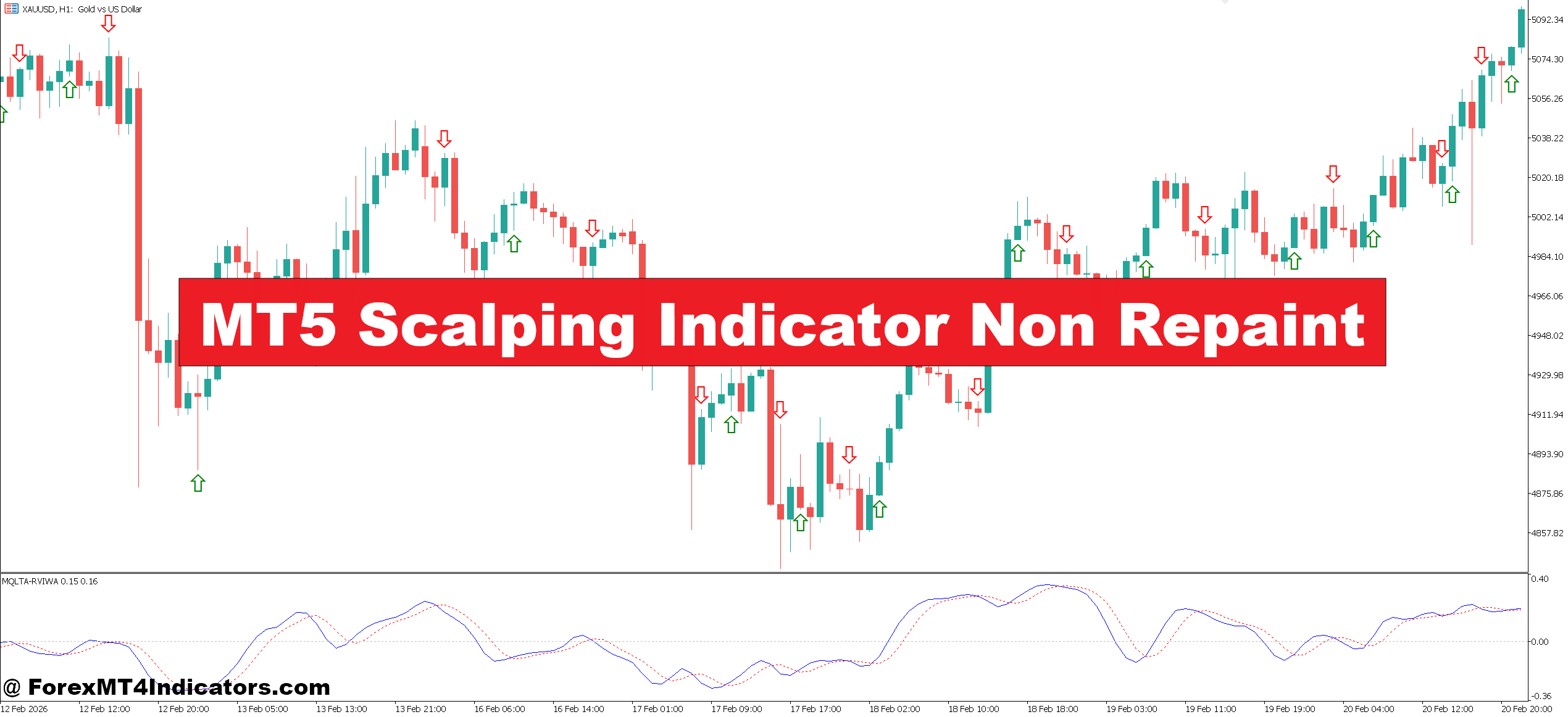
The MT5 Scalping Indicator Non Repaint is a technical analysis tool designed for short-term trading on the MetaTrader 5 platform. Its main purpose is to generate entry and exit signals without altering past signals once they are printed on the chart.
Unlike repainting tools, this indicator locks its signals after candle closure. That means what a trader sees in live trading is the same as what appears in backtesting. This consistency helps build trust in the system.
Most versions of this indicator combine trend-following logic with momentum filters. It may use moving averages, price action patterns, or volatility bands to determine market direction. Signals are often displayed as arrows, colored dots, or histogram changes.
In simple terms, it tries to answer one question: is there enough momentum right now to justify a quick trade?
How It Works in Real Trading Conditions
At its core, the MT5 Scalping Indicator Non Repaint uses a mix of price smoothing and confirmation layers. Many setups rely on a fast moving average crossing a slower one, combined with a momentum filter like RSI or MACD.
For example, on EUR/USD using a 5-minute chart:
- A buy signal may appear when price closes above a 20-period EMA
- RSI crosses above the 50 level
- A bullish arrow prints after candle close
The key detail is timing. The signal only confirms after the candle finishes. This avoids the common trap where indicators shift signals mid-candle.
During testing on high-impact news events like NFP releases, traders often notice fewer signals. That’s actually a good sign. The indicator filters out unstable price spikes and waits for cleaner structure.
But here’s the thing—no indicator is perfect. In ranging markets, even non-repaint tools can produce false entries. Price may move 5–10 pips in favor, then reverse quickly.
Practical Application with Real Examples
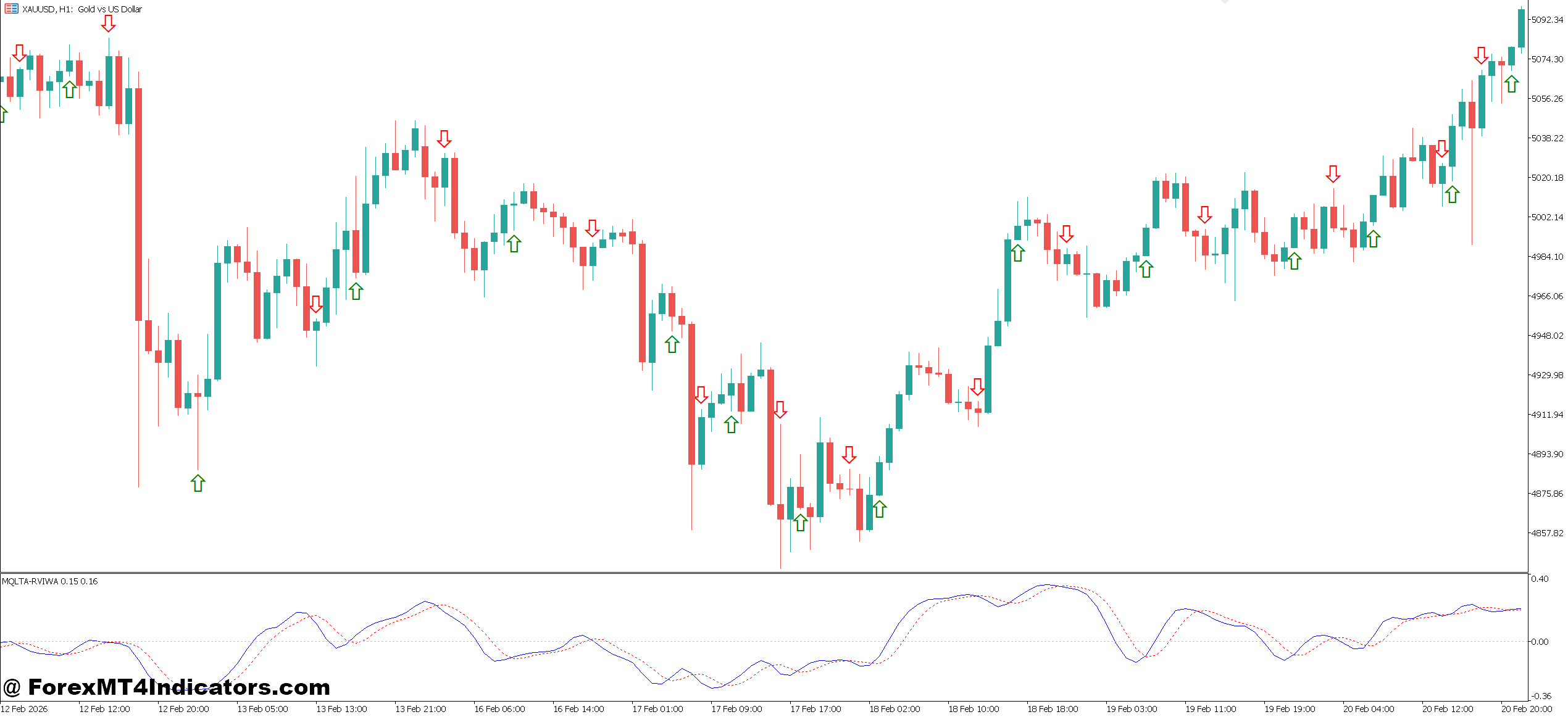
Scalpers usually apply this indicator on lower timeframes such as M1, M5, or M15. Let’s look at a realistic scenario.
On GBP/USD (M5 chart), during the London open:
- Price breaks above a minor resistance level
- Indicator prints a buy arrow after candle close
- Entry is taken at 1.2740
- Stop loss is placed 10 pips below at 1.2730
- Take profit is set at 15 pips (1:1.5 risk-reward)
In this case, price moves steadily upward and hits take profit within 20 minutes.
Now consider a different situation on USD/JPY during Asian session:
- Indicator shows a buy signal in a sideways market
- Price moves only 6–7 pips, then reverses
- Stop loss gets hit
This shows why context matters. The indicator works best in active sessions with clear momentum.
Experienced traders often combine it with support and resistance zones. If a signal aligns with a breakout or pullback level, the probability improves.
MT5 Scalping Indicator Non Repaint Settings and Customization for Better Results
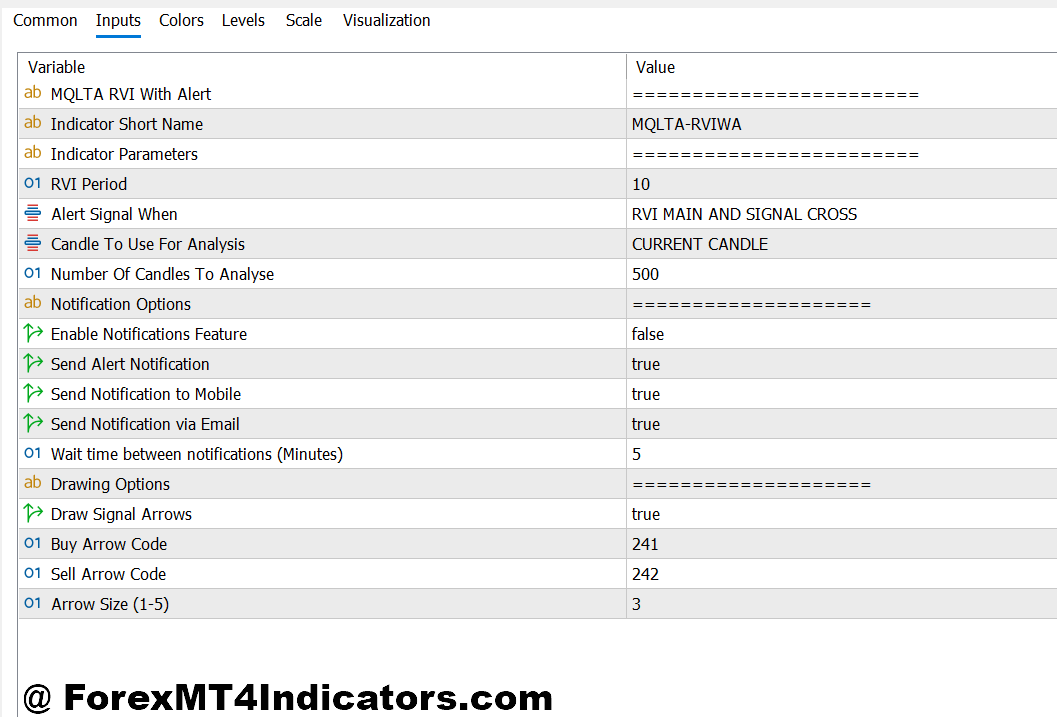
Most versions of the MT5 Scalping Indicator Non Repaint allow some level of customization. Adjusting settings can significantly change performance.
Common parameters include:
- Moving average periods (e.g., 10 EMA vs 20 EMA)
- Signal sensitivity (higher = fewer but stronger signals)
- Alert notifications (sound, popup, mobile)
- Timeframe compatibility
For faster pairs like GBP/JPY, traders may reduce the EMA period to catch quicker moves. On slower pairs like EUR/CHF, slightly higher settings can reduce noise.
Some traders also adjust settings based on session:
- London session: tighter settings for quick entries
- New York session: balanced settings for volatility
- Asian session: conservative settings to avoid chop
But over-optimization can be risky. If settings are too fine-tuned to past data, performance may drop in live markets.
Advantages and Limitations
The biggest advantage is clear—no repainting. Signals remain fixed, which helps traders trust what they see. This is especially useful for beginners who struggle with inconsistent indicators.
Another strength is simplicity. Most setups are easy to read, with visual signals that don’t require complex interpretation.
It also works well with other tools. Traders often combine it with trendlines, Fibonacci levels, or volume analysis.
That said, there are limitations.
In choppy markets, the indicator can still produce false signals. No repainting doesn’t mean no losses. It simply means signals are honest, not perfect.
Also, scalping requires fast execution. Even a good signal can fail if spreads widen or execution is delayed.
Compared to standard indicators like Moving Averages or MACD, this tool offers better signal stability. However, it may lag slightly because it waits for candle confirmation.
So, it’s a trade-off between accuracy and speed.
How to Trade with MT5 Scalping Indicator Non Repaint
Buy Entry
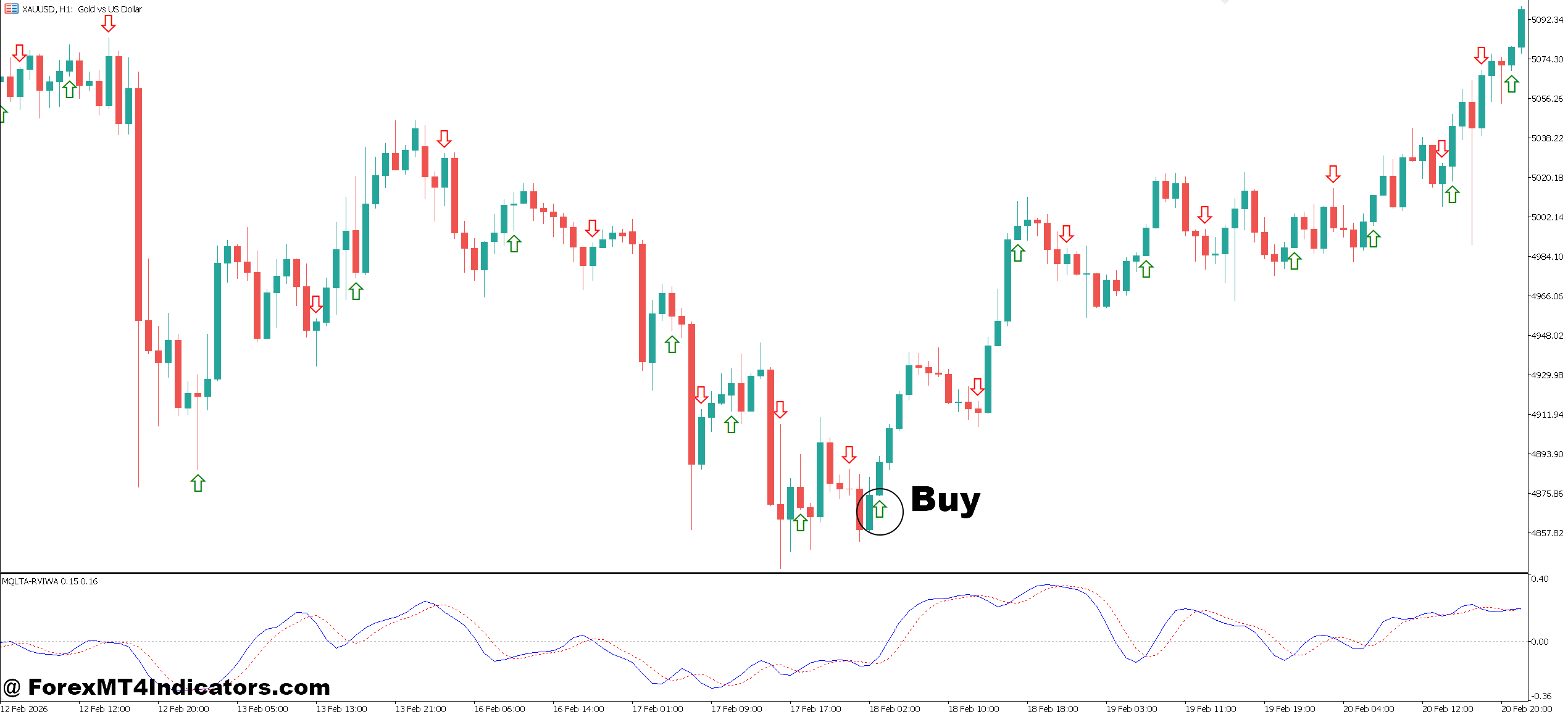
- Wait for confirmed buy arrow close – Enter only after the candle fully closes with a buy signal on M5 or M15 to avoid fake-outs during fast moves.
- Trade above key EMA level – Take buys only when price is above the 20 EMA on EUR/USD (M5), confirming short-term bullish momentum.
- Use London session momentum – Focus on trades between 8:00–11:00 AM London time when volatility supports 10–20 pip scalping targets.
- Set tight stop loss – Place stop loss 8–12 pips below recent swing low to control risk in fast scalping conditions.
- Confirm with RSI above 50 – Enter only if RSI (14) is above 50, showing buyers are in control and momentum is aligned.
- Avoid sideways markets – Skip trades if GBP/USD is ranging within 15–20 pips, as signals often fail in low volatility.
- Target quick profits – Aim for 10–15 pips take profit on M5 charts, keeping a minimum 1:1.5 risk-reward ratio.
- Check higher timeframe bias – Align with H1 trend direction; avoid buying against a strong bearish trend to reduce risk.
Sell Entry
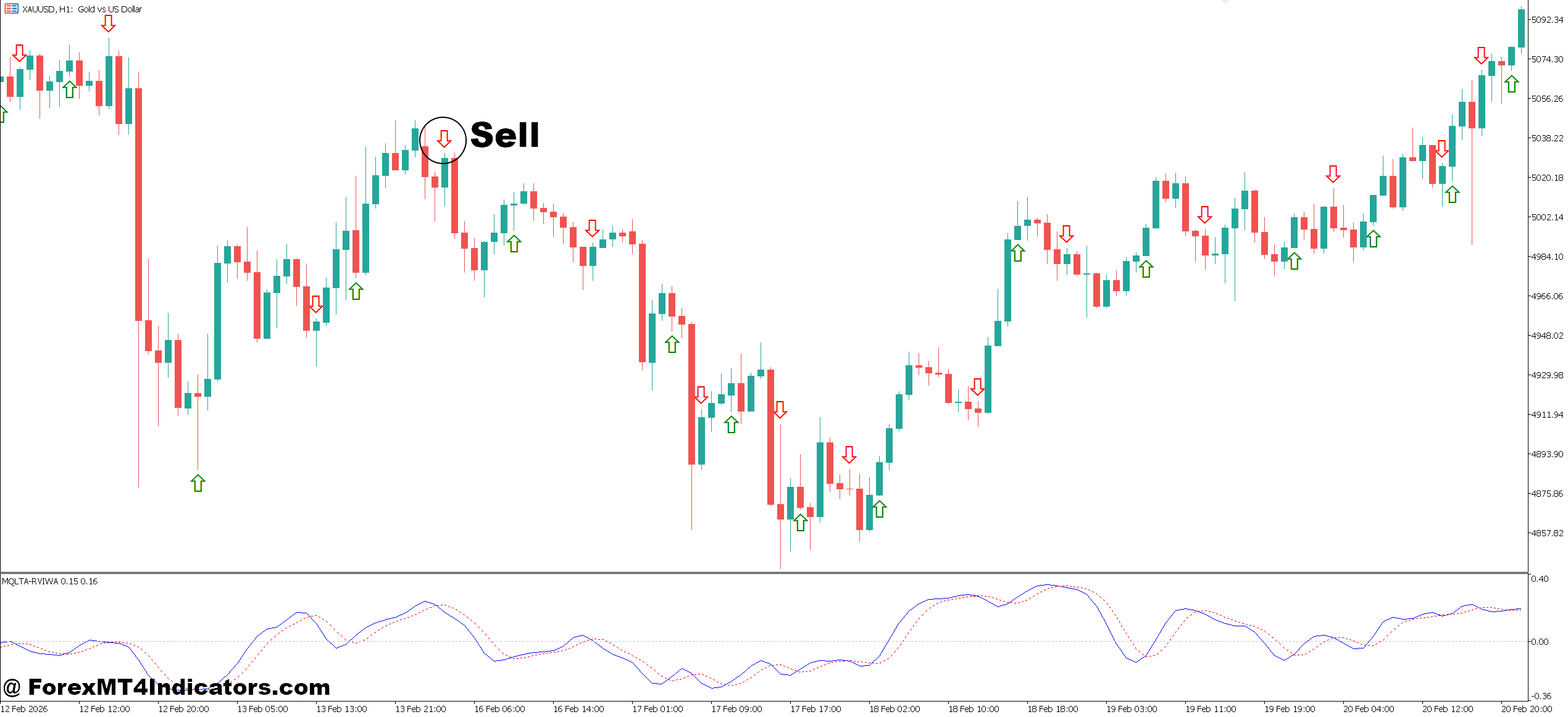
- Wait for confirmed sell arrow close – Enter only after candle closes with a sell signal to prevent early entries during pullbacks.
- Trade below moving average – Sell only when price is below the 20 EMA on GBP/USD M5 chart, confirming bearish pressure.
- Use New York session volatility – Look for setups during 1:00–4:00 PM London time when USD pairs move strongly.
- Place controlled stop loss – Keep stop loss 8–12 pips above recent swing high to protect against sudden reversals.
- Confirm with RSI below 50 – Enter sell trades when RSI drops below 50, showing bearish momentum is active.
- Avoid major news events – Don’t trade during high-impact news (like NFP) as spreads widen and signals become unreliable.
- Aim for fast exits – Set take profit at 10–18 pips depending on pair volatility, especially on EUR/USD and USD/JPY.
- Skip weak trends – Avoid selling when price is consolidating or making small candles under 5 pips range.
Conclusion
The MT5 Scalping Indicator Non Repaint offers a more reliable way to approach short-term trading, especially for those tired of shifting signals. It focuses on consistency rather than prediction, which is a smarter approach in fast markets.
Key takeaways are simple: it provides stable signals after candle close, works best during active sessions like London or New York, and performs better when combined with market structure. At the same time, traders should expect occasional losses, especially in sideways conditions, and avoid relying on it alone.
Trading forex carries substantial risk. No indicator guarantees profits.
Used with discipline and proper risk management, this tool can support a structured scalping strategy. The real edge still comes from how a trader reads the market and manages trades.
Level up your trading Learn to read the chart — not just the indicator eBook · Instant PDF Video Course · 12 modules Trading forex and CFDs carries a significant risk of loss and is not suitable for everyone. Broker links are affiliate links — we may earn a commission at no cost to you.Recommended MT4/MT5 Brokers
Free MT4 Indicator Download

Enter Your Email Address below, download link will be sent to you.