

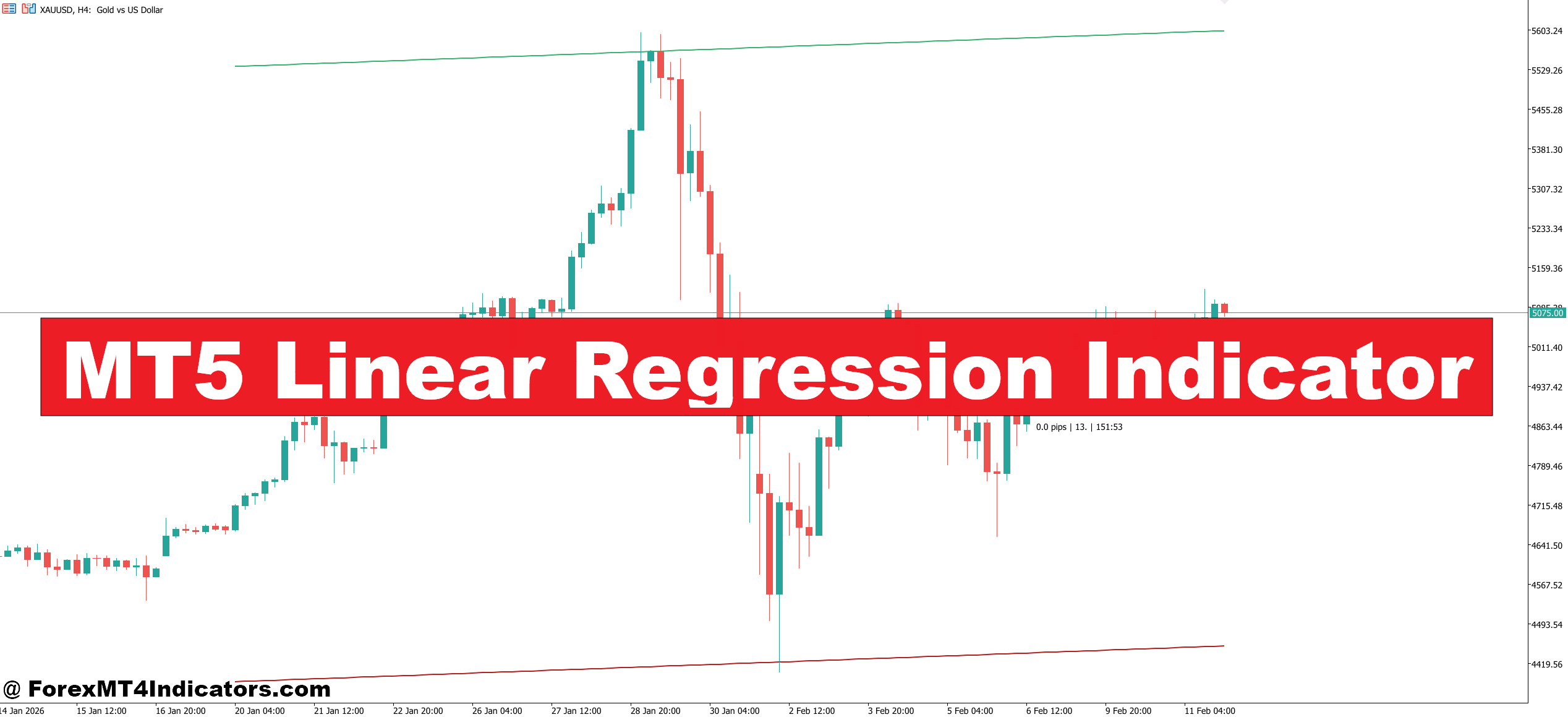
The MT5 Linear Regression Indicator is a trend-following technical analysis tool available on the MetaTrader 5 platform. It draws a straight line that best fits price data over a selected period using linear regression math.
In simple terms, it calculates the average direction of price over “X” number of candles. If the line slopes upward, the short-term trend is bullish. If it slopes downward, sellers are in control.
Unlike a simple moving average, which smooths past prices, linear regression finds the statistical best-fit line through the data. That means it reacts differently to sharp spikes or gradual trends.
Many traders use it to:
- Identify trend direction
- Spot dynamic support and resistance
- Confirm breakout strength
- Filter trades during sideways markets
What makes it stand out is its slope. A steep angle shows strong momentum. A flat line often signals consolidation.
How the Linear Regression Calculation Works
Behind the scenes, the indicator uses the least squares method. It calculates a straight line that minimizes the total distance between the line and each price point in the selected period.
Here’s the logic in practical terms:
- Choose a period (for example, 50 candles).
- The indicator calculates the regression line based on closing prices.
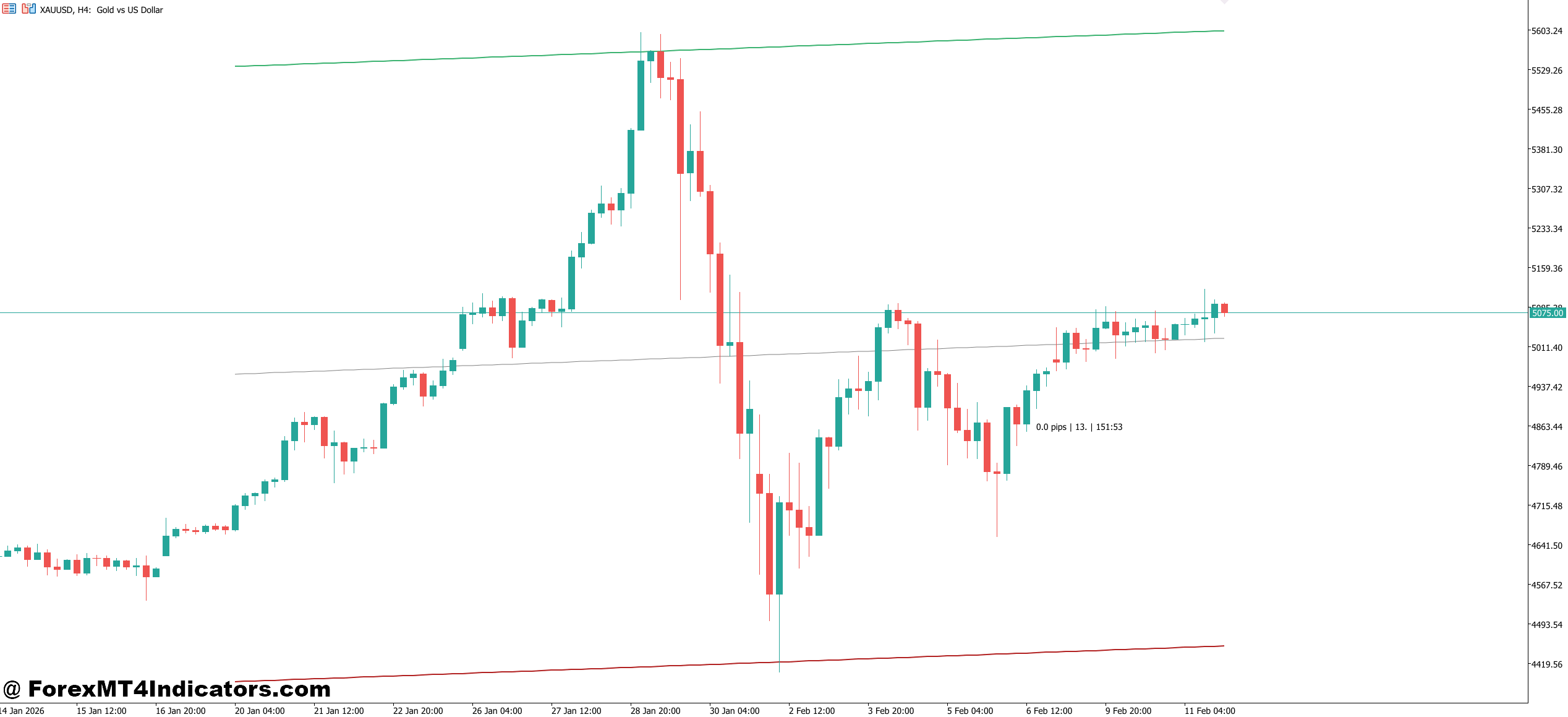
- It plots the line and often adds upper and lower deviation bands.
Those bands measure standard deviation from the regression line. When price touches the upper band, it may signal overextension. When it reaches the lower band, it may indicate temporary weakness.
For example, on GBP/USD during a volatile Non-Farm Payroll (NFP) release, the 100-period regression line on the 15-minute chart showed a sharp upward slope. Even when price pulled back 20–25 pips, it respected the regression line as dynamic support. That gave experienced traders confidence to buy dips instead of panic-selling.
But here’s the thing: during extreme news spikes, the line can adjust quickly and distort signals. That’s why traders should combine it with structure and volume analysis.
Practical Trading Applications on MT5
Trend Confirmation on Higher Timeframes
On the 4-hour USD/JPY chart, a trader might use a 100-period Linear Regression Indicator to define macro direction. If the line slopes upward and price stays above it, long trades align with the broader trend.
In one case study, USD/JPY climbed from 148.20 to 150.80 over three days. Each time price retraced near the regression line, buyers stepped in. The line acted almost like a moving support level.
This approach works best in trending markets, not in tight ranges.
Pullback Entries on Lower Timeframes
Scalpers often use a 20- or 34-period regression line on the 5-minute chart. During the London session, EUR/USD might trend steadily for two hours. When price pulls back to the regression line and forms a bullish engulfing candle, that confluence can trigger an entry.
In practice, combining the regression line with RSI divergence or horizontal support improves accuracy. Relying on the line alone can lead to whipsaws during low-volume Asian sessions.
Breakout Validation
Some traders apply regression channels (with deviation bands). If price breaks above the upper band with strong momentum and rising tick volume, it may signal continuation.
But false breakouts happen. Especially in gold (XAU/USD), price can pierce the band and snap back within minutes. That’s why stop-loss placement matters. Many traders set stops slightly beyond the recent swing high or low rather than directly on the regression band.
Trading forex carries substantial risk. No indicator guarantees profits.
MT5 Linear Regression Indicator Settings and Customization
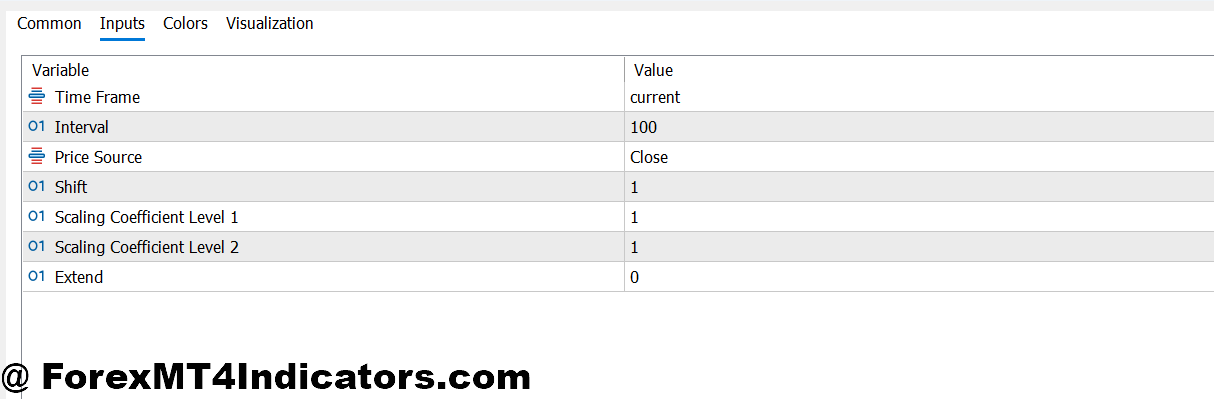
The power of the MT5 Linear Regression Indicator depends heavily on its period setting.
- Short-term trading (5M–15M): 20–34 periods
- Intraday (1H): 50–100 periods
- Swing trading (4H–Daily): 100–200 periods
Shorter periods react faster but produce more noise. Longer periods smooth out price but lag more.
For example, on AUD/USD daily charts, a 200-period regression line gives a clear long-term bias. But on a 5-minute chart, that same setting would be useless for scalping.
Deviation levels also matter. Some traders use 1.0 standard deviation for tighter channels. Others prefer 2.0 for wider boundaries in volatile pairs like GBP/JPY.
The key is testing settings under different market conditions—trending, ranging, high-impact news days. What works during steady trends may fail in sideways chop.
Advantages, Limitations, and Comparison with Similar Indicators
Advantages
- Clear visual trend direction
- Objective slope measurement
- Useful dynamic support/resistance
- Works well with price action strategies
It’s particularly effective when combined with market structure analysis. If higher highs align with an upward regression slope, the trend bias becomes stronger.
Limitations
The indicator lags because it relies on historical data. In sudden reversals, it reacts after price has already moved.
During consolidation, the line flattens and offers little value. Traders might mistake minor slope changes as new trends. That leads to overtrading.
And it doesn’t predict future price. It measures past direction statistically.
Comparison with Moving Averages and Trendlines
Compared to a 50-period Exponential Moving Average (EMA), linear regression responds differently to spikes. EMAs weight recent candles more heavily. Regression lines focus on best-fit alignment.
Manual trendlines depend on trader judgment. Two traders may draw different lines. The regression indicator removes that subjectivity.
What makes this different? It blends math-based objectivity with visual clarity. Still, many professionals use it alongside moving averages, not as a replacement.
How to Trade with MT5 Linear Regression Indicator
Buy Entry
- Trade in the direction of an upward slope – Enter long when the Linear Regression line slopes clearly upward on the 1-hour chart and price stays above it for at least 3 consecutive candles; this confirms bullish momentum on pairs like EUR/USD.
- Buy pullbacks to the regression line – When GBP/USD retraces 15–30 pips toward the regression line on H1 and prints a bullish rejection candle, enter on the close to catch continuation.
- Confirm with deviation band bounce – If price touches the lower regression channel band and rejects it with strong volume, buy with a 20–40 pip stop below the recent swing low.
- Align with higher timeframe trend – Take buy signals on the 1-hour only if the 4-hour regression slope is also rising; this filters countertrend trades.
- Enter after breakout above upper band – If EUR/USD breaks above the upper deviation band with a 25+ pip impulse candle, wait for a small 10–15 pip pullback, then enter long.
- Use slope angle as strength gauge – A steep slope (clear visual angle, not flat) signals stronger momentum; avoid buying when the line is nearly horizontal.
- Set risk at 1–2% per trade – Risk no more than 1–2% of account balance and aim for at least a 1:2 risk-reward ratio, such as risking 25 pips to target 50 pips.
- Avoid low-volume sessions – Don’t take buy signals during slow Asian session chop if the regression line is flat; whipsaws are common.
Sell Entry
- Trade with a downward slope – Enter short when the Linear Regression line angles downward on the 4-hour chart and price remains below it for multiple candles, confirming bearish control.
- Sell rallies to the regression line – On GBP/USD H1, if price rallies 20–35 pips into a falling regression line and forms a bearish engulfing candle, enter short on candle close.
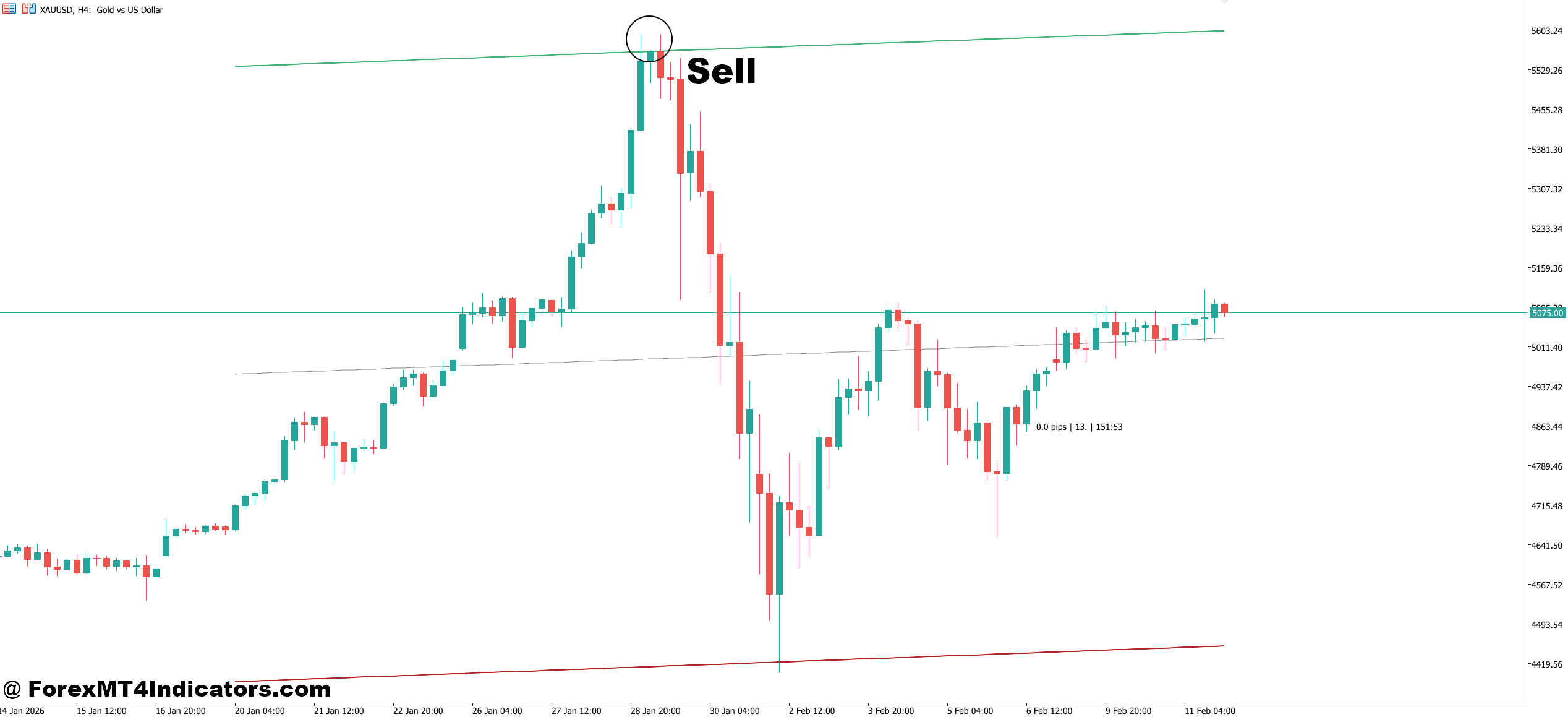
- Use upper band rejection – When price hits the upper regression channel band in a downtrend and stalls, sell with a stop 15–25 pips above the recent swing high.
- Confirm multi-timeframe alignment – Take short trades on the 1-hour only if the daily regression slope also points downward; this strengthens probability.
- Sell breakdown below lower band – If EUR/USD closes strongly below the lower band with a 30+ pip bearish candle, wait for minor pullback before entering.
- Avoid countertrend trades – Don’t short if the higher timeframe (4-hour or daily) regression line is rising; this often leads to fake-outs.
- Protect capital with tight management – Trail stop once trade moves 30–40 pips in profit to lock gains, especially during volatile London or New York sessions.
- Skip signals during major news – Avoid selling right before high-impact events like NFP or CPI; regression signals can fail during sudden 50+ pip spikes.
Conclusion
The MT5 Linear Regression Indicator gives traders a structured way to measure trend direction and momentum. It helps define pullback zones, supports breakout analysis, and filters trades in trending markets. At the same time, it lags during sharp reversals and loses value in tight ranges. It works best when combined with price action, support and resistance, and risk management rules.
For traders who struggle with chasing entries or misreading short-term pullbacks, this tool offers clarity. But discipline matters more than any indicator. Test it on demo accounts, adjust period settings to fit your strategy, and treat it as part of a broader trading plan. Used wisely, the MT5 Linear Regression Indicator can add structure to an otherwise noisy chart.
Level up your trading Learn to read the chart — not just the indicator eBook · Instant PDF Video Course · 12 modules Trading forex and CFDs carries a significant risk of loss and is not suitable for everyone. Broker links are affiliate links — we may earn a commission at no cost to you.Recommended MT4/MT5 Brokers
Free MT4 Indicator Download

Enter Your Email Address below, download link will be sent to you.