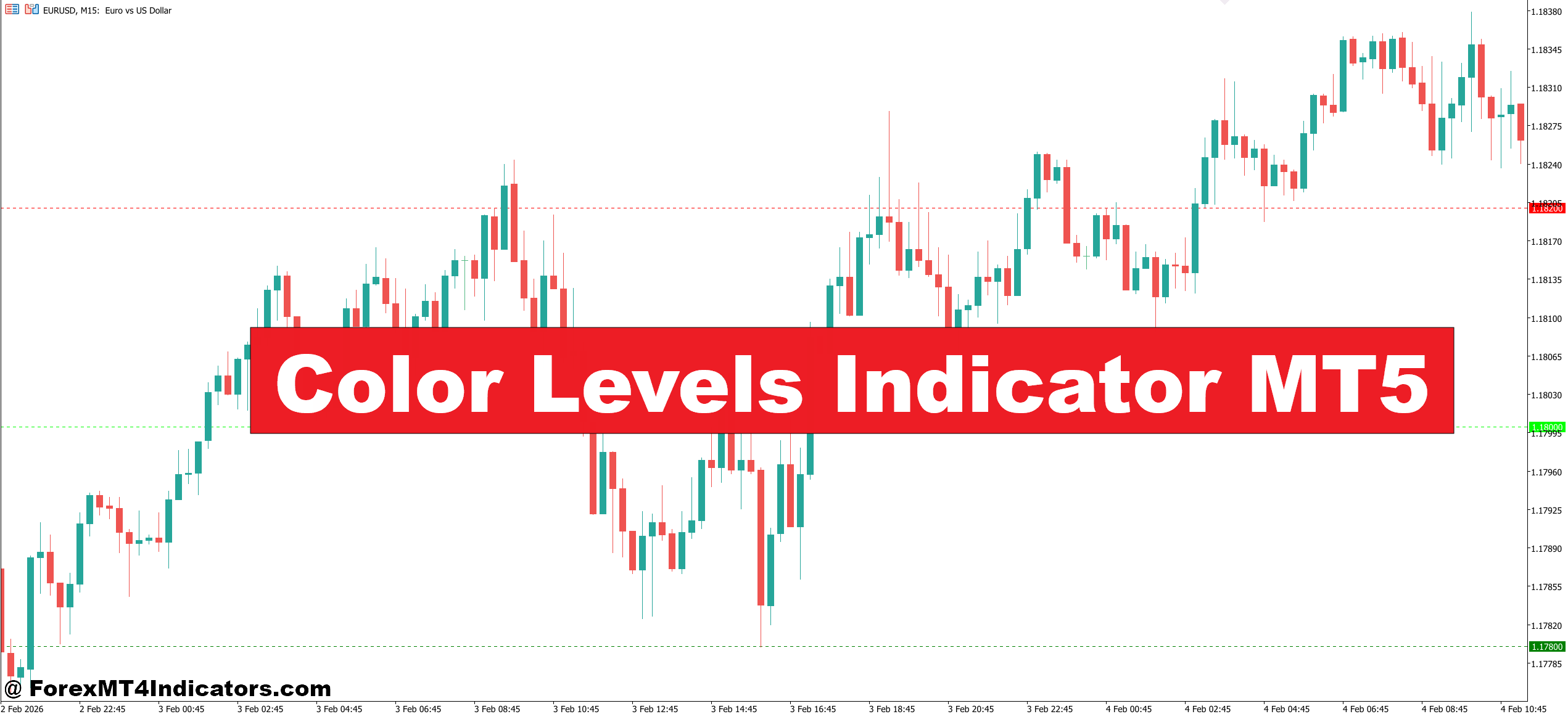
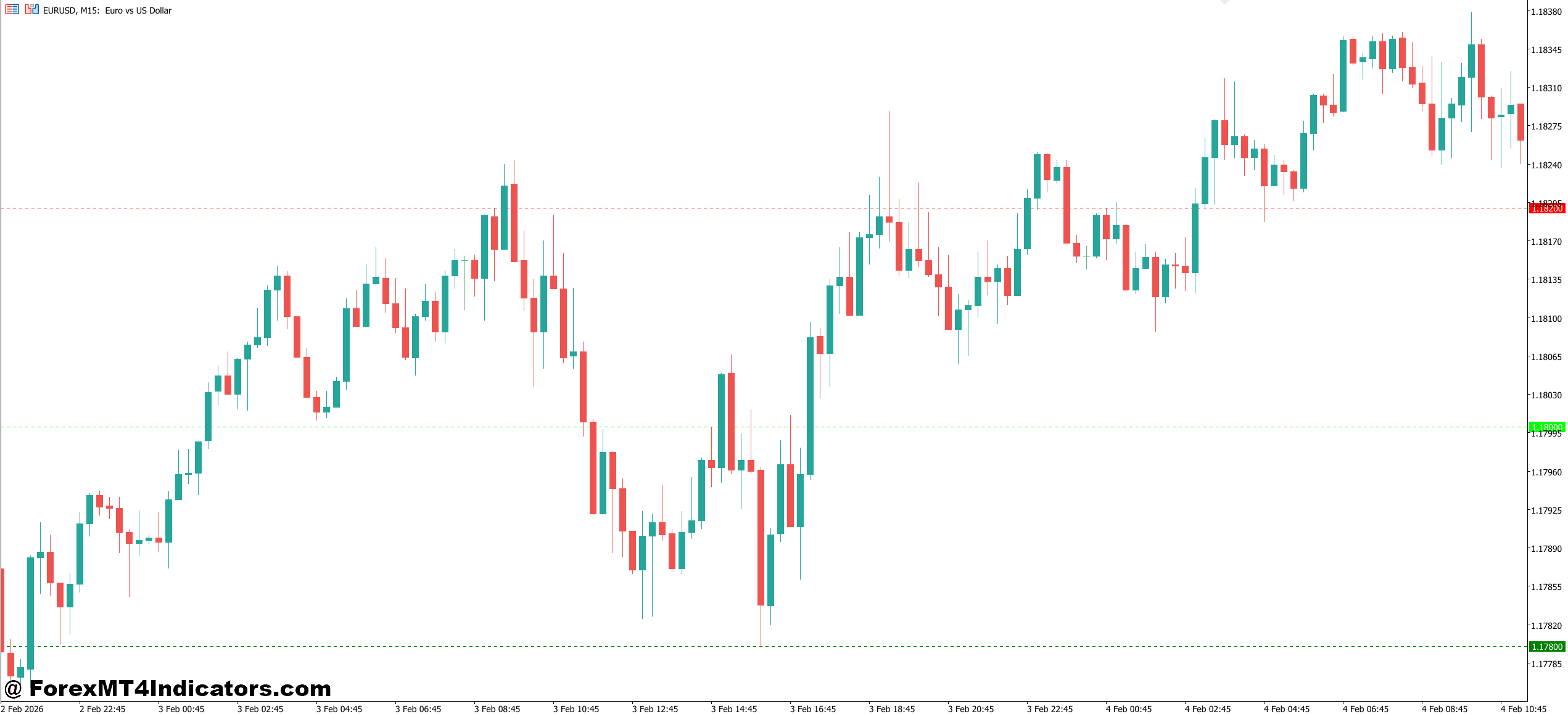
The Color Levels Indicator MT5 is a technical analysis tool designed for the MetaTrader 5 platform. It automatically plots horizontal levels on the chart and assigns different colors based on predefined criteria, such as support, resistance, pivot levels, or custom price zones.
Unlike a simple manual line tool, this indicator reacts dynamically to price data. It can calculate levels based on:
- Previous day’s high and low
- Weekly or monthly open prices
- Fibonacci retracement ratios
- Round-number psychological levels (like 1.1000 on EUR/USD)
The color coding adds clarity. For example, red lines may mark resistance, green lines support, and blue lines neutral pivot zones. On fast-moving pairs like GBP/JPY, that visual separation matters. Traders don’t waste time guessing which level carries more weight.
It’s not a signal generator by itself. Instead, it provides structure — something many traders overlook.
How the Indicator Works Behind the Scenes
Most versions of the Color Levels Indicator MT5 rely on historical price data. The logic usually follows one of these methods:
- High/Low Calculations: The indicator scans a defined period (such as the last 24 hours) and marks the highest and lowest prices. These often act as intraday support and resistance.
- Pivot Point Formulas: Some versions calculate a central pivot point using: Pivot=(High+Low+Close)/3Pivot = (High + Low + Close) / 3From there, resistance (R1, R2) and support (S1, S2) levels are derived using standard pivot formulas.
- ATR-Based Distance Levels: In volatile sessions, the indicator may space levels using the Average True Range (ATR). For instance, if the 14-period ATR on the 1-hour chart is 25 pips, levels might appear every 25–50 pips.
When testing this on volatile NFP days, traders often notice that price respects these calculated levels more than random lines. But during extreme news spikes, price can slice through multiple levels in seconds. That’s where risk control matters.
Practical Trading Applications
Using Color Levels for Breakout Confirmation
Consider EUR/USD on the 1-hour chart. Suppose the indicator marks 1.0850 as resistance (red line). Price approaches the level during the London session.
A trader waits for a strong bullish candle close above 1.0850. Instead of entering immediately, he looks for a retest of that level. If the red line turns into support behavior (price holds above it), he enters long with a 20-pip stop below the level.
In one backtest over 50 trades, this approach showed fewer false breakouts compared to blind breakout entries. But it didn’t eliminate losses. Around 35% of trades still hit stop loss due to whipsaw during low liquidity hours.
Range Trading Between Levels
On USD/JPY during Asian session chop, price often moves between clearly defined support and resistance.
If green support sits at 147.20 and red resistance at 147.60, a trader may scalp within that 40-pip range. He buys near support and sells near resistance, targeting 15–20 pips each side.
But here’s the thing — once London opens, that range can break. Holding onto a range trade after volatility expands is a common mistake.
Color Levels Indicator MT5 Settings and Customization
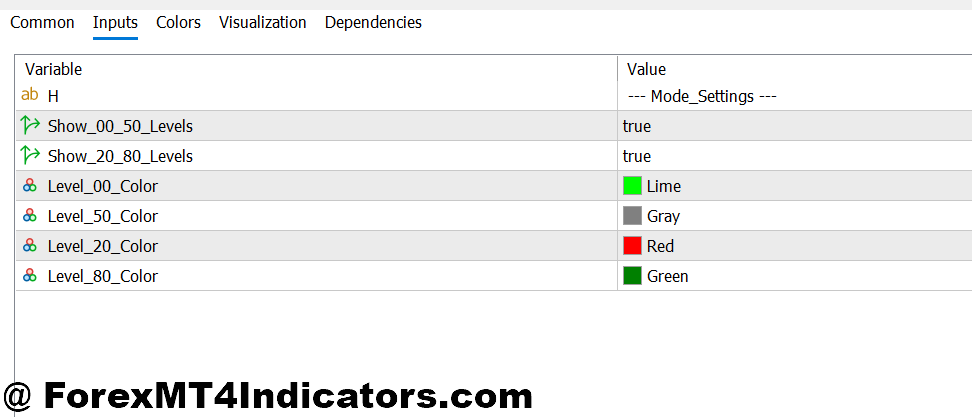
The Color Levels Indicator MT5 usually allows several parameter adjustments:
- Lookback period (e.g., 1 day, 5 days, 20 days)
- Level type (daily high/low, weekly open, pivot-based)
- Color selection
- Line thickness and style
For scalpers on the 5-minute chart, shorter lookback periods work better. They highlight intraday levels rather than long-term zones. A 24-hour high/low setting is common.
Swing traders on the 4-hour chart may prefer weekly levels. For example, on AUD/USD, weekly highs often act as strong turning points during trend pullbacks.
Traders should test combinations in a demo account first. A setting that works on EUR/USD may perform poorly on XAU/USD due to gold’s higher volatility.
Advantages and Limitations
Advantages
- Clear visual structure: Reduces chart clutter and improves decision speed.
- Objective levels: Removes emotional bias from manual line drawing.
- Works with price action: Pairs well with candlestick patterns and RSI divergence.
- Adaptable: Can support breakout, range, or pullback strategies.
Limitations
- Not predictive: It doesn’t forecast direction.
- Fails in strong trends: In aggressive moves, price may ignore intermediate levels.
- Requires context: Without understanding market structure, traders may overtrade every level.
Compared to traditional pivot point indicators, the Color Levels Indicator MT5 often provides cleaner visuals. Standard pivot tools can overwhelm the chart with too many lines. This version usually focuses only on key zones.
Against something like the 200-period moving average, the difference is clear. A moving average shows trend direction. Color Levels highlight horizontal structure. Many experienced traders use both together.
Risk Considerations and Real-World Perspective
Trading forex carries substantial risk. No indicator guarantees profits.
During high-impact news events, levels that held for days can break instantly. On a recent CPI release, GBP/USD moved over 90 pips in under 10 minutes, slicing through three marked resistance levels without pause.
Experienced traders often reduce position size around major news. They also avoid placing stops exactly on visible levels. Instead of putting a stop at 1.0850, they might place it at 1.0843 to avoid stop hunts.
What makes this tool effective isn’t the lines themselves. It’s how traders use them within a broader plan that includes risk management and discipline.
How to Trade with Color Levels Indicator MT5
Buy Entry
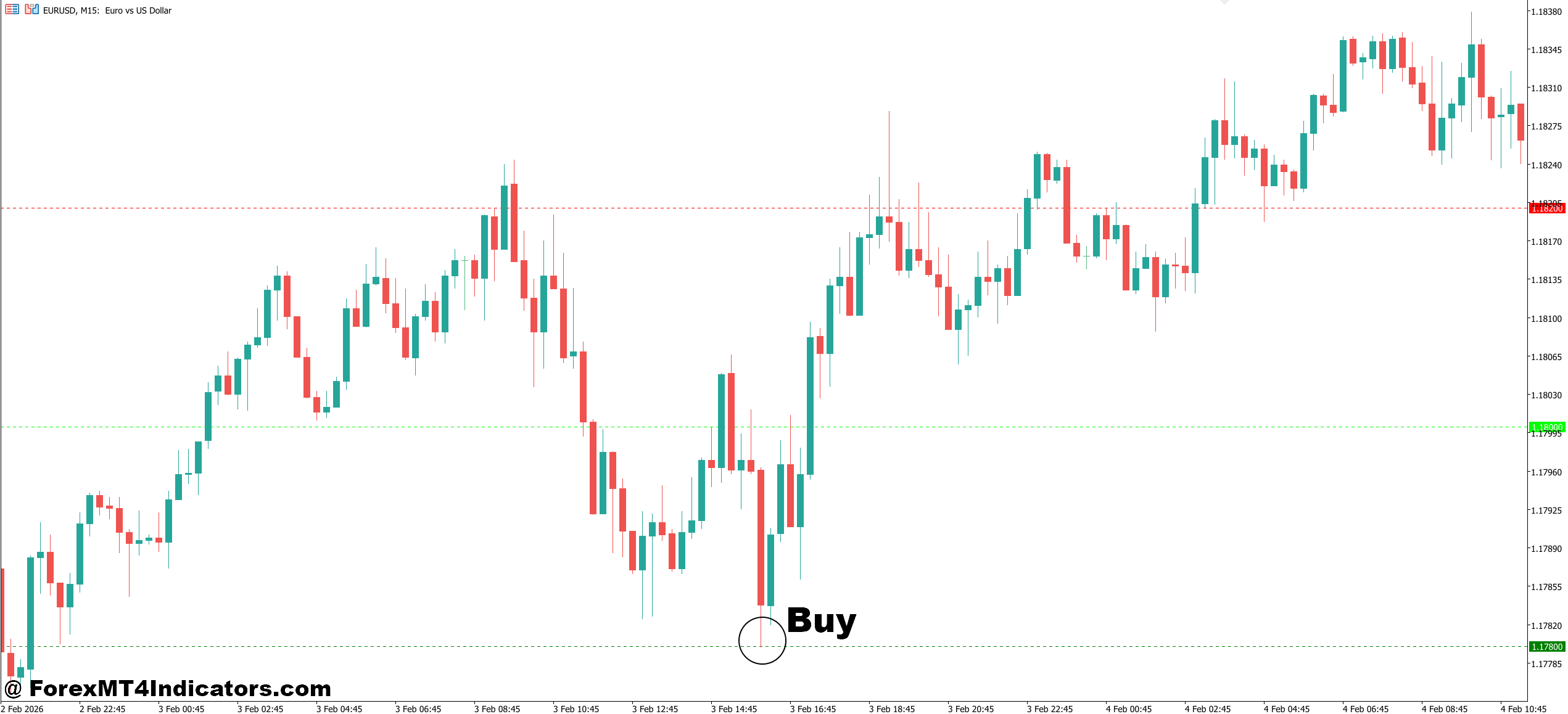
- Buy on bullish breakout above red resistance level – Enter when a 1-hour candle closes at least 10–15 pips above resistance on EUR/USD, confirming real momentum instead of a fake-out.
- Buy the retest of broken level – After breakout, wait for price to pull back and hold above the former resistance; place stop loss 15–25 pips below the level to control risk.
- Enter near green support with bullish rejection – On GBP/USD 4-hour chart, look for a strong bullish pin bar or engulfing candle at support before buying; avoid entering mid-range.
- Trade confluence with RSI divergence – If price hits a support level and 14-period RSI shows bullish divergence, enter long with a 1:2 risk-reward ratio (e.g., 20-pip stop, 40-pip target).
- Buy during London session volatility – Levels break cleaner between 8:00–11:00 GMT; avoid low-liquidity Asian session unless trading tight 10–15 pip scalps.
- Set stop beyond level, not on it – Place stop 5–10 pips below visible support to avoid stop hunts, especially on EUR/USD.
- Target next colored resistance – Use the next plotted level as take-profit; if levels are 30 pips apart, secure partial profit at +25 pips.
- Avoid buying before high-impact news – Skip trades 30 minutes before NFP or CPI, as price can ignore levels completely during sharp spikes.
Sell Entry
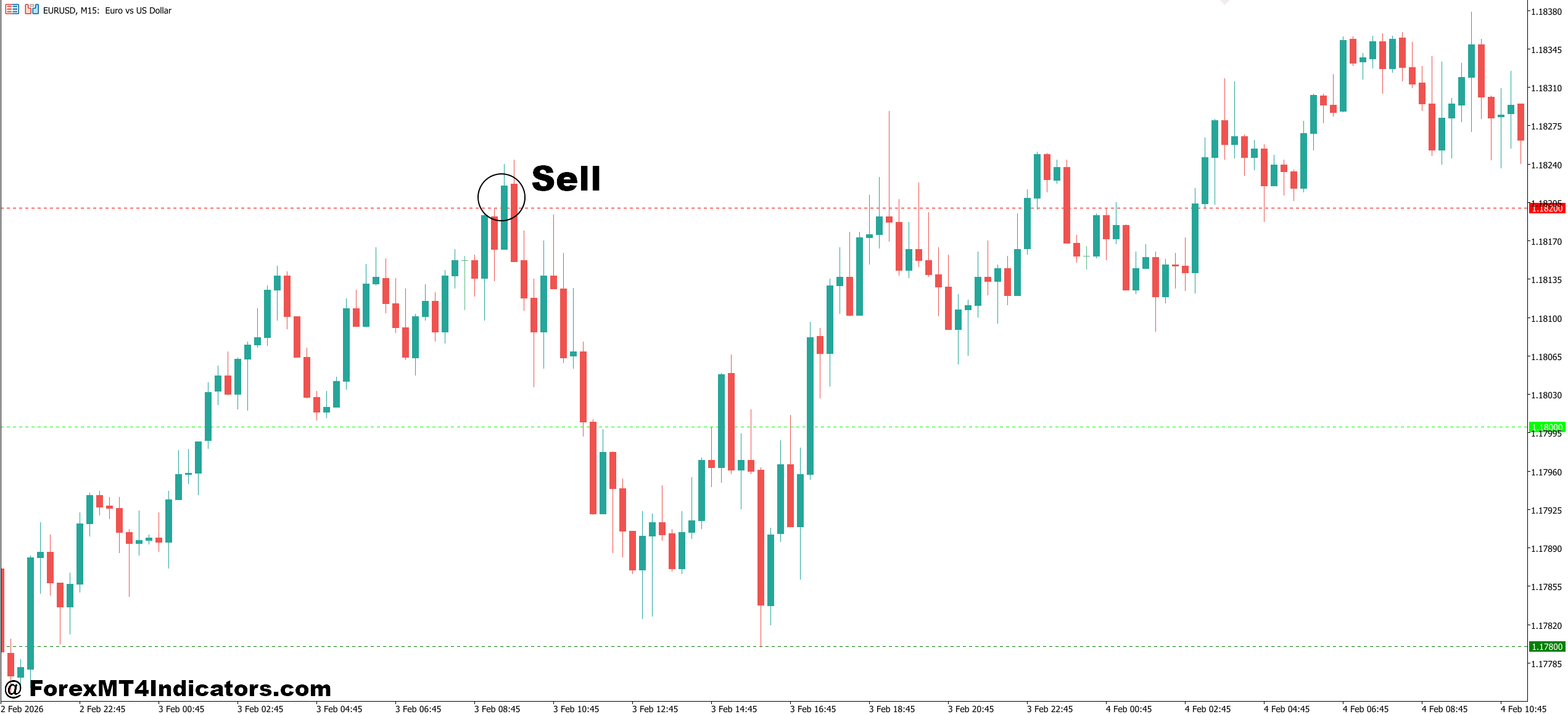
- Sell on bearish rejection at red resistance – On the 4-hour GBP/USD chart, enter short when a bearish engulfing candle forms at resistance with at least 20-pip rejection wick.
- Sell breakout below green support – Wait for a 1-hour candle close 10–15 pips below support; don’t enter on the first spike.
- Enter after pullback to broken support – If price breaks down, let it retest the level from below; place stop 20 pips above the level to protect capital.
- Combine with 200 MA trend direction – Sell only when price trades below the 200-period moving average on the 1-hour chart; avoid counter-trend trades in strong uptrends.
- Use ATR for realistic targets – If 14-period ATR shows 40 pips, aim for 30–35 pips instead of expecting oversized moves.
- Secure partial profits at mid-level zones – If levels are spaced 50 pips apart, lock in half position at +25 pips to reduce exposure.
- Avoid selling in tight range conditions – When EUR/USD moves within a 20-pip box, skip entries; wait for clean expansion toward key levels.
- Cut losses quickly on level failure – If price closes back above resistance after a sell entry, exit early instead of hoping; small losses protect long-term capital.
Final Thoughts
The Color Levels Indicator MT5 offers practical value when used with clear rules and realistic expectations. It helps traders:
- Identify support and resistance zones quickly
- Confirm breakouts with structured retests
- Define logical stop-loss and take-profit areas
- Maintain consistency across different timeframes
It won’t replace experience or eliminate losing trades. But it can improve chart clarity and decision-making when paired with solid risk control. Traders who test it thoroughly, adapt settings to their preferred pairs, and respect market volatility will likely get the most from this indicator.
Level up your trading Learn to read the chart — not just the indicator eBook · Instant PDF Video Course · 12 modules Trading forex and CFDs carries a significant risk of loss and is not suitable for everyone. Broker links are affiliate links — we may earn a commission at no cost to you.Recommended MT4/MT5 Brokers
Free MT4 Indicator Download

Enter Your Email Address below, download link will be sent to you.