

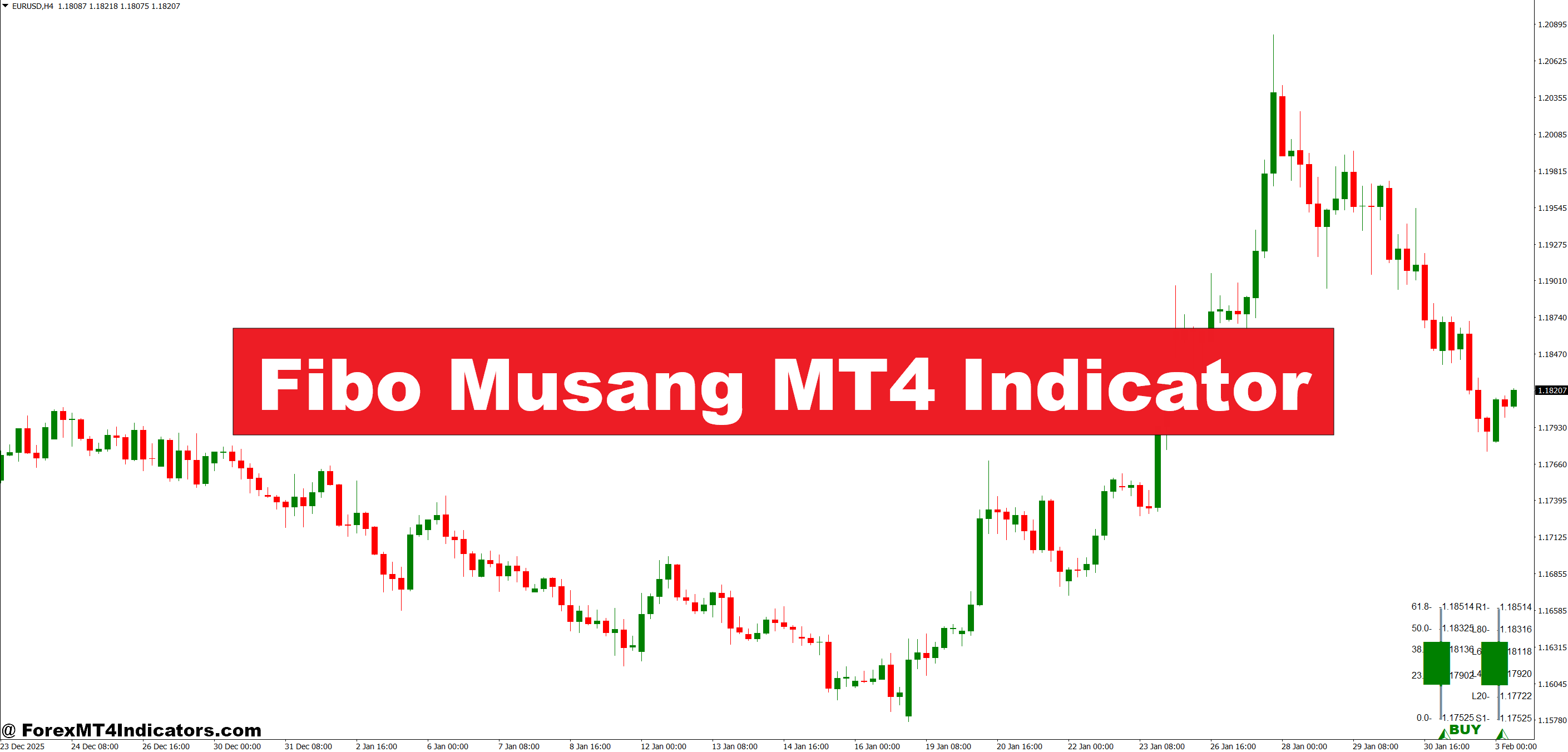
The Fibo Musang indicator is a Fibonacci-based technical analysis tool designed for MetaTrader 4. It automatically calculates and plots key Fibonacci levels — 23.6%, 38.2%, 50%, 61.8%, and 78.6% — based on recent price swings. The word “Musang” references the civets found across Southeast Asia, and the indicator shares a bit of that reputation for being quick and sharp.
What sets it apart from drawing Fibonacci levels by hand is the automation. Instead of manually selecting a high and low point every time conditions shift, the indicator reads the price data and recalculates on its own. This is especially handy during volatile sessions when swing points move fast.
How the Indicator Actually Works
The Fibo Musang indicator relies on a straightforward calculation. It scans back through a set number of bars — configurable by the user — and identifies the highest high and lowest low within that lookback window. Once it locks those two points, it applies standard Fibonacci math to plot the retracement levels between them.
The real value isn’t in the math itself. Every Fibonacci tool does the same calculation. What matters is how the indicator handles the lookback period. A shorter window means the levels snap to more recent swings, which works well in trending markets. A longer window pulls in older price action, smoothing things out during choppy, range-bound conditions.
The levels are drawn as horizontal lines across the chart. Traders watch for price to react at these lines — either bouncing off them as support or running into them as resistance. When price holds at the 38.2% level after a pullback, that’s often a sign the prior trend still has legs.
Using Fibo Musang in Real Trading Scenarios
Catching Pullbacks in a Trend
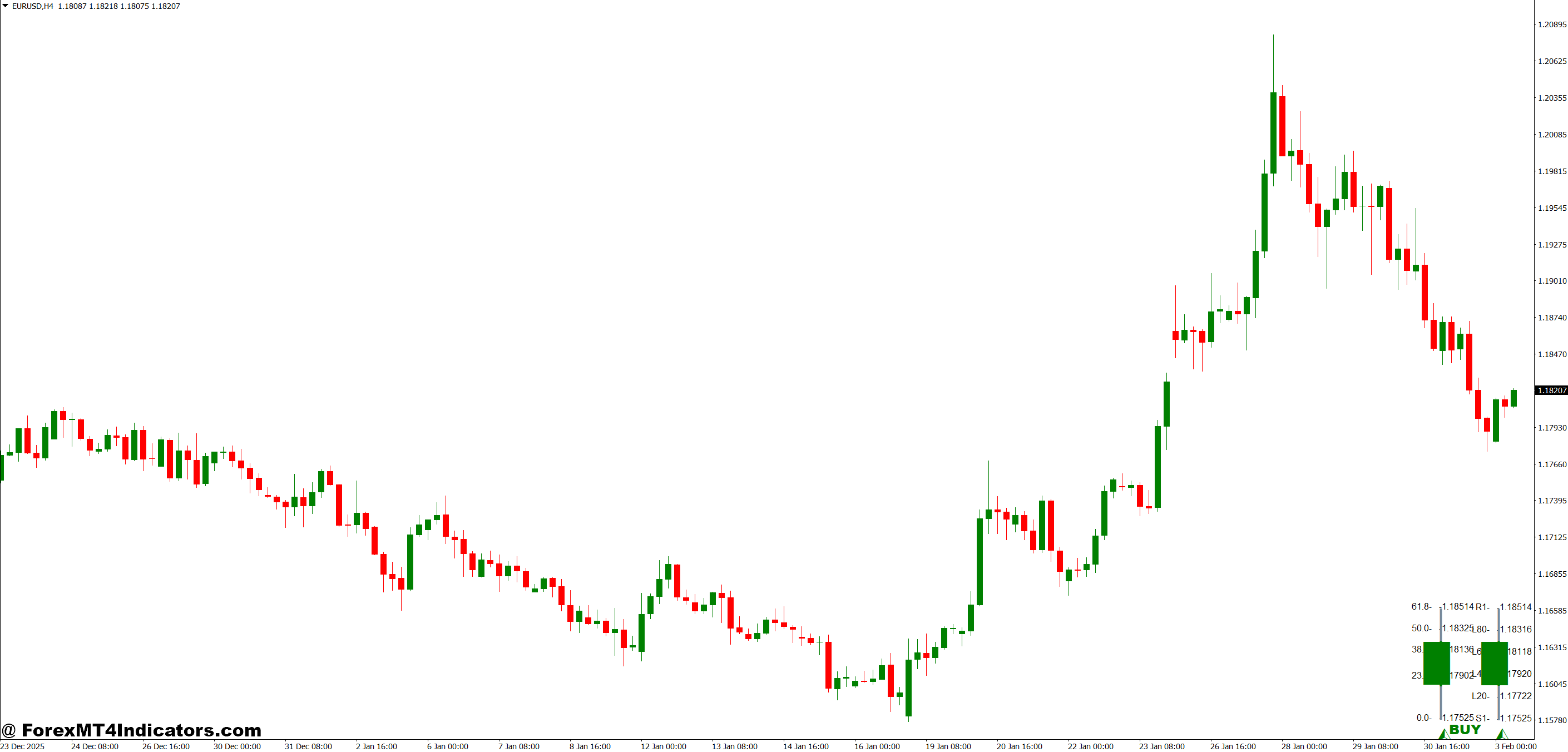
One of the best uses of this indicator is during a clear trend. Say GBP/USD is in an uptrend on the 4-hour chart and pulls back after a sharp leg higher. The indicator quickly recalculates its levels based on that last swing up. If price holds around the 38.2% or 50% retracement and starts pushing higher again, many traders treat that as confirmation the trend is still intact — and a solid spot for a long entry.
During one stretch in early 2024, GBP/USD pulled back from around 1.2800 to 1.2680 on the 1-hour chart. The indicator placed the 61.8% level right near 1.2690. Price touched that zone and reversed, giving traders a clear entry point with a tight stop below the swing low.
Identifying Range Boundaries
The indicator also works well when the market isn’t trending. During consolidation on USD/JPY on the daily chart, the Fibo levels helped define the top and bottom of the range. The 78.6% level acted as a ceiling, and the 23.6% became a floor. Traders could fade moves toward either extreme and ride the bounce back toward the middle.
Spotting Fake-Outs
Experienced traders also watch for price breaking a Fibonacci level only to snap right back. If price drops below the 50% level on a 30-minute chart but closes back above it within one or two candles, that’s a strong sign the level is still holding as support. The indicator makes these moves easier to catch because the levels are already drawn and updating in real time.
Fibo Musang MT4 Indicator Settings and Customization
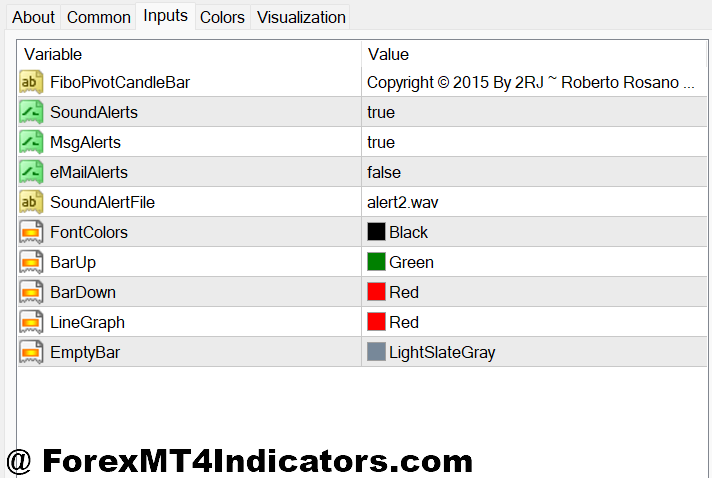
The indicator comes with a few key parameters that traders can adjust depending on their style and preferred timeframes.
Lookback Period: This is the most important setting. A value between 50 and 100 bars works well for day traders on the 1-hour or 4-hour charts. Swing traders might push it toward 150 or 200 bars to capture broader moves on the daily chart. Too low and the levels jump around during normal fluctuations; too high and the indicator becomes slow to reflect current price action.
Level Display: Most versions let you toggle individual Fibonacci levels on or off. For a cleaner chart, some traders only show the 38.2%, 50%, and 61.8% levels. Others keep all levels visible during breakout analysis.
Color and Line Style: Using bold, distinct colors for each level makes it easier to read during fast-moving sessions. Dashed lines tend to work better than solid ones so they don’t obscure the price candles underneath.
Strengths and Limitations – An Honest Look
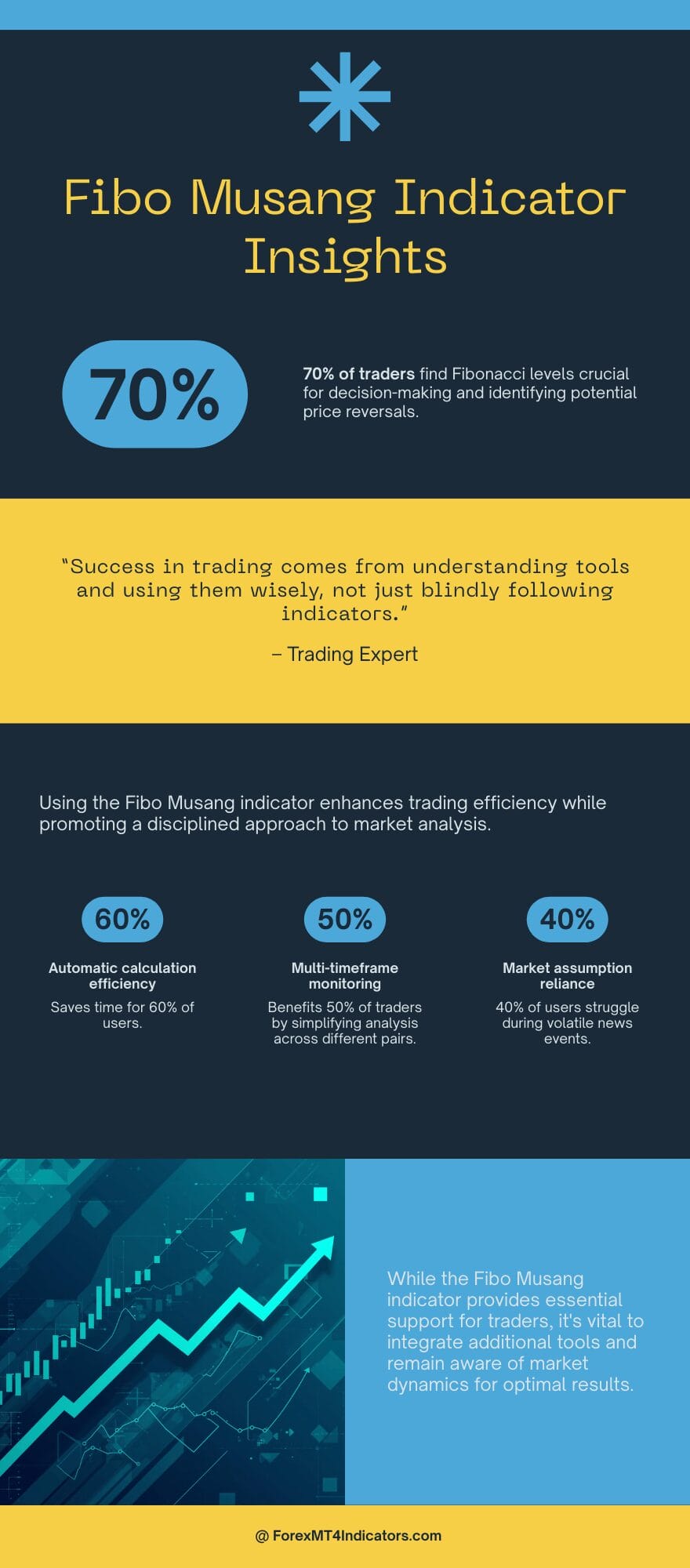
The Fibo Musang indicator saves time. Manual Fibonacci drawing is tedious, especially when watching multiple pairs or timeframes. Having those levels auto-calculated removes one layer of repetitive work from the trading day.
But it’s not without drawbacks. Like all Fibonacci-based tools, it assumes past price swings will influence future behavior — and that doesn’t always hold. In markets with sudden news-driven moves, the levels can shift dramatically. The indicator also doesn’t account for volume or sentiment, so it works best as one piece of a larger strategy — alongside trend confirmation tools like a moving average, or RSI divergence.
How Does It Compare to Other Fibonacci Tools?
MT4 already has a built-in Fibonacci tool in its drawing toolkit. The catch is that you have to manually select the swing points yourself every time the relevant price move changes. The Fibo Musang indicator automates that, which is a meaningful time saver if you trade actively.
Compared to other auto-Fibonacci indicators on the MT4 market, Fibo Musang is relatively lightweight. Some competing tools add trend arrows, alerts, and trade signals on top of the levels, which can clutter your chart. Fibo Musang stays focused on plotting clean, accurate levels. Other traders lean on pivot point indicators instead, but pivots recalculate once per day and don’t offer the same retracement depth across multiple timeframes.
How to Trade with Fibo Musang MT4 Indicator
Buy Entry
- Wait for price to hold the 38.2% level – On EUR/USD 1-hour chart, confirm the candle closes above 38.2% before entering. No close = no trade.
- Enter long after the bullish confirmation candle – Place your buy order at the close of the green candle that holds above 38.2%. Don’t guess — wait for the close.
- Set stop-loss 15–20 pips below the swing low – On GBP/USD 4-hour, place SL 18 pips under the last low. Keeps risk tight without getting stopped out on normal wicks.
- Target the 61.8% extension level first – Use 61.8% as your TP1. On a daily chart, that usually lands 30–50 pips above entry on major pairs.
- Only take signals in an uptrend – Check the 4-hour MA(50). Price must sit above it. Buying into a downtrend against the Fibo levels leads to whipsaw losses.
- Scale in at the 50% level if the first entry pulls back – Add a second smaller position (half size) at 50%. This lowers your average entry and improves your risk/reward to 1:2.
- Skip the signal during NFP or high-impact news – EUR/USD and GBP/USD go wild 30 min before and after NFP. Wait 1 hour post-release before acting on any Fibo level.
- Move stop-loss to breakeven once price hits +15 pips – Lock in the trade early. On the 1-hour chart, trail SL up as price extends. Protects profit and removes emotional pressure.
Sell Entry
- Wait for price to reject the 61.8% resistance – On EUR/USD 4-hour, watch for a bearish candle closing below 61.8%. One rejection candle isn’t enough — wait for confirmation.
- Enter short at the close of the bearish confirmation candle – Place your sell order right at the close. On GBP/USD 1-hour, this keeps your entry clean and reduces slippage risk.
- Set stop-loss 15–20 pips above the swing high – Place SL 17 pips over the last high on the 4-hour chart. Anything tighter and normal volatility wicks will stop you out.
- Target the 38.2% support level as TP1 – On the daily chart, 38.2% usually sits 25–45 pips below the entry for major pairs. Take partial profit there.
- Only sell in a confirmed downtrend – Price must trade below the 4-hour MA(50). Selling into an uptrend against Fibo will get you chopped out fast.
- Add a second sell at the 50% level on a pullback – If price retraces to 50% before continuing lower, add half your original size. Averages down your entry and tightens risk/reward.
- Do not sell during consolidation or range chop – If price bounces between 38.2% and 61.8% for 3+ candles on the 1-hour, the market is indecisive. Stay out entirely.
- Trail your stop-loss down once price drops 15 pips – On the 4-hour, move SL down with price. Locks in gains without exiting too early. Keeps emotion out of the trade.
Final Thoughts
The Fibo Musang MT4 indicator fills a specific gap in a trader’s toolkit. It takes the manual grind out of Fibonacci level drawing and keeps those levels updated as price action evolves. For traders who already work with Fibonacci retracements, adding this tool is a practical step — not a magic fix, but a genuine improvement in workflow.
Use it the right way, though. Pair it with trend analysis, confirm signals with a second indicator, and keep your risk management tight. Fibonacci levels are guides, not guarantees. But when they line up with the broader market structure, they can point you toward high-probability trades that manual analysis would take longer to find. Give it a run on a demo account and see how it fits into the way you already trade.
Level up your trading Learn to read the chart — not just the indicator eBook · Instant PDF Video Course · 12 modules Trading forex and CFDs carries a significant risk of loss and is not suitable for everyone. Broker links are affiliate links — we may earn a commission at no cost to you.Recommended MT4/MT5 Brokers
Free MT4 Indicator Download

Enter Your Email Address below, download link will be sent to you.