

Last updated:
The MT4 Keltner Channel indicator solves this by wrapping price action in volatility-adjusted bands. Unlike static support and resistance, these channels expand and contract with market conditions. Traders get dynamic reference points that adapt to what the market’s actually doing, not what they hope it’ll do.
Understanding the Keltner Channel Structure
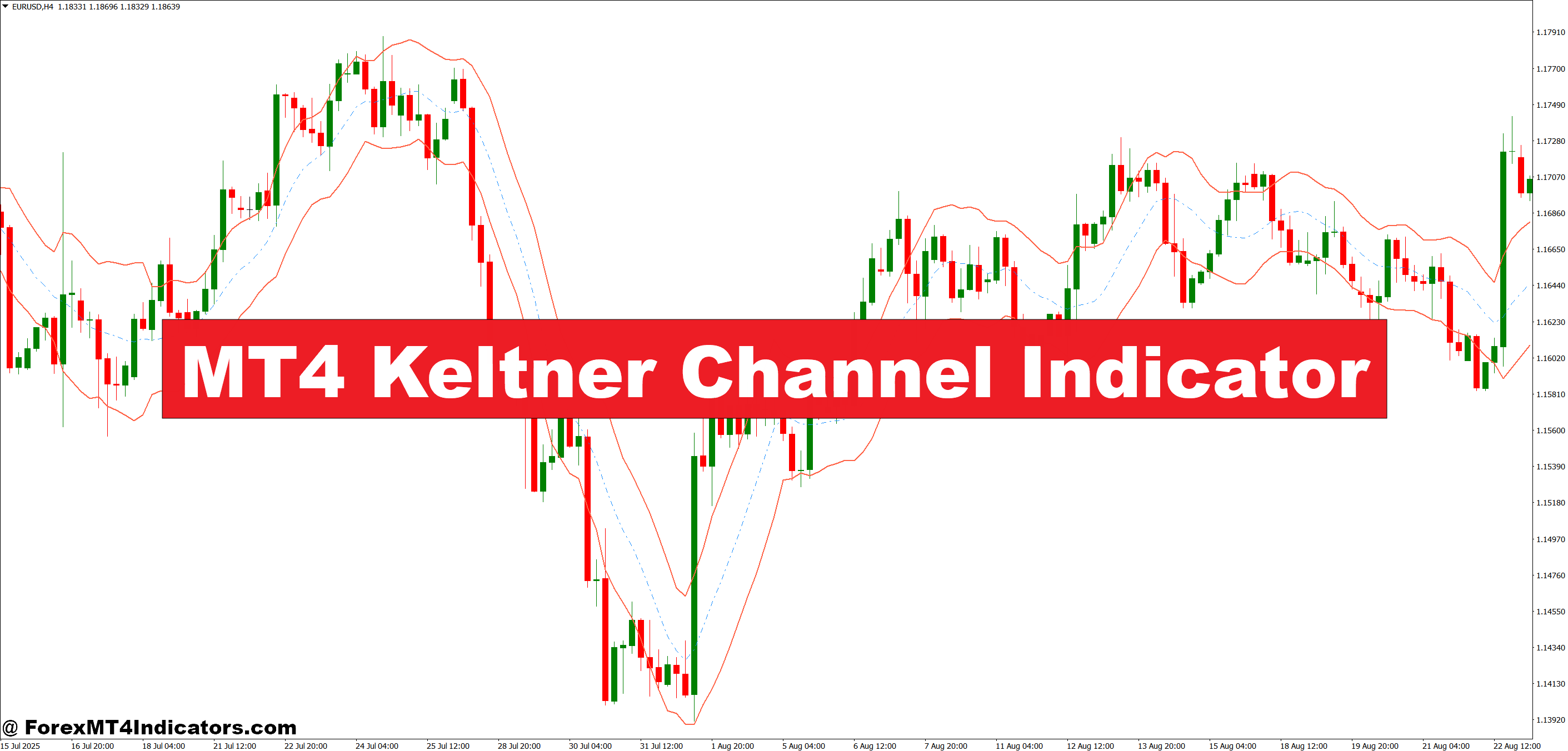
The Keltner Channel consists of three lines plotted on a price chart. The middle line is an exponential moving average (EMA), typically set to 20 periods. Above and below this EMA, two bands extend outward based on the Average True Range (ATR).
Here’s what sets this indicator apart from moving average envelopes: the bands don’t use a fixed percentage. They use ATR, which measures actual volatility. When GBP/JPY starts whipping around 200 pips a day, the channels widen. During the Tokyo doldrums, they tighten. This responsiveness makes the indicator useful across different market conditions.
The standard calculation multiplies ATR by 2, then adds and subtracts from the middle EMA. A trader testing this on the 4-hour USD/JPY chart during June 2024’s rate speculation saw channels that perfectly framed the 152.00-156.00 range. The bands expanded as volatility spiked around Fed announcements, then contracted during quieter sessions.
Practical Trading Applications
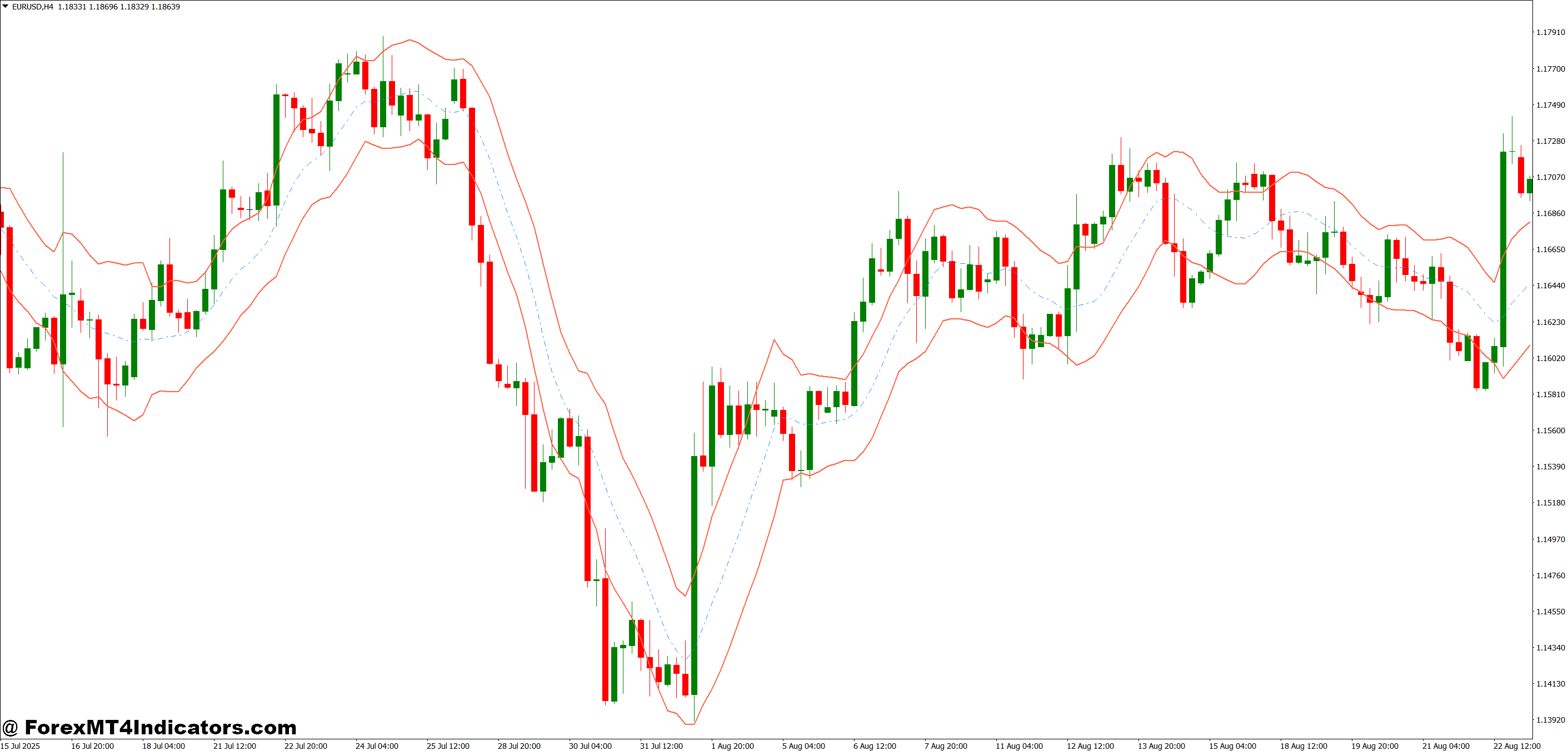
The most straightforward use involves trend confirmation. When price consistently rides the upper band, that’s trending strength—not just higher highs, but volatility-supported momentum. Scalpers on the 15-minute EUR/USD chart use this during London open. If price touches the upper channel and the bands are expanding, they’ll take long entries with stops below the middle line.
But here’s the thing: riding bands works until it doesn’t. A trader needs to distinguish between continuation and exhaustion. That’s where the channel width comes in. When bands start narrowing after an extended trend, it signals diminishing volatility. Smart traders reduce position size or avoid new entries.
Mean reversion setups offer another angle. When price extends beyond the bands—a genuine breakout, not just a touch—many traders expect a pullback to the middle EMA. This works particularly well on the 1-hour GBP/USD during U.S. afternoon sessions when momentum fades. Price might spike 40 pips past the lower band on disappointing economic data, then drift back toward the EMA over the next 2-3 hours.
Range traders love consolidating channels. If the upper and lower bands run nearly parallel for 12+ hours on the 4-hour chart, that’s a defined range. Traders sell near the upper band with targets at the lower band, or vice versa. The key is waiting for price to actually reach these boundaries rather than anticipating.
MT4 Keltner Channel Indicator Customizing Settings
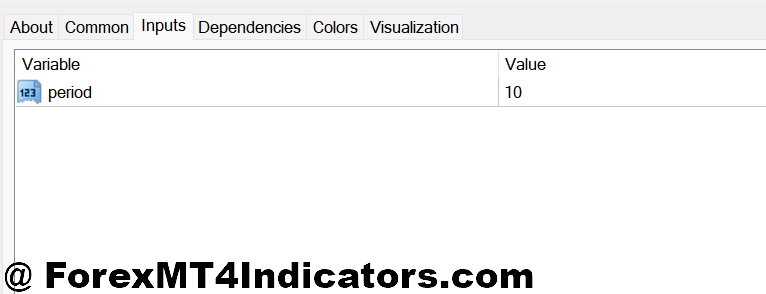
The default 20-period EMA and 2x ATR multiplier work fine, but they’re not gospel. Day traders often shorten the EMA to 10 periods for faster response. This makes the channel more sensitive to price changes—useful for catching intraday swings on pairs like AUD/USD during the Sydney-London overlap.
Longer-term position traders might extend the EMA to 50 periods and increase the ATR multiplier to 3. This creates wider bands that filter out daily noise. When testing this on the daily EUR/GBP chart, the setup caught major multi-week trends while ignoring choppy consolidation periods.
The ATR period itself can be adjusted. The standard is 10, but increasing it to 14 or 20 smooths the bands further. A trader working with volatile emerging market pairs might keep it at 10 for responsiveness. Someone trading major pairs during low-volume hours might bump it to 20 to avoid false signals from random price jumps.
Different timeframes need different approaches. Scalpers on the 5-minute chart might use an 8-period EMA with a 1.5x ATR multiplier. Swing traders on the daily chart stick closer to defaults. There’s no universal “best” setting—it depends on how much lag a trader can tolerate versus how much noise they want to filter.
Comparing with Bollinger Bands
Traders often confuse Keltner Channels with Bollinger Bands since both create envelopes around price. The critical difference lies in calculation. Bollinger Bands use standard deviation, which measures how far price strays from average. Keltner Channels use ATR, which measures the range of actual price movement.
In practice, this means Bollinger Bands react more sharply to price spikes. A sudden 100-pip move on EUR/USD will make Bollinger Bands explode wider. Keltner Channels, using the smoothed ATR, adjust more gradually. For traders who hate whipsaw signals, Keltner’s steadier behavior is preferable.
During trending markets, Keltner Channels tend to keep price inside the bands more often than Bollinger Bands. That’s because ATR rises with trends, naturally widening the channels. Bollinger Bands might stay relatively tight, leading to more “breakout” touches that aren’t really breakouts.
That said, Bollinger Bands excel at spotting volatility squeezes—those tight consolidations before explosive moves. The bands contract more dramatically than Keltner Channels, giving clearer visual cues. Some traders run both indicators simultaneously, using Bollinger for squeeze setups and Keltner for trend confirmation.
Real Limitations to Consider
No indicator is perfect, and Keltner Channels have blind spots. The biggest issue is lag. Since the middle line is an EMA, it trails price by definition. By the time the channel catches up to a sudden reversal, a trader could already be underwater.
Testing this indicator on GBP/JPY during the March 2024 intervention showed the problem clearly. Price dropped 400 pips in 90 minutes. The channels took hours to adjust, leaving traders with wildly outdated reference points. In fast-moving news events, the indicator provides little useful information.
The channels also struggle in ranging, choppy markets with erratic volatility. Price might touch both bands multiple times in a few hours, generating conflicting signals. A trader following mean reversion would get chopped up, while a breakout trader would face repeated fake-outs.
Another thing to watch: the indicator tells you nothing about fundamental catalysts. The bands might show a tightening range on EUR/USD right before an ECB meeting, but they won’t predict which direction the breakout goes. Traders still need to analyze interest rate expectations, economic data, and central bank rhetoric.
Trading forex carries substantial risk, and using any single indicator in isolation is asking for trouble. The Keltner Channel works best as part of a broader strategy that includes price action analysis, multiple timeframe confirmation, and solid risk management.
How to Trade with MT4 Keltner Channel Indicator
Buy Entry
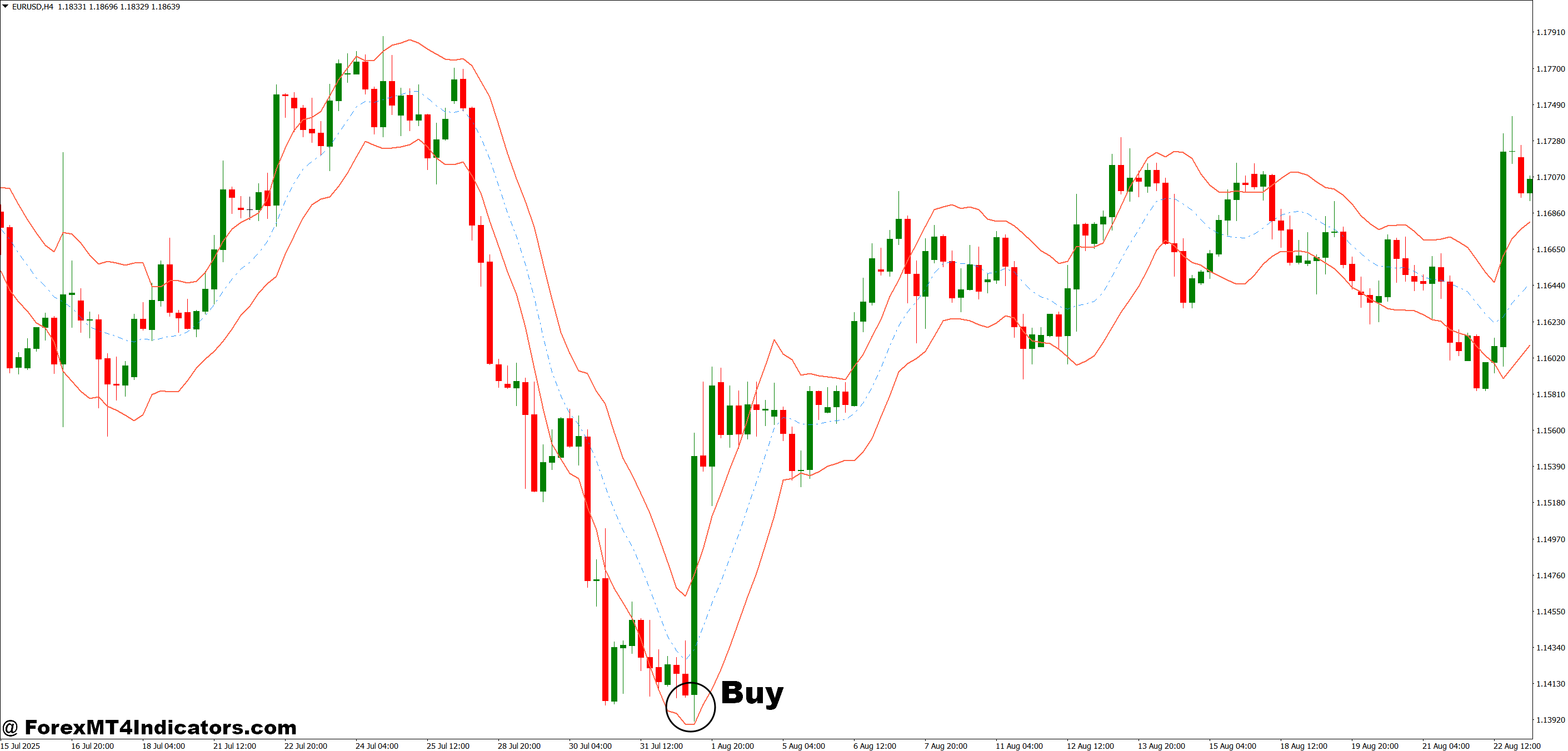
- Price bounces off lower band – Enter long when price touches or slightly penetrates the lower channel and forms a bullish candlestick (hammer, engulfing) on EUR/USD 1-hour chart; place stop 10-15 pips below the band.
- Middle line support hold – Take long positions when price pulls back to the 20 EMA (middle line) during an uptrend and holds with a bullish rejection candle; works best on GBP/USD 4-hour charts with 30-pip stops.
- Band squeeze breakout upward – Enter long when channels narrow to less than 50% of average width, then price breaks above upper band with strong volume; avoid during low-liquidity Asian sessions.
- Walking the upper band – Add to long positions when price consistently closes above the upper channel for 3+ consecutive candles on daily charts; trail stop below middle line as trend continues.
- Failed breakdown reversal – Buy when price spikes below lower band by 20+ pips but closes back inside within 1-2 candles on EUR/USD; signals failed breakdown and potential reversal.
- ATR expansion with upside break – Enter long when bands widen (ATR increases 20%+) and price breaks upper channel during London open; confirms genuine momentum, not noise.
- Double bottom at lower band – Take long entries when price tests lower channel twice within 8-12 hours without breaking below on 1-hour charts; wait for breakout above middle line for confirmation.
- Don’t buy near upper band in ranging markets – Avoid long entries when price touches upper channel but bands are flat and parallel for 12+ hours; high probability of mean reversion chop.
Sell Entry
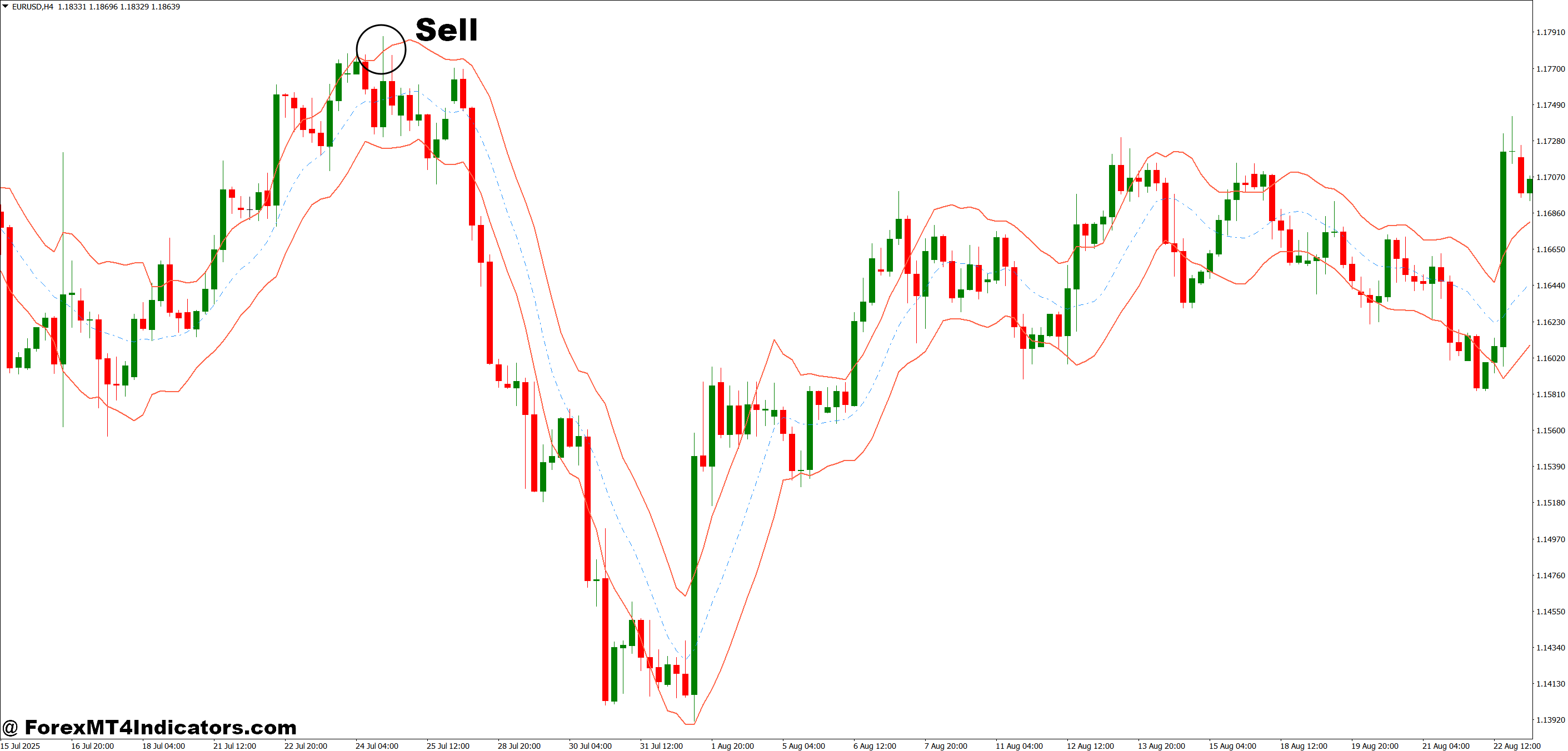
- Price rejection at upper band – Enter short when price touches or exceeds upper channel and forms bearish reversal candle (shooting star, bearish engulfing) on 4-hour GBP/USD; stop 10-15 pips above band.
- Middle line resistance break – Sell when price rallies to the 20 EMA during a downtrend and gets rejected with bearish candle; effective on EUR/USD daily charts with 40-pip stops below recent swing high.
- Band squeeze breakout downward – Short when channels compress to narrow range, then price breaks below lower band with momentum; skip this during major news events to avoid whipsaws.
- Riding the lower band – Add to short positions when price consistently closes below the lower channel for 3+ consecutive 4-hour candles; trail stop above middle line as downtrend develops.
- Failed rally rejection – Sell when price spikes above upper band by 25+ pips but closes back inside within 1-2 candles; indicates exhausted buying pressure and potential reversal.
- Widening bands with downside break – Enter short when ATR expands 15%+ and price breaks lower channel during high-volume U.S. session; confirms real selling pressure, not random drift.
- Double top at upper band – Take short when price tests upper channel twice in 6-10 hours on 1-hour charts without breakthrough; wait for break below middle line to confirm reversal setup.
- Don’t sell near lower band in strong downtrends – Avoid shorting when price touches lower channel but bands keep expanding downward; attempting mean reversion against momentum causes repeated stop-outs.
Making It Work in Your Trading
The Keltner Channel indicator shines when traders understand its strengths—dynamic volatility context, trend confirmation, and mean reversion setups—while respecting its weaknesses around lag and choppy markets. It won’t predict the future or eliminate losses, but it provides objective reference points in an environment where emotions often drive decisions.
Traders who get the most from this tool typically combine it with support and resistance levels, candlestick patterns, or momentum oscillators. The channel handles the “where” and “how volatile,” while other tools address the “why” and “when.” Start by testing the default settings on a demo account with your preferred pairs and timeframes. Watch how the bands behave during different market conditions—trending days, range-bound sessions, news events.
Level up your trading Learn to read the chart — not just the indicator eBook · Instant PDF Video Course · 12 modules Trading forex and CFDs carries a significant risk of loss and is not suitable for everyone. Broker links are affiliate links — we may earn a commission at no cost to you.Recommended MT4/MT5 Brokers
Free MT4 Indicator Download
Enter Your Email Address below, download link will be sent to you.
Related: TTM Squeeze MT4 Indicator