

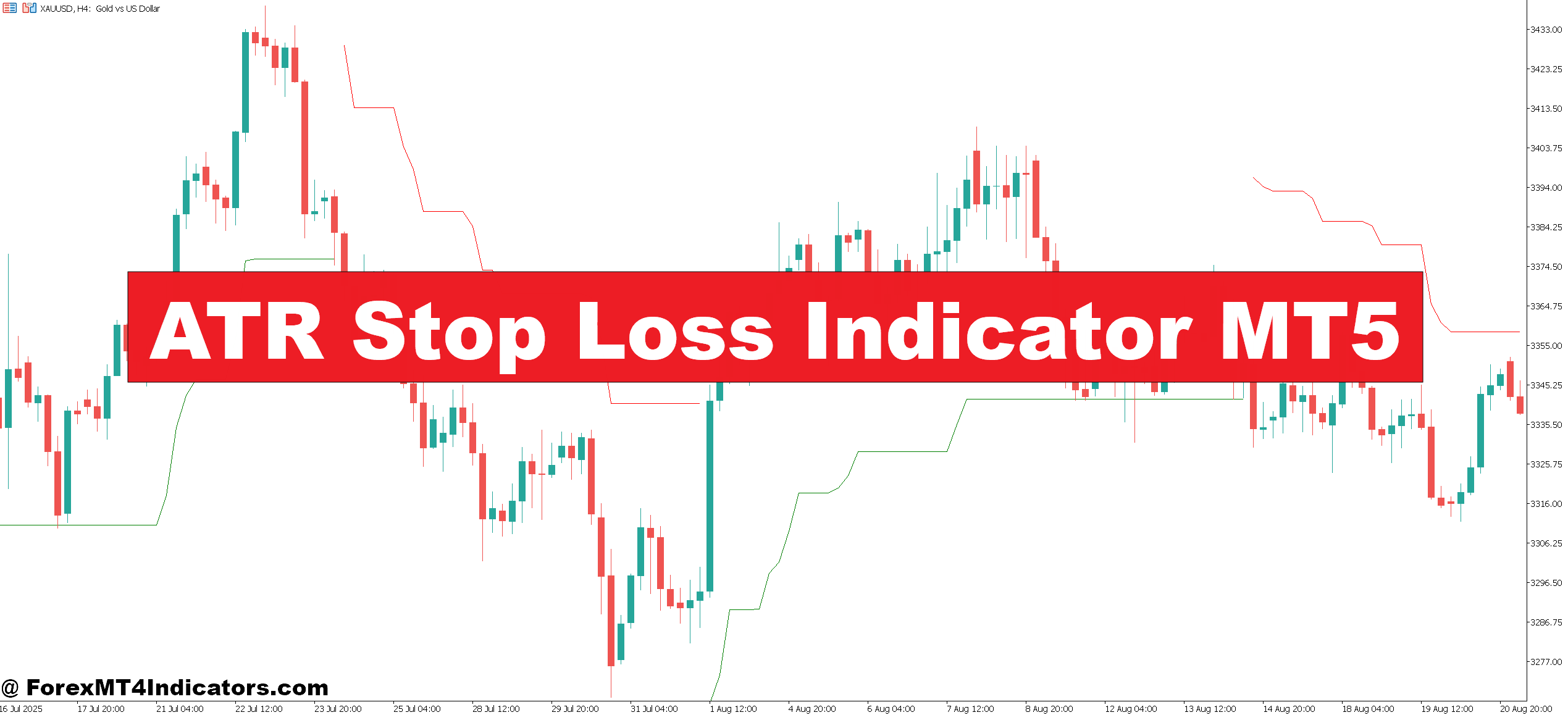
The ATR Stop Loss Indicator is a volatility-based tool that calculates stop-loss levels using the Average True Range (ATR) of price movements. Unlike fixed stop losses, it adjusts automatically according to market conditions.
At its core, the indicator measures the range between high and low prices over a specified period, factoring in gaps and intra-bar movements. Traders can set a multiplier to the ATR value, determining how far from the entry price the stop should sit. For example, a 1.5x ATR stop on a 14-period calculation adapts automatically: during calm markets, the stop might be 20 pips; during volatile spikes, it could widen to 50 pips.
This approach helps prevent early stop-outs in trending markets while still protecting capital during sudden reversals. In practice, it integrates seamlessly with existing strategies, whether you trade breakouts, pullbacks, or trend-following setups.
How It Works
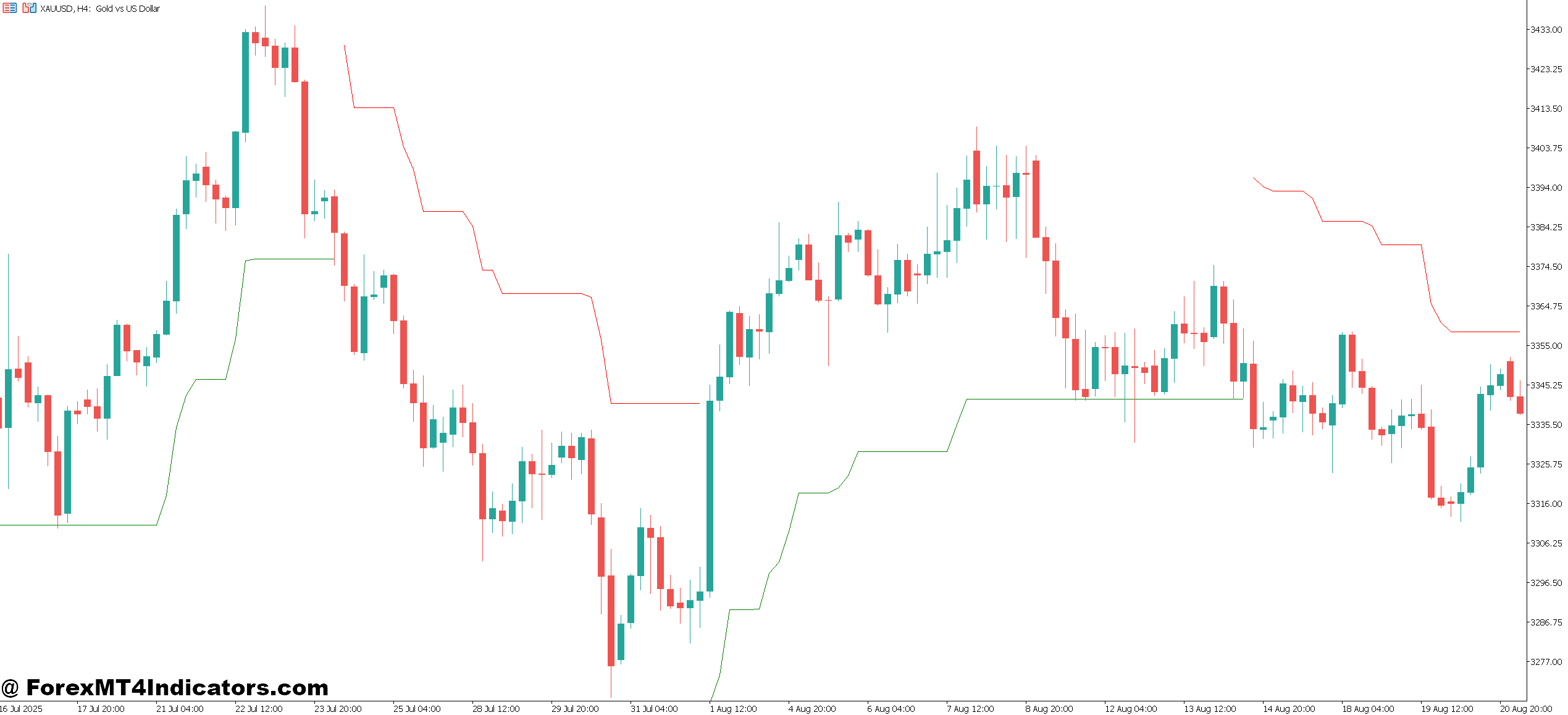
The indicator uses the formula:
ATR Stop Level = Entry Price ± (ATR × Multiplier)
For buy trades, the stop sits below the entry by the calculated ATR distance. For sell trades, the stop sits above.
Here’s a practical scenario: on EUR/USD 1-hour chart, the 14-period ATR reads 35 pips. A trader sets a 2x multiplier. The buy trade at 1.1000 gets a stop at 1.1000 − (35 × 2) = 1.0930. If volatility surges and ATR jumps to 50 pips, the stop automatically recalculates to 1.0900. This adaptive mechanism reduces the likelihood of being stopped out by intraday noise.
Experienced traders often combine ATR stops with support and resistance zones. If the dynamic stop aligns just below a recent swing low, it strengthens risk management, giving trades room to breathe without leaving positions overly exposed.
Practical Application
In real trading, the ATR Stop Loss Indicator is especially valuable during high-impact news. During NFP releases, GBP/USD can swing 70–100 pips within an hour. Traders using fixed stops often get whipsawed, while ATR-based stops adjust to the spike, keeping positions alive longer.
For trend traders, ATR stops can trail behind price. On USD/JPY 4-hour charts, a trader enters long after a breakout. Using a 1.5x ATR stop, the stop level follows price as the trend extends. This method allows profits to run while still controlling downside risk.
Swing traders also benefit. If EUR/GBP consolidates in a 50-pip range, a 2x ATR stop ensures positions are not closed prematurely, while capturing potential breakouts.
It’s important to note that ATR stops aren’t static profit targets—they are risk management tools. Combining them with proper position sizing and strategy confirmation is key to consistent results.
ATR Stop Loss Indicator MT5 Settings & Customization
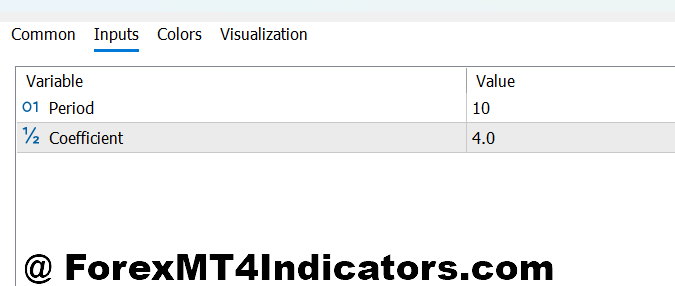
The indicator offers adjustable parameters:
- ATR Period: Standard is 14, but shorter periods (7–10) make stops tighter for scalping, while longer periods (20–30) smooth out volatility for swing trades.
- Multiplier: Typically 1.5–3x ATR. Higher values reduce stop-outs but increase risk per trade.
- Timeframe Adaptation: Works on all timeframes, but ATR values differ; 5-minute charts produce smaller pip stops than daily charts.
Example: On EUR/USD 15-minute chart, 14-period ATR is 12 pips. With a 2x multiplier, stop = 24 pips. On 1-hour chart, same period ATR is 35 pips, stop = 70 pips.
Traders can also link ATR stops with break-even adjustments. Once a trade moves in favor, stops can be trailed using a fraction of the ATR, locking in profits without exiting too early.
Advantages vs Limitations
Advantages
- Adaptive Risk Control – Adjusts to market volatility, reducing premature stop-outs.
- Strategy Compatibility – Works with trend, breakout, and swing trading setups.
- Timeframe Flexibility – Effective across scalping to daily trading.
Limitations
- Lag in Volatile Spikes – Sudden price gaps can bypass ATR stop before recalculation.
- Requires Multiplier Tuning – Incorrect settings may leave stops too tight or wide.
- Not a Signal Generator – It manages risk, doesn’t predict entry or exit points.
Traders often combine it with trend confirmation or support/resistance analysis to improve effectiveness. Honest evaluation of its limits avoids overreliance.
Comparison with Similar Indicators
Compared to fixed pip stops, ATR stops provide a dynamic, market-responsive approach. Fixed stops often fail during volatility spikes, while ATR stops expand naturally.
Trailing stops in MT5 can mimic ATR stops but often lack volatility adaptation unless manually calculated. Traditional indicators like Bollinger Bands offer volatility insight, but ATR stops directly translate that into actionable risk management.
In practice, traders using ATR stops report fewer early exits and better alignment with price swings, making it a reliable complement to any disciplined strategy.
How to Trade with ATR Stop Loss Indicator MT5
Buy Entry
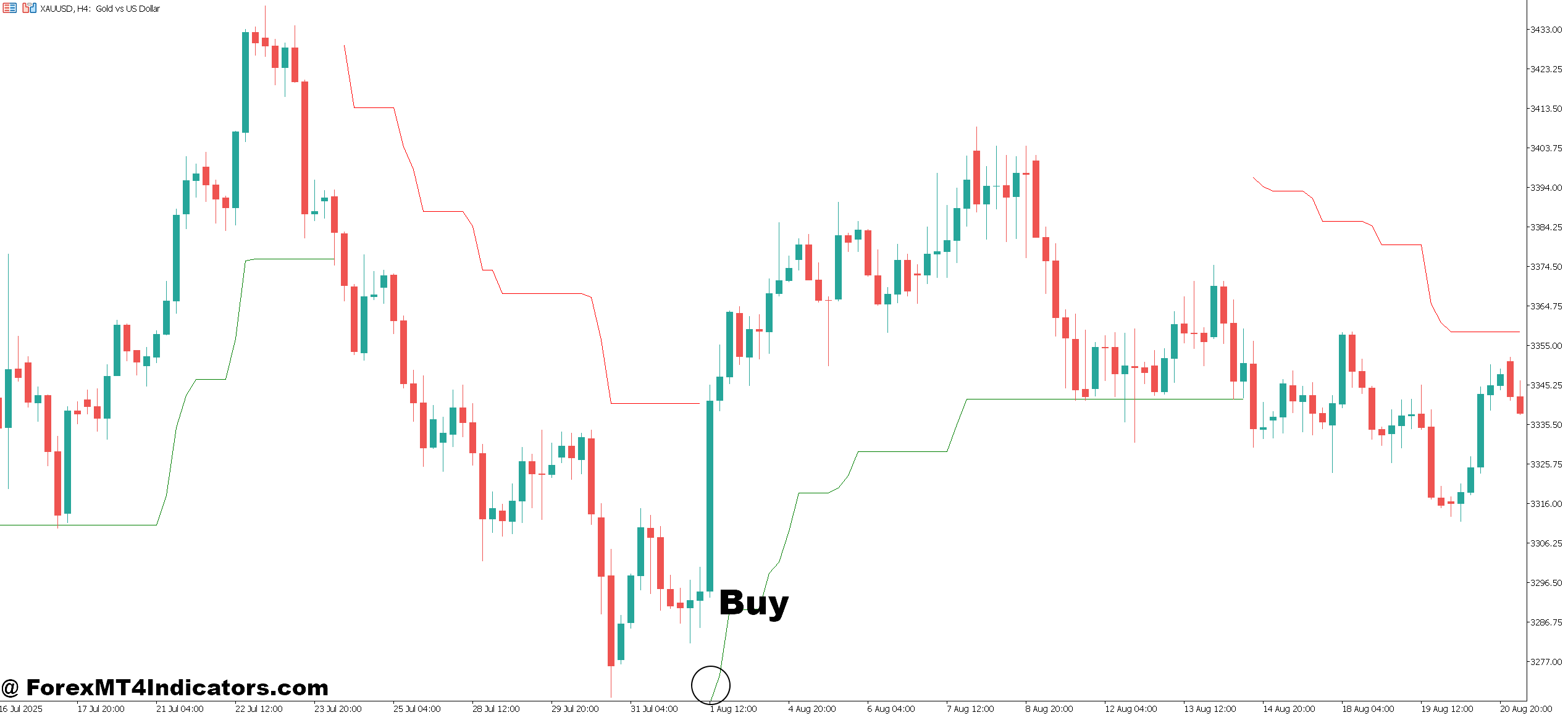
- Price closes above recent swing high – Enter long on EUR/USD 1-hour chart when the candle closes above the last high, set ATR stop 1.5x below entry (~35 pips).
- Trend confirmed by moving average – If GBP/USD 4-hour closes above the 50 SMA and ATR stop aligns below the swing low (~50 pips), consider buying.
- Breakout from consolidation – On EUR/JPY daily chart, a breakout candle above range triggers buy; ATR stop 2x ATR (~70 pips) protects against false breakouts.
- ATR stop trailing – Move stop to breakeven when trade gains 1x ATR (30–40 pips), locking in profits without exiting early.
- RSI support alignment – Buy when 14-period RSI crosses 50 on USD/JPY 1-hour and ATR stop is below swing low (~25 pips).
- Avoid choppy markets – Do not take signals when ATR < 10 pips on low volatility pairs; stops will be too tight.
- Multiple timeframe confirmation – Confirm trend on higher timeframe (4-hour) before entering 1-hour buy, ATR stop ~1.5x ATR (~30 pips).
- Event filter caution – Avoid buying during NFP or major news spikes; ATR stops may widen excessively (50–100 pips).
Sell Entry
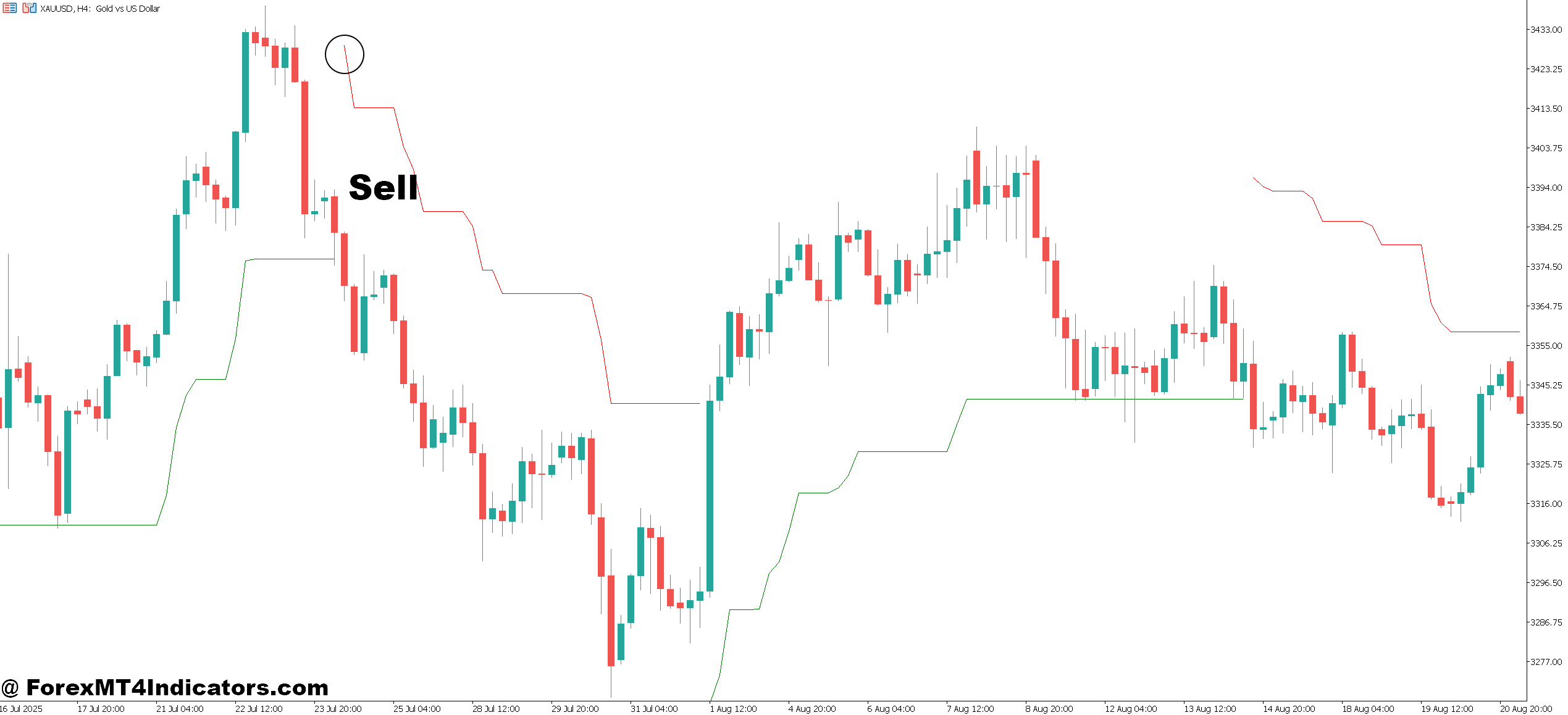
- Price closes below recent swing low – Enter short on GBP/USD 1-hour chart when candle closes under last low; set ATR stop 1.5x above entry (~40 pips).
- Trend confirmed by moving average – On EUR/USD 4-hour chart, price below 50 SMA with ATR stop above swing high (~50 pips) signals sell.
- Breakdown from consolidation – USD/JPY daily closes below range; ATR stop 2x ATR (~65–70 pips) minimizes whipsaw risk.
- ATR stop trailing – Shift stop to breakeven when trade moves 1x ATR (~30–35 pips), securing gains.
- RSI resistance alignment – Short when 14-period RSI drops below 50 on EUR/GBP 1-hour chart; ATR stop above swing high (~25–30 pips).
- Avoid flat markets – Do not sell when ATR < 10 pips; stops may trigger prematurely.
- Multiple timeframe confirmation – Check 4-hour trend aligns with 1-hour setup; ATR stop ~1.5x ATR (~30–40 pips).
- High-impact news caution – Avoid selling during news releases like CPI; ATR stops may widen drastically (50–100 pips).
Conclusion
The ATR Stop Loss Indicator MT5 provides a practical solution for traders aiming to balance risk and flexibility. Key takeaways include:
- Dynamic stop-loss levels adapt to market volatility, reducing early exit risks.
- Settings like ATR period and multiplier allow customization for various pairs and timeframes.
- Best used alongside trend confirmation, support/resistance analysis, and proper position sizing.
- While effective, it doesn’t guarantee profits and should be integrated within a disciplined trading plan.
By understanding its logic and applying it in real scenarios, traders can protect capital more intelligently and navigate market swings with greater confidence. Remember, trading forex carries substantial risk. No indicator guarantees profits, but ATR stops offer a measured, adaptive way to manage risk effectively.
Level up your trading Learn to read the chart — not just the indicator eBook · Instant PDF Video Course · 12 modules Trading forex and CFDs carries a significant risk of loss and is not suitable for everyone. Broker links are affiliate links — we may earn a commission at no cost to you.Recommended MT4/MT5 Brokers
Free MT4 Indicator Download

Enter Your Email Address below, download link will be sent to you.