

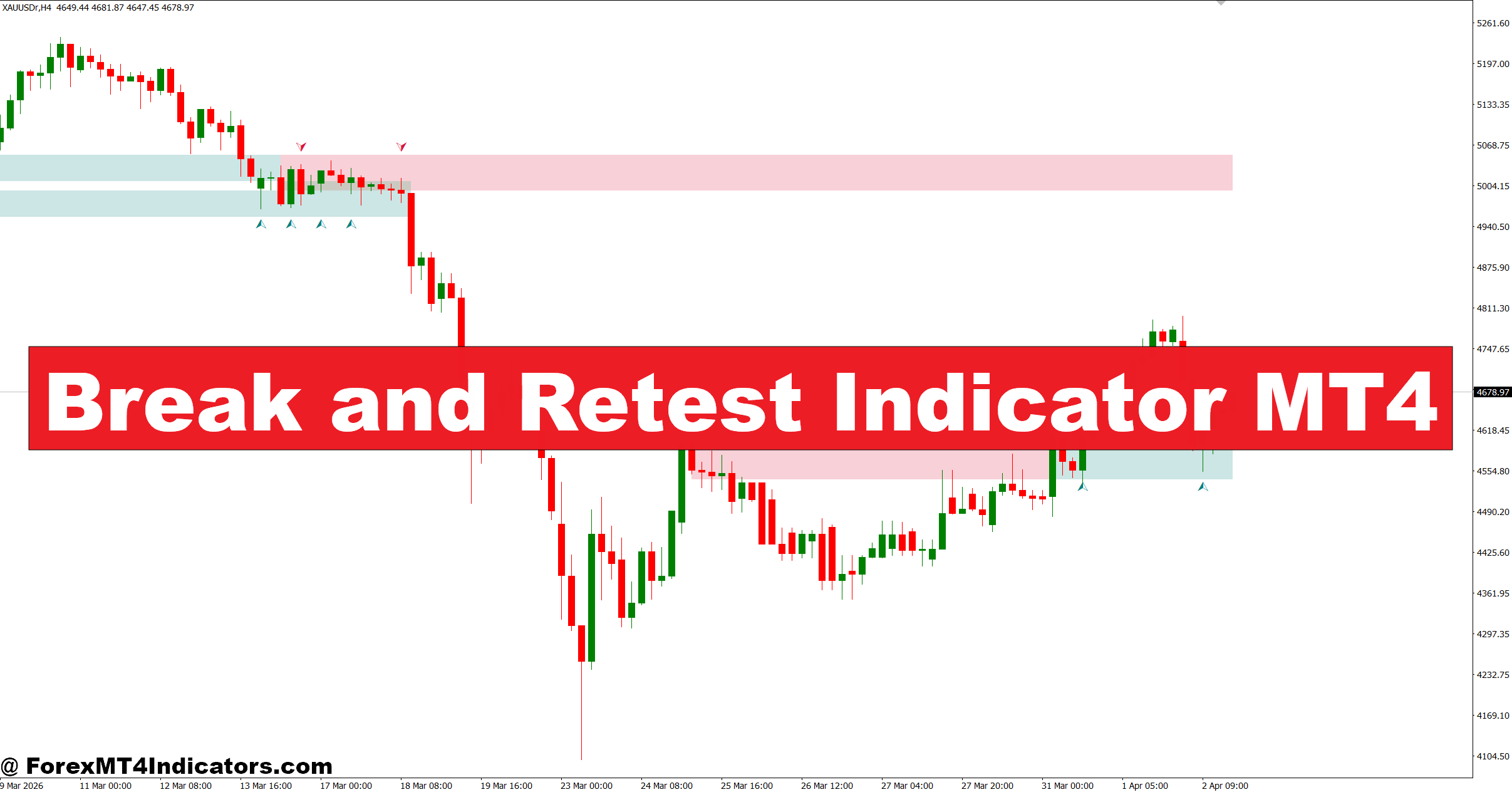
The Break and Retest Indicator MT4 helps reduce that problem by identifying when price breaks an important support or resistance level and then returns to test it before continuing in the same direction. Instead of chasing fast-moving candles, traders can wait for a more structured setup with better risk control.
No indicator can predict every market move, but this one gives traders a clear framework for reading price action. When combined with trend analysis and proper money management, it can improve entry timing and reduce emotional trading decisions. Here’s a closer look at how the indicator works and why many MT4 traders include it in their trading routine.
What Is the Break and Retest Indicator MT4?
The Break and Retest Indicator MT4 is a price action tool designed to highlight one of the most common market behaviors. Markets rarely move in a straight line. After breaking an important support or resistance level, price often returns to test that same level before continuing in the direction of the breakout.
Instead of manually drawing every support and resistance zone, the indicator scans price history and marks potential breakout areas. Once price closes beyond a key level, it watches for a retest. If the market respects that level and begins moving away from it, the indicator signals a possible trading opportunity.
This approach works because support frequently becomes resistance after a bearish breakout, while resistance often turns into support after a bullish breakout. Many institutional traders also monitor these areas, making them important decision points across different markets.
The indicator performs best in trending conditions where momentum supports the breakout. During sideways markets with low volatility, traders may notice more fake-outs and failed retests. That’s why experienced traders usually combine it with trend confirmation instead of relying on the signal alone.
How the Break and Retest Indicator MT4 Works
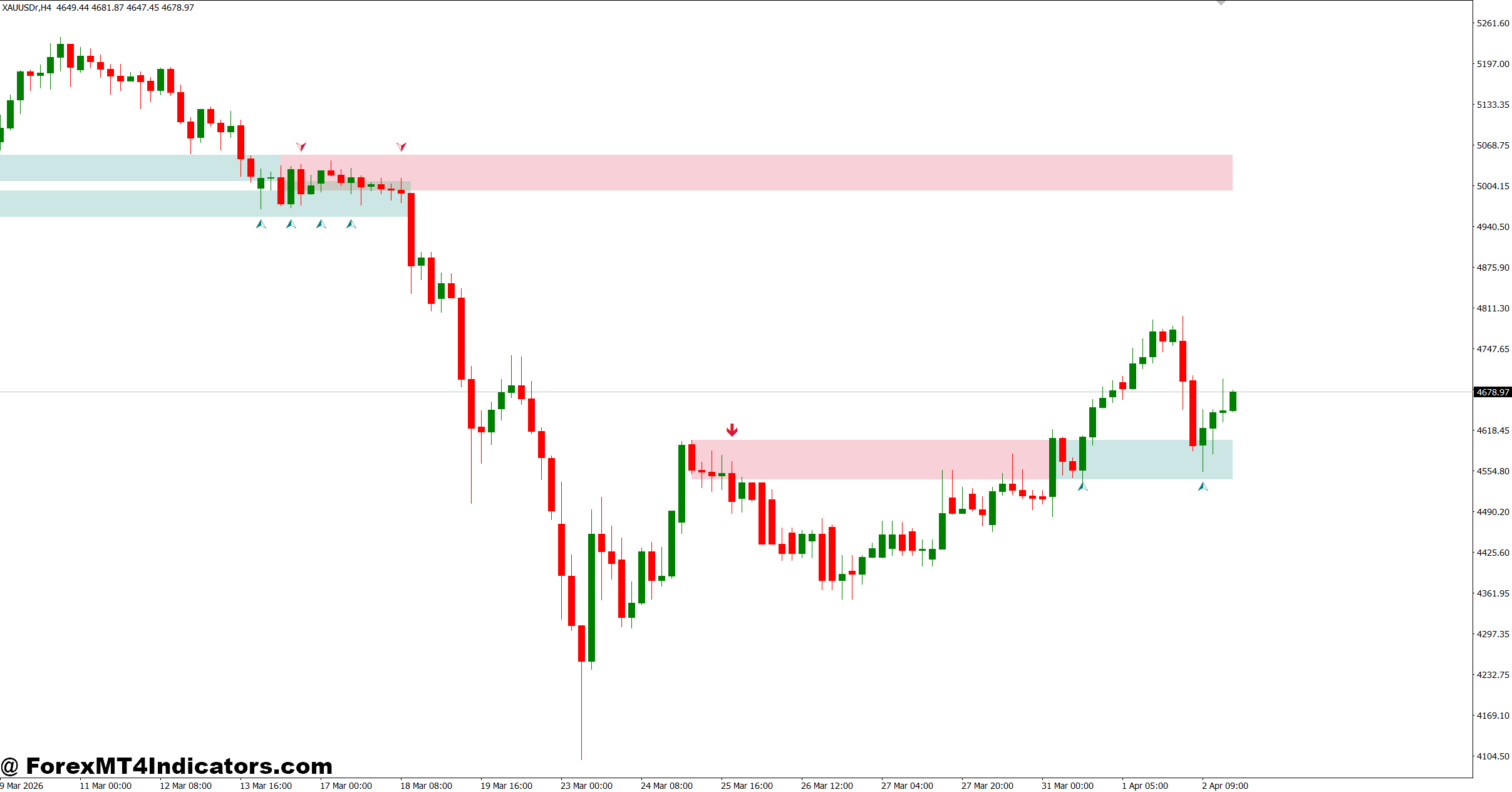
The indicator follows a logical sequence rather than generating random buy or sell alerts. It first identifies important swing highs, swing lows, or manually defined support and resistance zones. Once price closes beyond one of these levels, it begins monitoring the next several candles for a return to the breakout area.
For example, imagine GBP/USD trading below 1.3500 for several hours on the 30-minute chart. A strong bullish candle closes above that resistance with above-average momentum. Rather than buying immediately, the indicator waits. Two candles later, price pulls back to around 1.3505, briefly touches the former resistance, and forms a bullish rejection candle. That retest confirms buyers are defending the breakout level.
A trader might enter near 1.3510 with a stop-loss 20 to 25 pips below the retest zone and aim for a reward of 45 to 60 pips. This creates a risk-to-reward ratio close to 1:2, which many disciplined traders prefer over chasing breakouts after large candles.
When testing this setup during active London and New York trading sessions, many traders notice cleaner retests compared with quieter Asian sessions. Higher trading volume often provides stronger follow-through after successful breakouts.
The indicator becomes even more reliable when paired with tools like the 50-period Exponential Moving Average, the Average True Range for stop placement, or a momentum filter such as the RSI. If the breakout aligns with the prevailing trend and momentum remains strong, the probability of a successful continuation generally improves.
Still, traders should stay cautious around major economic releases. During Non-Farm Payroll announcements or central bank interest rate decisions, price can break important levels only to reverse sharply within minutes. Waiting for volatility to settle often produces more dependable retest opportunities than entering immediately after the news.
Using the Break and Retest Indicator MT4 in Real Trading
Knowing how the indicator works is only part of the process. The real value comes from using it in situations where market structure supports the trade.
Take USD/JPY on the 4-hour chart as an example. Price spends two days moving below a resistance level before a strong bullish candle closes above it. Instead of buying the breakout candle, a patient trader waits for the market to return to that area. A few candles later, the pullback reaches the previous resistance, forms a bullish pin bar, and starts moving higher. This is the type of setup the Break and Retest Indicator MT4 is designed to highlight.
Another example appears on EUR/USD during a downtrend. Price breaks below a well-tested support zone and later rallies back toward the broken level. If the indicator marks the retest and a bearish engulfing candle forms, traders have a stronger reason to consider a short position. A stop-loss can be placed 15 to 25 pips above the retest, while the profit target may sit at the next major support level.
Here’s the thing: not every retest deserves a trade. Sometimes price drifts back through the level without showing rejection. Other times the market enters a choppy range where support and resistance lose their meaning. Experienced traders usually wait for a confirming candlestick pattern before placing an order.
Many traders also avoid entering if the breakout candle is unusually large. A move of 80 or 100 pips in a single candle often leaves little room for a healthy pullback, increasing the chance of a deep correction before the trend resumes.
Best Settings and Customization
Most versions of this indicator include adjustable parameters that allow traders to match different trading styles.
Scalpers often use the indicator on the 5-minute or 15-minute charts with shorter swing detection periods. This creates more signals, although the number of false breakouts also increases.
Swing traders generally prefer the 1-hour or 4-hour charts. These timeframes produce fewer signals, but the breakout levels tend to carry more weight because they reflect stronger market participation.
For major currency pairs such as EUR/USD, GBP/USD, and USD/CHF, the default settings usually perform well. Highly volatile pairs like GBP/JPY or XAU/USD may benefit from wider breakout filters and larger stop-loss distances to account for stronger price swings.
Many experienced traders combine the indicator with:
- A 50-period or 200-period Exponential Moving Average to identify the overall trend.
- The RSI (14) to avoid buying in extremely overbought conditions or selling after extended declines.
- The Average True Range (ATR) to calculate stop-loss distances based on current market volatility.
- Higher timeframe support and resistance zones for stronger trade confirmation.
These combinations don’t eliminate losing trades, but they often help filter weaker setups.
Advantages and Limitations
Like every technical analysis tool, this indicator has strengths and weaknesses.
One of its biggest advantages is improved entry timing. Instead of chasing price after a breakout, traders can wait for confirmation. This often leads to tighter stop-loss placement and better risk-to-reward opportunities.
The indicator is also easy to understand because it follows basic market structure. Traders who already study support, resistance, and trend continuation usually adapt to it quickly.
Another benefit is flexibility. It can be applied to forex pairs, indices, commodities, and even cryptocurrencies that experience clear breakout patterns.
Still, there are limitations.
During ranging markets, price may break the same level several times without establishing a sustained trend. These fake-outs can generate multiple losing signals. The indicator also reacts to completed price movement, so it isn’t designed to predict future direction before the breakout occurs.
Trading forex carries substantial risk. No indicator guarantees profits. Risking only 1% to 2% of account equity per trade remains a sensible approach, even when a setup looks strong.
How It Compares with Similar Indicators
Many traders compare the Break and Retest Indicator MT4 with simple breakout indicators, but they serve slightly different purposes.
A standard breakout indicator alerts traders as soon as price crosses support or resistance. That early signal can capture strong momentum, yet it also exposes traders to more false breakouts.
The Break and Retest Indicator MT4 waits for additional confirmation before generating its signal. That extra patience may result in entering slightly later, but it often filters out weaker breakout attempts.
Compared with trend-following indicators like Moving Averages, this tool focuses more on market structure than trend direction alone. Moving Averages identify the overall trend, while the Break and Retest Indicator pinpoints precise entry areas after the market confirms a breakout.
Many traders find that combining both approaches produces more consistent trade selection than relying on either indicator independently.
Price action remains the final decision-maker. The indicator should support a trading plan rather than replace one.
How to Trade with Break and Retest Indicator MT4
Buy Entry
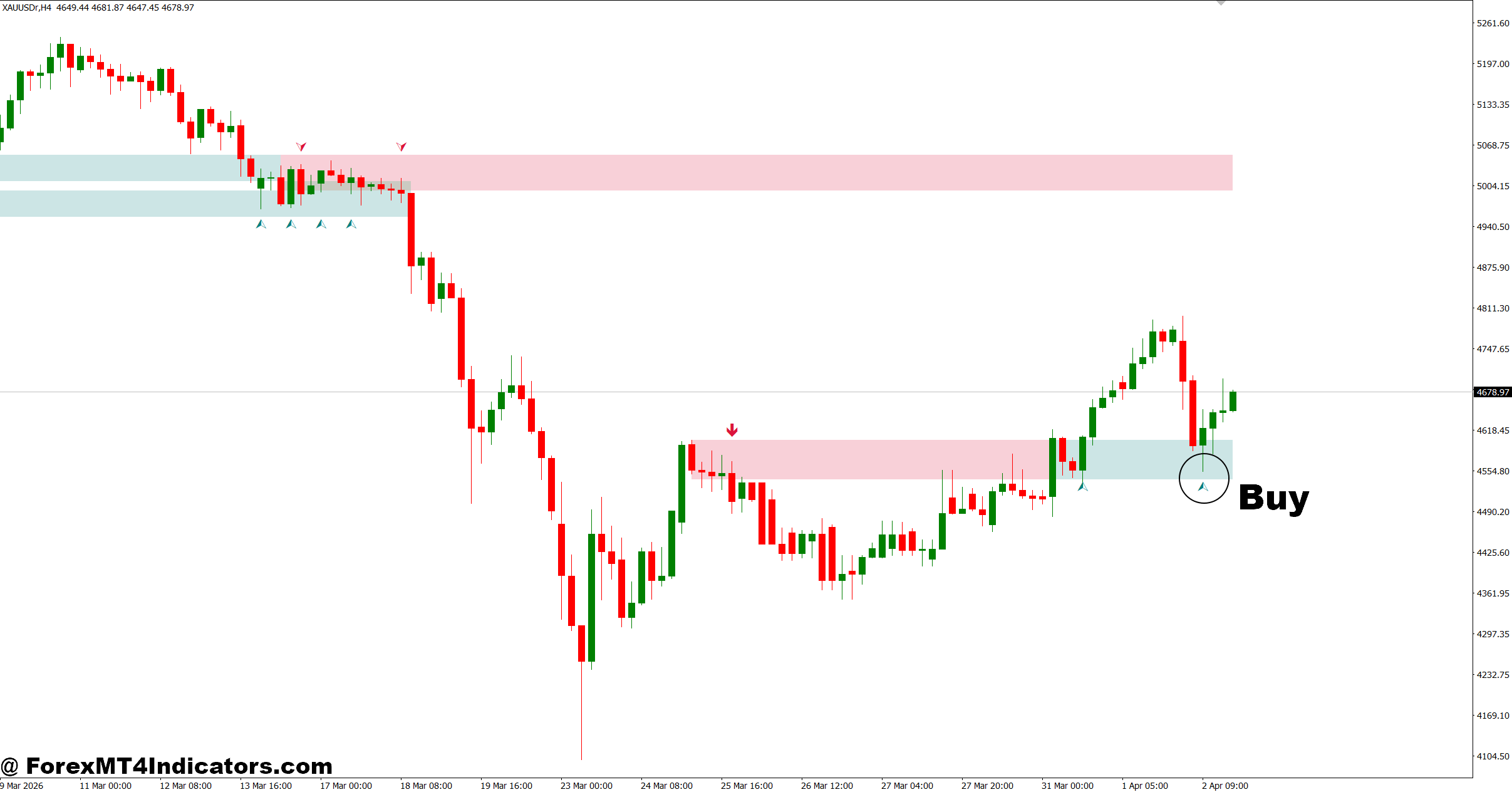
- Wait for a bullish retest – Buy after price retests broken resistance on the EUR/USD 1-hour chart and forms a bullish candle.
- Confirm trend direction – Trade only if price stays above the 50 EMA on the 4-hour timeframe.
- Use a tight stop-loss – Place the stop 15–25 pips below the retest zone to control risk.
- Target a 1:2 reward ratio – Aim for 40–60 pips when risking around 20–30 pips.
- Check trading sessions – Look for entries during the London or New York session for stronger momentum.
- Skip weak breakouts – Don’t buy if the breakout candle has low volume or closes back below resistance.
- Wait for candle confirmation – Enter only after a bullish engulfing or pin bar appears at the retest.
- Risk only 1–2% – Keep position size small even if the setup looks perfect.
Sell Entry
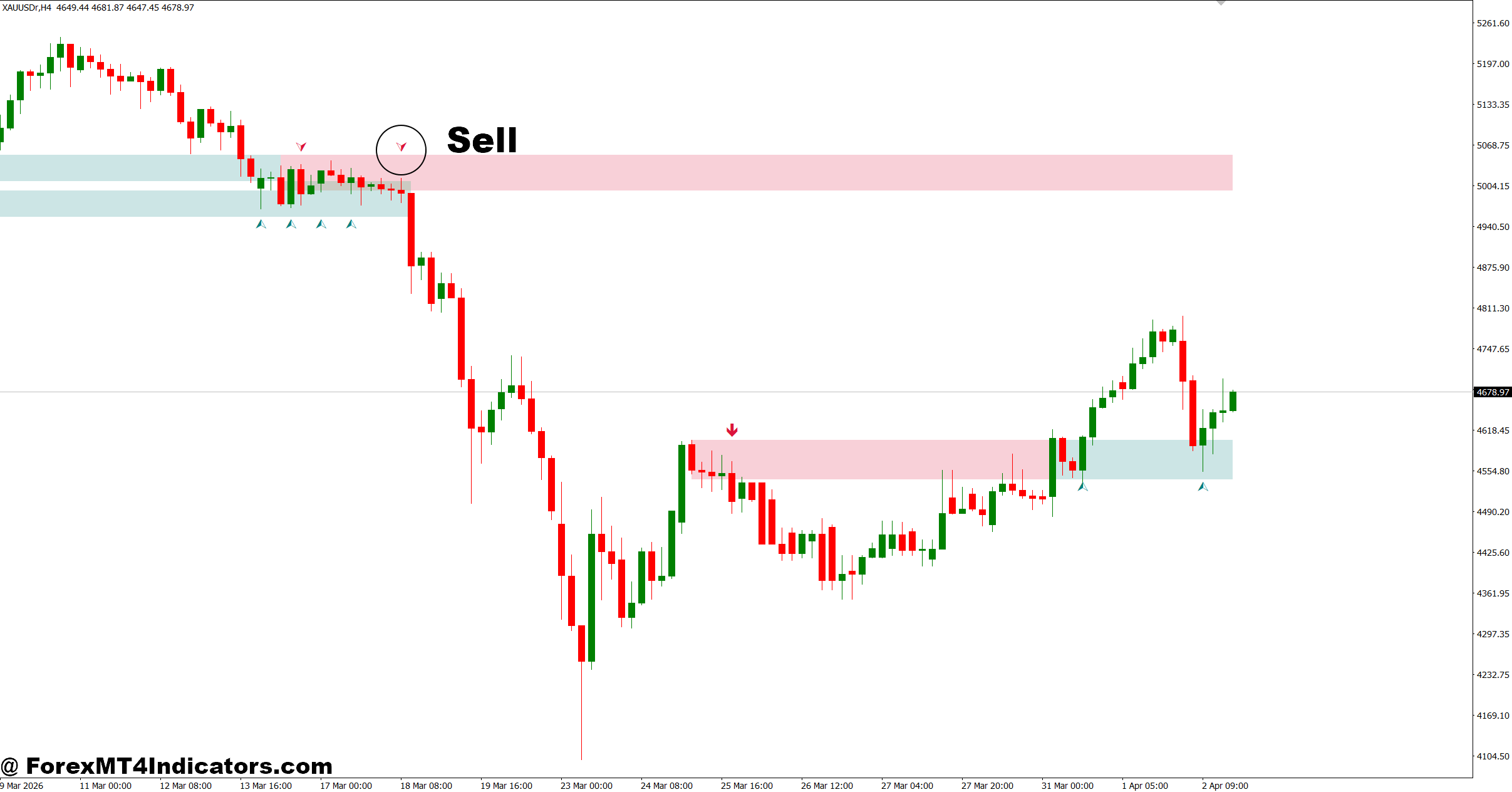
- Wait for a bearish retest – Sell after price retests broken support on the GBP/USD 1-hour chart.
- Trade with the trend – Take sell signals only when price remains below the 50 EMA.
- Place a protective stop – Keep the stop-loss 15–25 pips above the retest level.
- Aim for nearby support – Target 40–70 pips or the next major support zone.
- Use higher timeframes – Signals on the 4-hour or daily chart usually have better reliability.
- Avoid major news events – Skip trades before high-impact releases to reduce fake-outs.
- Confirm bearish rejection – Enter after a bearish engulfing or shooting star forms on the retest.
- Ignore choppy markets – Don’t sell when price keeps crossing the same level without a clear trend.
Final Thoughts
The Break and Retest Indicator MT4 offers a practical way to identify structured trading opportunities after price confirms a breakout. It helps traders focus on better entry timing instead of reacting to fast market moves. Its biggest strengths include recognizing key support and resistance flips, improving risk-to-reward potential, and working well alongside trend confirmation tools. At the same time, traders should remember that ranging markets and major news events can produce unreliable signals. Used with disciplined risk management and sound price action analysis, the Break and Retest Indicator MT4 can become a valuable part of a well-planned trading strategy instead of the sole reason for entering a trade.
Level up your trading Learn to read the chart — not just the indicator eBook · Instant PDF Video Course · 12 modules Trading forex and CFDs carries a significant risk of loss and is not suitable for everyone. Broker links are affiliate links — we may earn a commission at no cost to you.Recommended MT4/MT5 Brokers
Free MT4 Indicator Download

Enter Your Email Address below, download link will be sent to you.